Monster Romance Books: Nonhuman Love Interests and the Kind of Story
Monster romance makes a nonhuman romantic lead’s identity important to the love story. The difference might be visible in a body, a culture, a way of living or the way others respond to them. Readers use the label with different boundaries: some want a clearly unfamiliar creature, while others include half-orcs and fantasy peoples. Before choosing, name the kind of difference you actually want to explore.
This guide separates that preference from danger, sexual intensity and fantasy worldbuilding. A nonhuman lead is not automatically cruel, and an unusual body does not establish a particular heat level. Our two reviewed starters sit near the fantasy end of this broad shelf. They are labelled for what the sources confirm, rather than offered as substitutes for every reader’s definition of a monster.
Authentic published cover of one starter selection; not a claim about every book in the guide.
Updated 8 October 2026 · Eikna Editorial Team
Which version of nonhuman romance interests you?
Setup
What drives it
What to check
Different species or peoples
Physical and cultural differences shape closeness
Check how much of that difference the premise actually describes
Half-orc fantasy lead
Identity and treatment by others may matter alongside a journey
This may be gentler than a reader’s creature-focused definition
Political interspecies marriage
A practical alliance puts unfamiliar partners together
Duty, consent and cultural adjustment are separate questions
Creature-forward adult romance
Anatomy or supernatural needs may drive intimate scenes
Verify the particular sexual content rather than assuming it
Narrow the reading experience
Treat the label as a starting question
A reader looking for a minotaur’s everyday life may want a very different book from someone looking for a half-orc on a dangerous road. Both can appear on monster lists, but the shared label is not enough to establish a match. The useful question is what the nonhuman identity changes: attraction, social treatment, communication, physical intimacy or the rules of the surrounding world. Our starters identify the first verified difference and leave broader creature preferences open.
Unfamiliarity can build trust rather than fear
One route begins with partners who find each other strange and learn how to share a life. Another begins with rescue, threat or a binding arrangement. Neither setup tells you how thoughtfully the story handles consent or whether the later bond feels convincing. Seek evidence about the actual relationship. If your preferred mood is affectionate curiosity, do not rely on a monster tag alone; if you want frightening intensity, check that the danger involves the relationship rather than only an outside enemy.
Decide how much fantasy you want to learn
Some nonhuman romances use a familiar town and a small change to its inhabitants. Others require kingdoms, politics and invented histories before the couple’s situation makes sense. A wider world can make the relationship’s stakes richer, but it can also take attention away from the pair. Read the series guidance before starting. An accessible opening does not establish that later volumes stand alone, and a first book can introduce a continuing political story even when the romantic bond develops substantially.
Keep anatomy, heat and darkness in separate boxes
An unusual body describes identity, not a quality judgment or a guaranteed sexual experience. A threatening setting describes external risk, not the amount of intimate detail. Reviews can help distinguish explicit scenes, relationship coercion and violence, but an incomplete warning list does not prove the absence of a subject. Use a book’s official content notes where available and the specific cautions in the full assessment. Our starter summaries do not supply new heat tiers or universal reassurance.
Starting points and their evidence
These are small starter examples, not a completed or ranked recommendation list. Reviewed selections link to existing evidence-based editorial assessments. Other examples are identified as researched premises or pending research leads; they have no new rating or claim of first-hand reading.
Purchases through Amazon, Bookshop.org and Libro.fm links may earn us a commission. As an Amazon Associate, Eikna Romance earns from qualifying purchases, at no extra cost to you.
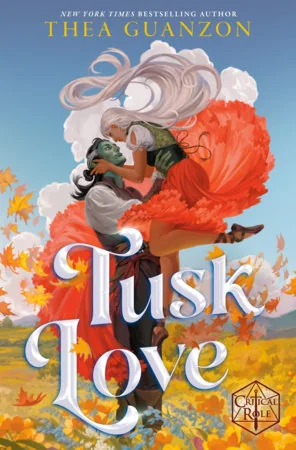
Tusk Love
Thea Guanzon / Critical Role
Editorial interpretation
Guinevere survives a bandit attack and travels with Oskar, a half-orc leaving his own disrupted life behind. This is the journey-and-companionship route into nonhuman fantasy romance. Our existing review weighs affectionate banter against criticism of thin plotting and characterization.
Before choosing: Half-orc identity is publisher-confirmed; inclusion in this broad monster guide is editorial, not a publisher monster label. The assessment discusses sexual scenes and danger. It is set in Critical Role’s Exandria.
Author or publisher premise source · checked 8 October 2026
Edition buttons become available when the specific format and destination are checked. Amazon opens a title-and-author search; choose your edition there.
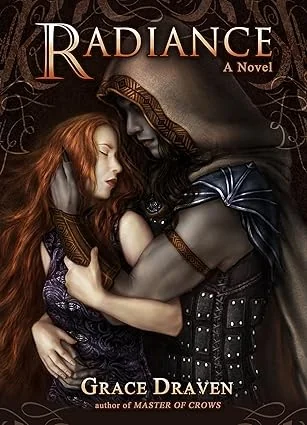
Radiance
Grace Draven
Editorial interpretation
Human noblewoman Ildiko and Kai prince Brishen enter a political marriage between different peoples. Choose it for unfamiliar partners learning to live together, rather than a promise of a terrifying creature romance. The author directly establishes that Brishen’s people are not human.
Before choosing: Wraith Kings book one; the author identifies continuing books and novellas. The starter’s broad monster placement is editorial. Use the existing review for intimate content and its reservations.
Author or publisher premise source · checked 8 October 2026
Edition buttons become available when the specific format and destination are checked. Amazon opens a title-and-author search; choose your edition there.
Questions that change the reading choice
Is every paranormal romance a monster romance?
No. The categories overlap, but readers often use monster to request a more visibly or materially nonhuman lead. Check the individual premise and your own preferred boundary.
Does a half-orc count?
It can fit a broad nonhuman-romance definition. Tusk Love is presented here as a half-orc fantasy starter, with that limit explicit.
Does nonhuman mean dark or explicit?
No. Identity, tone and sexual content require separate evidence. The label cannot settle any book’s complete content profile.