Captive Romance: Confinement, Power and the Relationship
Captive romance places confinement and unequal freedom close to the romantic relationship. One lead may be held under the authority of the eventual love interest, while nearby stories make both leads prisoners of someone else. Those are different dynamics: one asks what happens to attraction under control, and the other can build connection through shared danger. Knowing who controls the exit helps you choose the story you actually want.
Compare 11 researched starting choices through who restricts freedom, how escape or rescue enters the plot and the role of the romantic interest. The direct and qualified groups distinguish control by a love interest from third-party captivity. Captive Prince remains a trilogy opener with disputed first-volume romantic scope; follow each assessment for consent, content and series guidance.
Original editorial artwork about this relationship theme; not a published cover or a scene from a specific novel.
Updated 10 October 2026 · Eikna Editorial Team · Researched editorial assessments
Compare who controls freedom and what the couple faces
Authority over another person’s freedom differs from cooperation against a common captor. These notes identify the actual confinement and the role of the romantic interest; the linked assessments discuss relationship and craft limitations.
Qualified captivity or rescue comparison; check who holds control
Readers seeking an abduction-and-survival setup whose romantic alien is distinct from the original abductors.
Who controls the confinement?
Begin with the relationship between the captive and the person restricting them. Captor–captive attraction creates a different power imbalance from two allies planning an escape. A rescue story may involve captivity without making the rescuer a captor, and a snowed-in couple may simply be unable to travel. These distinctions keep a familiar proximity label from hiding what the plot actually does.
Starting point
What drives it
What to check
The romantic interest has authority over confinement
Attraction develops within unequal freedom
Check coercion, sexual violence and when choices become possible
Both leads are prisoners of a third party
Shared danger requires cooperation
This is a contrasting captivity plot, not necessarily captor romance
A love interest helps someone escape
Protection and recovery shape the connection
Check who restricted freedom rather than inferring from the rescue
Weather or circumstances prevent travel
Neither person intentionally imprisons the other
Ordinary forced proximity answers a different reading preference
Confinement matters beyond physical closeness
A character who cannot leave may depend on another person for shelter, information or basic needs. That dependence changes the meaning of decisions within the relationship. Some readers intentionally seek troubling fictional power dynamics; others want shared survival with a trustworthy ally. The premise and content notes should make those choices visible without assuming either preference from the word captive.
Attraction does not answer the consent question
Fear, desire and compliance can appear together in a story without making them interchangeable. We do not describe coerced sexual acts as evidence of mutual romantic intimacy. If a book includes such conduct, the assessment needs to name it and consider how the narrative handles it. Read the identified content discussion rather than taking a romantic series label as reassurance about every scene.
A series label does not promise a complete romance in its opener
An opening volume can devote most of its attention to survival, court politics or establishing an unequal position. Captive Prince illustrates why work-level and series-level expectations need separating: the publisher calls the series a romance trilogy, while an inspected critic finds no romance in the first book. This guide preserves both facts instead of silently presenting the volume as a finished courtship.
Shared captivity can lead to a different kind of trust
When neither lead causes the confinement, cooperation may reveal skills, priorities and care under pressure. That does not establish an easy tone or absence of violence. Shards of Hope begins with that kind of threat and belongs to a wider paranormal series. Its inclusion here is explicitly comparative, so readers looking specifically for a captor as love interest do not receive a false match.
The forced-proximity guide compares circumstances that keep leads together. Use it for shared travel, living arrangements or practical constraints when a captive relationship is not what you want.
The dark-romance guide examines troubling dynamics and reader choices. Captivity can overlap with that territory, but each book still needs its own content and relationship assessment.
The morally grey guide asks about motives, methods and consequences. It helps when your interest is the handling of authority rather than confinement alone.
These choices link existing researched assessments. Direct romantic-interest control and qualified captivity or rescue have separate groups. Captivity does not establish consent, a complete romance in a series opener or an absence of sexual violence. Read the individual limits before choosing. This remains a starter collection rather than an exhaustive list.
Purchases through Amazon, Bookshop.org and Libro.fm links may earn us a commission. As an Amazon Associate, Eikna Romance earns from qualifying purchases, at no extra cost to you.
Romantic-interest control: check the exact confinement
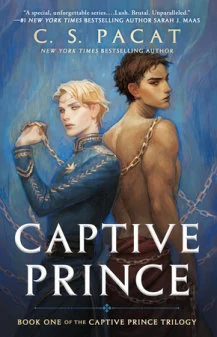
Captive Prince
C. S. Pacat
Captivity evidence: Author or publisher establishes romantic-interest control
Best for: Political survival with an extreme imbalance of freedom
Damen’s half brother takes his throne and sends him to an enemy court as an enslaved man. Laurent becomes his master, so the connection is not simply two enemies forced into the same room. Damen must conceal his identity while depending on someone whose position gives him control over Damen’s circumstances.
Choose this for sustained political tension and a relationship that develops across a trilogy. The need to cooperate does not remove the starting imbalance: Damen’s survival and his country’s future become entangled with Laurent. This first volume should be introduced as the beginning of that larger relationship, rather than a complete standalone resolution.
Before choosing: Book one of a romance trilogy. Explicit sexual enslavement and coercive power are central to the publisher premise. Consult detailed content guidance; do not soften the setup into ordinary forced proximity. The existing assessment attributes to Kristen at Metaphors and Moonlight a finding of no central romance in volume one; it reports sexual assault and severe flogging. Later trilogy development is outside that assessment.
Who restricts freedom, and how does that relate to the romance?
Berkley — Captive Prince: Publisher explicitly calls Damen a pleasure slave sent to Prince Laurent, his new master, and identifies this as the trilogy’s first novel. (verified primary). Source: https://www.penguinrandomhouse.com/books/316172/captive-prince-by-c-s-pacat/.
Edition buttons become available when the specific format and destination are checked. Amazon opens a title-and-author search; choose your edition there.
A Heart of Blood and Ashes
Milla Vane
Captivity evidence: Author or publisher establishes romantic-interest control
Best for: A captive heroine using political strategy against her captor’s assumptions
Maddek captures Yvenne believing she helped cause his parents’ deaths. That accusation makes his control threatening before it becomes a romantic connection. Yvenne answers with a proposal of marriage and shared vengeance against her father, turning the encounter toward an alliance without making its hostile beginning disappear.
This suits readers who want a heroine whose most consequential weapons are judgment and argument. The author contrasts Maddek’s expectations with Yvenne’s political intelligence: she can propose a future that neither physical strength nor anger alone can secure. Keep the captive premise visible alongside that agency, rather than presenting the proposed marriage as proof that the capture was consensual.
Before choosing: Author identifies explicit sex, bloody violence and vulgar language. Capture is driven by revenge; the heroine’s later marriage proposal does not make the initial seizure consensual. Gathering of Dragons book one; author provides series-wide assault/abuse guidance.
Who restricts freedom, and how does that relate to the romance?
Milla Vane — A Heart of Blood and Ashes: Author explicitly says Maddek captures Yvenne for revenge and she proposes marriage to unite their goals. (verified primary). Source: https://millavane.com/book/blood-and-ashes/.
Milla Vane — series content warning: Author warns at series level of violence, references to sexual assault/rape and emotional or physical abuse; this audit does not assign every listed event to this particular volume. (verified primary series scope). Source: https://millavane.com/books/content-warning/.
Edition buttons become available when the specific format and destination are checked. Amazon opens a title-and-author search; choose your edition there.
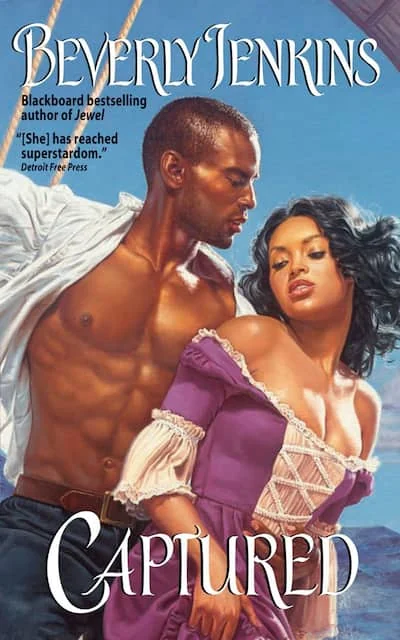
Captured
Beverly Jenkins
Captivity evidence: Author or publisher establishes romantic-interest control
Best for: Readers prepared for an enslaved heroine and a coercive freedom bargain within historical romance.
Dominic LeVeq seizes a British frigate and finds Clare Sullivan enslaved aboard it. The author’s premise makes his control over her freedom central: he offers release in return for a night in his bed. This is a direct example of the love interest holding the power to end captivity, rather than a protective escort being mistaken for a captor.
The attraction sits inside an exceptionally unequal bargain. A reader choosing this book needs to be comfortable examining a romance whose opening makes sexual access the price of freedom; the synopsis describing Clare’s desire does not remove that pressure. Its privateer setting also gives this choice a different historical context from contemporary kidnapping stories.
Before choosing: Enslavement and a freedom-for-sex bargain are explicit. Treat consent under that pressure as a material reader concern; the inspected premise does not establish a complete content inventory.
Who restricts freedom, and how does that relate to the romance?
Beverly Jenkins — Captured: Dominic captures a frigate carrying enslaved Clare and offers her freedom in exchange for a night in his bed. (direct premise). Source: https://www.beverlyjenkins.net/books/historical-romance-books/captured/.
Edition buttons become available when the specific format and destination are checked. Amazon opens a title-and-author search; choose your edition there.
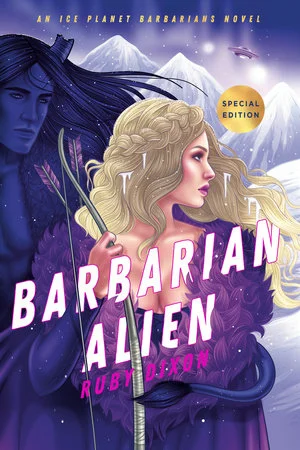
Barbarian Alien
Ruby Dixon
Captivity evidence: Author or publisher establishes romantic-interest control
Best for: Readers who want a captor relationship complicated by alien biological mating pressure and resistance.
Liz is already stranded on the alien planet when Raahosh takes her away from the other survivors. The publisher explicitly describes him stealing her from the group because he believes their symbionts have identified them as mates. This is a direct romantic-lead capture, distinct from the earlier ship abduction shared by the series’ human characters.
Liz’s resistance is part of the checked premise: she rejects the idea that a biological response obliges her to love him or accept his claim. Choose this for a conflict between imposed mating certainty and her own judgment, while keeping the coercive removal visible. It is the second novel in the series, and the publisher’s premise does not establish the duration of captivity or every later consent boundary.
Before choosing: Direct removal by Raahosh supported; biological attraction is not evidence of voluntary consent.
Who restricts freedom, and how does that relate to the romance?
Berkley / Penguin Random House: Raahosh steals Liz away from the group to make her fall for him; Liz disputes the symbiont’s apparent mating mandate. (direct premise example). Source: https://www.penguinrandomhouse.com/books/706933/barbarian-alien-by-ruby-dixon/.
Edition buttons become available when the specific format and destination are checked. Amazon opens a title-and-author search; choose your edition there.
Barbarian Mine
Ruby Dixon
Captivity evidence: Author or publisher establishes romantic-interest control
Best for: Readers comfortable with an explicitly coercive capture and a relationship shaped by major communication differences.
Harlow’s new life with the tribe is interrupted when Rukh watches her and takes her captive. The author’s special-edition description names him and expressly identifies the act as kidnapping; the original description also mentions striking her head and claiming her. The captor is therefore the developing romantic partner, rather than an outside villain whose victim later meets someone else.
The author makes Rukh’s isolation and limited communication central to their encounter, alongside the resonance that identifies a mating connection. Those conditions distinguish the book from a calculated criminal ransom plot, but they do not make the seizure harmless or voluntary. Readers should expect coercive capture and violence in the stated setup. This is the fourth Ice Planet Barbarians novel, with prior series circumstances already in place.
Before choosing: Author explicitly verifies kidnapping and head-strike; retain coercion caveat without claiming comprehensive content coverage.
Who restricts freedom, and how does that relate to the romance?
Ruby Dixon, official editions: Harlow is kidnapped and claimed by Rukh, an isolated alien with limited speech. Original author page additionally states he clubs her over the head. (direct premise example). Source: https://rubydixon.com/special-edition/barbarian-mine/.
Ruby Dixon, original book description: Explicitly states that the alien captures the heroine and strikes her over the head while claiming her. (direct premise example). Source: https://rubydixon.com/book/barbarian-mine/.
Edition buttons become available when the specific format and destination are checked. Amazon opens a title-and-author search; choose your edition there.
Third-party captivity and rescue: qualified comparisons
These choices involve a different relationship to confinement. A fellow prisoner or rescuer should not be labelled the captor without evidence.
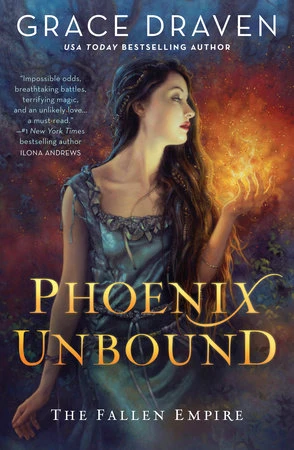
Phoenix Unbound
Grace Draven
Captivity evidence: Qualified captivity or rescue comparison; check who holds control
Best for: Two people resisting an empire while their own bargain remains unequal
Azarion is an enslaved gladiator who identifies the magic keeping Gilene alive through the empire’s sacrificial ritual. He blackmails her into helping him escape. The empire creates the underlying captivity, while the romantic lead’s leverage over Gilene creates a distinct coercive relationship within that struggle.
Use this as a qualified comparison for readers interested in escape and conflicting obligations. Gilene’s repeated return protects her village, so freedom for one person can threaten the safety of others. The romance has to contend with that pressure; it should not be framed as a freely chosen adventure simply because both characters oppose the same regime.
Before choosing: Qualified rather than an unverified direct physical-captor claim: the publisher confirms Azarion’s slavery and blackmail, plus threatened burning of women. Fallen Empire book one. Exact sexual-violence scenes were not audited here.
Who restricts freedom, and how does that relate to the romance?
Ace publisher description via Apple Books — Phoenix Unbound: Publisher verifies Azarion’s enslavement, his blackmail of Gilene to aid escape, and the empire’s annual sacrificial burning. (verified primary). Source: https://books.apple.com/us/book/phoenix-unbound/id1330331353.
Edition buttons become available when the specific format and destination are checked. Amazon opens a title-and-author search; choose your edition there.
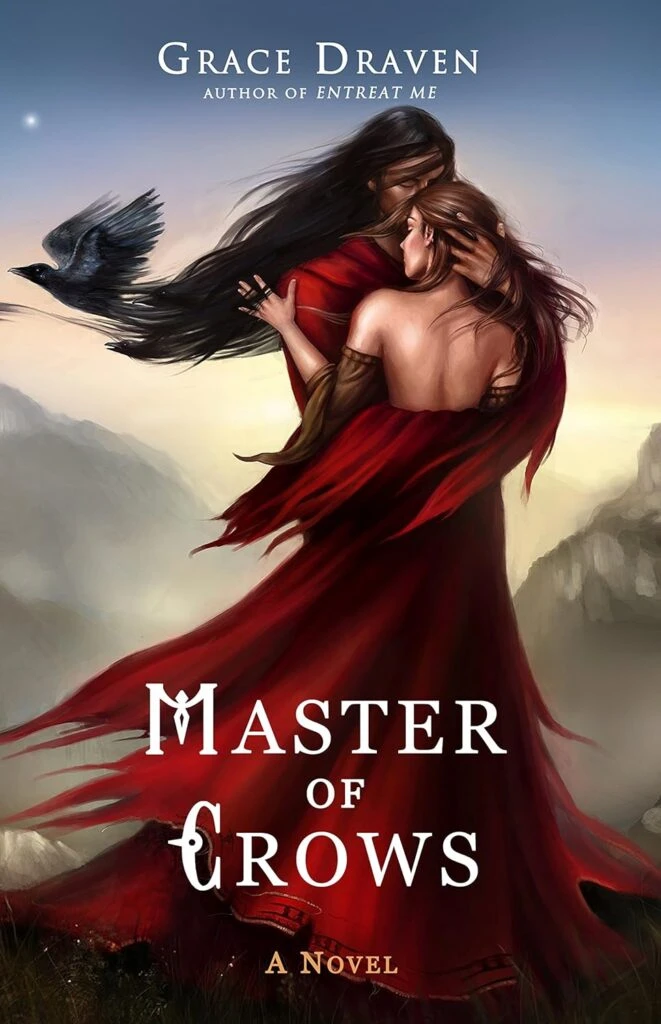
Master of Crows
Grace Draven
Captivity evidence: Qualified captivity or rescue comparison; check who holds control
Best for: Freedom that appears to require betraying the person she comes to love
Martise is a bondwoman whose masters are the mage-priests of Conclave. They offer freedom in exchange for spying on Silhara, who receives her as an apprentice and recognizes the deception. The source of her enslavement is therefore distinct from the man she falls for; the apprenticeship alone should not be described as him taking her captive.
This comparison suits readers who want captivity to shape the heroine’s available choices. Martise and Silhara work against a dangerous god while the priests’ bargain threatens their emerging trust. Her conflict is whether freedom bought through his betrayal can become a future she wants, rather than a simple romance between prisoner and jailer.
Before choosing: Third-party bondage: Conclave are explicitly her masters; Silhara is the target of her spying and her eventual love interest. Do not label him her verified owner or abductor. Author identifies this as book one with follow-up stories.
Who restricts freedom, and how does that relate to the romance?
Grace Draven — Master of Crows: Author explicitly identifies Conclave as Martise’s masters, their freedom-for-spying bargain, and her placement with Silhara as an apprentice. (verified primary). Source: https://www.gracedraven.com/master-of-crows/.
Edition buttons become available when the specific format and destination are checked. Amazon opens a title-and-author search; choose your edition there.
The Spymaster's Lady
Joanna Bourne
Captivity evidence: Qualified captivity or rescue comparison; check who holds control
Best for: Readers interested in an uneasy escape alliance complicated by incompatible intelligence missions.
Annique Villiers and British spymaster Robert Grey are imprisoned together and need an alliance to escape. Grey also has orders to capture Annique and take her intelligence back to England. Those overlapping circumstances make the book useful for readers interested in captivity, trust and opposing duties, while keeping the initial jailer separate from the romantic lead.
The verified premise promises a suspicious partnership under pursuit, not an uncomplicated rescue romance. Grey’s mission creates a further question about whether freedom with him can remain freedom at all. The inspected author and publisher material confirms shared imprisonment and capture intent; it does not, on its own, establish every later act of detention by Grey.
Before choosing: Qualified shared-captivity example. His capture mission is explicit; actual subsequent confinement by the hero is not verified here. Expect espionage danger and deception.
Who restricts freedom, and how does that relate to the romance?
Penguin Random House — The Spymaster’s Lady: Grey must capture Annique; both are thrown into prison and forge an alliance to escape. (direct premise). Source: https://www.penguinrandomhouse.com/books/301661/the-spymasters-lady-by-joanna-bourne/paperback/.
Edition buttons become available when the specific format and destination are checked. Amazon opens a title-and-author search; choose your edition there.
Hostage to Pleasure
Nalini Singh
Captivity evidence: Qualified captivity or rescue comparison; check who holds control
Best for: Readers seeking escape from institutional coercion with a protective romance and a child-rescue stake.
Ashaya Aleine is forced to work on a neural implant that would enslave her people, while separation from her son gives her enemies leverage. The author’s opening also shows her young son restrained by captors before Dorian helps rescue him. The captivity belongs to the Psy power structure; Dorian’s stated role is protecting Ashaya and the child.
This choice suits readers who want the romance to develop around escape, distrust and safety after coercion. Dorian’s anger at the Psy complicates that protection because Ashaya belongs to the group he associates with his sister’s death. It is a useful comparison to captor romances precisely because a dangerous male lead is not automatically the person imprisoning the heroine.
Before choosing: Psy/Changeling book five. Institutional coercion, child captivity and violent rescue are explicit; Dorian is the rescuer/protector, not the verified original captor.
Who restricts freedom, and how does that relate to the romance?
Nalini Singh — Hostage to Pleasure, description and opening excerpt: Ashaya is forced to create an enslaving implant; the opening depicts her restrained child being rescued by Dorian. Author identifies book five. (direct premise). Source: https://nalinisingh.com/books/psychangeling-series/hostage-to-pleasure/.
Edition buttons become available when the specific format and destination are checked. Amazon opens a title-and-author search; choose your edition there.
Shards of Hope
Nalini Singh
Captivity evidence: Qualified captivity or rescue comparison; check who holds control
Best for: Readers seeking a joint escape in which both partners resist the captors.
Aden and Zaira begin in a guarded cell with their psychic abilities disabled and Zaira seriously wounded. The author’s excerpts identify outsiders as the captors and show the two Arrow operatives coordinating an escape. Their partnership is the route out of confinement, so this belongs in a clearly separated shared-captivity section.
The opening turns care into concrete action: Aden treats Zaira’s wound, the pair exchange tactical information, and he returns when she is left behind. Those choices support a romance built around mutual survival rather than attraction to a jailer. The material is severe, including physical abuse and captors’ explicit threats of sexual torture; the threat must not be softened into generic danger.
Before choosing: Psy/Changeling book fourteen; substantial established-world context. Opening includes gunshot injury, physical violence, childhood torture recollections and threats of sexual torture against both leads. These are threats in the inspected scene, not a claim that the threatened assaults occur.
Who restricts freedom, and how does that relate to the romance?
Nalini Singh — Shards of Hope, opening excerpts: Both leads are confined by armed outsiders with abilities disabled; guards assault Zaira and threaten sexual torture; Aden returns during their escape. (direct premise). Source: https://nalinisingh.com/books/psychangeling-series/shards-of-hope/.
Edition buttons become available when the specific format and destination are checked. Amazon opens a title-and-author search; choose your edition there.
Ice Planet Barbarians
Ruby Dixon
Captivity evidence: Qualified captivity or rescue comparison; check who holds control
Best for: Readers seeking an abduction-and-survival setup whose romantic alien is distinct from the original abductors.
The author opens the premise with human women abducted by aliens and abandoned as cargo when the ship develops trouble. The narrator encounters a native inhabitant only after being left on the ice planet. That separation matters: the initial captivity belongs to the traffickers, rather than automatically making the romantic lead her captor.
Use this as a clearly labelled comparison for readers who want romance after outside captivity and displacement. The verified setup includes involuntary removal from Earth and a hostile environment, so an attractive alien companion does not erase the circumstances that brought her there. It is the first Ice Planet Barbarians novel; do not promise captivity by the romantic lead from this evidence.
Before choosing: Initial third-party abduction; romantic lead not established as original captor.
Who restricts freedom, and how does that relate to the romance?
Ruby Dixon, official book page: Human women are abducted and abandoned by a malfunctioning ship; the narrator subsequently encounters a native alien. (direct premise example). Source: https://rubydixon.com/book/ice-planet-barbarians/.
Edition buttons become available when the specific format and destination are checked. Amazon opens a title-and-author search; choose your edition there.
Questions that change the reading choice
Is every kidnapped character in a captive romance?
No. Kidnapping can be a suspense event, and the love interest may be a rescuer or another prisoner. This guide states the relationship configuration instead of classifying from the event alone.
Is a snowed-in romance the same trope?
No. Weather can prevent travel without one person holding another against their will. The forced-proximity guide is the closer route for that preference.
Does the current starter collection avoid sexual violence?
No. Captive Prince’s assessed content includes sexual violence, and Shards of Hope’s inspected opening includes physical violence and threats of sexual torture. These are distinct descriptions; consult each full review before choosing.
Does the feature image depict Captive Prince?
No. It is original thematic artwork showing an adult woman and man. The site covers M/M books in text and authentic covers; this feature is not a scene from either starter.
Mafia Captive Romance: Debt, Confinement and Control
Mafia captive romance asks readers to distinguish a dangerous criminal setting from a relationship built around loss of freedom. Someone may be abducted, traded over a debt or prevented from leaving. Identify the actual constraint first: a threatening reputation or a possessive partner alone does not establish captivity.
How these starting choices were researched
We inspected current competing guides and checked the exact confinement through author and publisher material, retaining identified criticism where additional interpretation is reported. Each note identifies who holds control and why rescue or third-party captivity remains a qualified comparison. These additions link existing researched assessments without adding ratings or claiming first-hand reading. The order groups evidence scopes rather than ranking quality; the collection remains incomplete.