Road-Trip Romance: Shared Miles, Old Tensions and New Trust
Road-trip romance gives a relationship a moving setting: shared transport, a destination and stretches of time in which the leads cannot easily avoid one another. The journey matters when it changes their contact, exposes disagreements or gives them room to speak differently than they would at home. A vacation backdrop alone does not tell you how the romance works.
Compare 12 researched starting choices through the transport, company and emotional baggage each journey brings. The collection separates road travel from qualified neighboring journeys, including situations where danger or obligation restricts the freedom to leave. Use those distinctions before following the individual assessment for relationship strengths, reservations and content guidance.
Original editorial artwork about this relationship theme; not a published cover or a scene from a specific novel.
Updated 10 October 2026 · Eikna Editorial Team · Researched editorial assessments
Compare the journey the couple has to share
A car journey toward a wedding creates different pressures from carriage travel, a repeated vacation or a trek under threat. Choose through the actual transport, reason for leaving and relationship history. The qualified comparisons explain where travel matters without being a conventional road trip.
Qualified shared-travel comparison; read the transport and scope
Workplace competitors reconsidering each other while traveling together
What does the journey make possible?
A short deadline and a long itinerary create different kinds of pressure. A crowded car can turn avoidance into conversation, while weeks of travel allow habits and assumptions to become visible. Think about why the leads agree to go, who else travels with them and what they will need to decide after the journey ends. The destination can organize the plot without solving the relationship.
Starting point
What drives it
What to check
A wedding deadline
An interrupted journey brings exes together
Does the reunion address the original breakup?
A family-inspired itinerary
Travel connects grief, memory and present attraction
How much space does the family story receive?
A longer shared trip
Repeated contact exposes class tensions and secrets
Who controls money, plans and the ability to leave?
A holiday encounter
An unfamiliar place makes a new meeting possible
Is shared travel central, or is this mainly a destination romance?
Travel changes contact, not necessarily trust
Forced proximity explains why people spend time together. It does not explain why they should trust each other. For a reunion, look for an account of what went wrong and evidence of changed behavior; for former rivals, ask whether they revise old assumptions. A beautiful route can make a story appealing while the emotional repair remains a separate question.
Choose the company as well as the couple
Additional passengers can give a trip comic energy, interrupt intimacy or carry a family history of their own. If you want concentrated time with two leads, a crowded ensemble may feel different from a quieter journey. The starter descriptions below identify who brings the couple together so that the travel setup is useful before you open a full review.
Leave room for difficult material
Travel romance can include bereavement, financial insecurity, hurtful treatment and concealed information. Scenic or playful marketing is not a complete content guide. Read the assessment for reservations, and consult an author’s content guidance when a particular subject matters to your choice. No uniform heat rating or ending classification is assigned here.
Explore the wider forced-proximity collection if the close contact appeals more than the travel itself. It includes other reasons that characters keep encountering one another.
Use the second-chance guide to compare reunions whose original separation needs an answer. The Road Trip is one example of travel making that conversation unavoidable.
The enemies-to-lovers collection offers more reviewed conflicts and explains why rivalry, prejudice and genuine hostility create different reading experiences.
12 researched starting choices for romance on a shared journey
4 establish shared road travel; 8 are separately qualified travel comparisons. The notes identify the company and circumstances rather than treating every holiday or rescue as the same trope. These are bounded starting choices from our existing reviewed catalogue.
Purchases through Amazon, Bookshop.org and Libro.fm links may earn us a commission. As an Amazon Associate, Eikna Romance earns from qualifying purchases, at no extra cost to you.
Verified shared road journeys
The Road Trip
Beth O'Leary
Journey evidence: Shared road journey established by the inspected premise
Best for: A second-chance romance where the shared vehicle makes avoiding the past difficult.
Addie and Dylan crash cars on the way to a wedding in rural Scotland. With Dylan’s car unusable, they join three other travelers in Addie’s small Mini and continue across Britain together.
The journey has a clear destination and an immediate practical reason for putting the exes in close quarters. Choose it when you want the uncomfortable car ride to force conversation about a failed relationship; the publisher also establishes their earlier Provence romance, so present travel and past history both matter.
Before choosing: Five travelers rather than an exclusively two-person trip; prior relationship ended two years earlier.
What establishes the journey and relationship setup?
Official author/publisher description: Publisher explicitly establishes car crash, shared Mini and cross-Britain journey to Scottish wedding. (direct premise example). Source: https://www.penguinrandomhouse.com/books/670330/the-road-trip-by-beth-oleary/9780593335024/.
Edition buttons become available when the specific format and destination are checked. Amazon opens a title-and-author search; choose your edition there.
You, with a View
Jessica Joyce
Journey evidence: Shared road journey established by the inspected premise
Best for: A shared road journey tied to family history and grief.
Noelle discovers evidence of her grandmother’s broken engagement and decides to take the honeymoon road trip the couple never completed. The former fiancé, Paul, joins her and insists that his grandson Theo—Noelle’s old school rival—comes too.
This makes the route itself an act of honoring the past, with the developing romance happening in the same car as the family-history journey. It suits readers who want travel to carry a purpose beyond escape, while the publisher’s account of Noelle’s bereavement keeps the emotional weight visible.
Before choosing: Grandparent travels with romantic leads; grief over grandmother is central, not just scenic background.
What establishes the journey and relationship setup?
Official author/publisher description: Publisher confirms planned honeymoon road trip retraced by Noelle, Paul and Theo; explicitly mentions moving car. (direct premise example). Source: https://www.penguinrandomhouse.com/books/713717/you-with-a-view-by-jessica-joyce/.
Edition buttons become available when the specific format and destination are checked. Amazon opens a title-and-author search; choose your edition there.
Going Nowhere Fast
Kati Wilde
Journey evidence: Shared road journey established by the inspected premise
Best for: A longer journey with tight quarters and an antagonistic starting relationship.
Aspen accepts her best friend’s invitation to a month-long road trip knowing that the friend’s brother Bram will share their tight quarters. His dismissive view of Aspen creates friction before attraction changes how she understands their encounters.
Pick this when the appeal is an extended trip with an uncomfortable social dynamic rather than a short ride to one event. Aspen is also keeping a promise involving a secret about Bram’s sister, so the road proximity comes with divided loyalties and the risk of a damaging disclosure.
Before choosing: Author explicitly confirms shared month-long road trip; do not invent vehicle type, route or exact stops. Class-based hostility and the money imbalance are discussed in the linked assessment; do not treat this as a carefree getaway.
What establishes the journey and relationship setup?
Official author/publisher description: Author confirms Aspen, best friend and Bram sharing tight quarters during month-long road trip, plus concealed sister-related secret. (direct premise example). Source: https://katiwilde.com/books/going-nowhere-fast/.
Edition buttons become available when the specific format and destination are checked. Amazon opens a title-and-author search; choose your edition there.
Here We Go Again
Alison Cochrun
Journey evidence: Shared road journey established by the inspected premise
Best for: A queer reunion romance with caregiving, grief and a shared final wish.
Logan and Rosemary agree to drive their former teacher and lifelong mentor across the country after learning he has only months to live. Their van journey runs from Washington state through the Grand Canyon and Gulf Coast to coastal Maine.
The road is the setting for both a romantic reunion and an act of care for someone important to them. This is a strong direct fit, but choose it with the terminal illness in view: the publisher explicitly identifies darker subject matter alongside the humor, so it should not be sold as an uncomplicated lighthearted getaway.
Before choosing: Mentor’s terminal illness and anticipatory grief are core premise; three-person journey, not couple-only escape.
What establishes the journey and relationship setup?
Official author/publisher description: Publisher establishes cross-country van trip to fulfill terminally ill mentor’s final wish and specifies route. (direct premise example). Source: https://www.simonandschuster.com/books/Here-We-Go-Again/Alison-Cochrun/9781668021200.
Edition buttons become available when the specific format and destination are checked. Amazon opens a title-and-author search; choose your edition there.
Qualified shared-travel comparisons
These journeys offer movement and repeated contact through other circumstances. Read the exact setup if you specifically want a car, road itinerary or a freely chosen holiday.
People We Meet on Vacation
Emily Henry
Journey evidence: Qualified shared-travel comparison; read the transport and scope
Best for: An adjacent travel comparison for readers who want friendship built over many trips.
Poppy and Alex become friends after sharing a car home from college. They then spend a week vacationing together every summer for a decade, until a rupture interrupts that tradition and Poppy asks for one more trip to repair their connection.
There is a verified shared road journey in their history, but the publisher frames the main structure around recurring vacations rather than one continuous drive. Keep it as a clearly qualified travel comparison, useful for readers who care more about repeated shared experiences than sustained car-bound proximity.
Before choosing: Foundational car share verified; annual vacations and repair trip are not established as continuous road journeys.
What establishes the journey and relationship setup?
Official author/publisher description: Publisher confirms college car share and decade of annual vacation weeks; main repair journey described as vacation, not road trip. (direct premise example). Source: https://www.penguinrandomhouse.com/books/608899/people-we-meet-on-vacation-by-emily-henry/9780593346808/.
Edition buttons become available when the specific format and destination are checked. Amazon opens a title-and-author search; choose your edition there.
The Escape
Mary Balogh
Journey evidence: Qualified shared-travel comparison; read the transport and scope
Best for: A shared journey toward independence after bereavement and war injury
Samantha sets out for an inherited cottage in Wales when her father-in-law tries to bring her under his supervision. Ben insists on accompanying her. Their escape gives an established friendship a different setting: the destination promises a life Samantha can choose, while the escort has to consider what his own future might hold.
This suits readers who want the journey to open possibilities for both people. Samantha has spent years caring for a wounded husband; Ben is living with lasting injuries from the war. Leaving familiar restrictions creates room for companionship and desire without making either person’s difficult history disappear.
Before choosing: Historical travel and a widowed heroine’s escape from controlling relatives; Ben’s lasting war injuries are part of his life, rather than a problem romance must cure. Survivors’ Club book three. The author verifies the shared escape to Wales but does not specify a carriage itinerary. Qualified historical shared journey: the inspected account does not establish transport mode or a road itinerary.
What establishes the journey and relationship setup?
Mary Balogh — The Escape: Author describes Samantha escaping to her inherited Welsh cottage, Ben insisting on escorting her, and their escape together bringing new possibilities and temptations. (verified primary). Source: https://marybalogh.com/portfolio-posts/the-escape/.
Edition buttons become available when the specific format and destination are checked. Amazon opens a title-and-author search; choose your edition there.
Not Quite a Husband
Sherry Thomas
Journey evidence: Qualified shared-travel comparison; read the transport and scope
Best for: Former spouses forced to revisit their marriage during a dangerous journey home
Leo comes to bring his former wife Bryony back to England after an urgent message from her sister. Their return through a dangerous frontier makes the old relationship impossible to keep at a comfortable distance. The appeal lies in travelling with someone who already knows how to wound you, while discovering whether you can depend on that person again.
Choose this for reconciliation under pressure rather than a light holiday romance. Thomas’s discussion guide connects illness and war with changes in the couple’s relationship, while also asking what still prevents them from reconciling. The journey exposes care and vulnerability; it does not supply an automatic answer to the reasons their marriage failed.
Before choosing: A qualified journey choice: overland travel and a return toward England, rather than a modern road holiday. British colonial frontier setting, war, illness and a failed marriage. The author’s thousand-mile reference concerns Leo’s earlier solo trek to find Bryony, not a verified shared mileage.
What establishes the journey and relationship setup?
Sherry Thomas — Not Quite a Husband, journey and reading guide: Author synopsis says Leo escorts Bryony home and they risk their lives on the journey; the route section and discussion guide address frontier travel, malaria, war and unresolved reconciliation barriers. (verified primary). Source: https://www.sherrythomas.com/not-quite-a-husband.php.
Edition buttons become available when the specific format and destination are checked. Amazon opens a title-and-author search; choose your edition there.
Whiteout
Adriana Anders
Journey evidence: Qualified shared-travel comparison; read the transport and scope
Best for: Two survivors depending on each other while seeking safety
Angel and Ford escape an attack on their remote Antarctic research station and must survive together without ordinary communications or shelter. The author establishes a partnership forced by danger; Kirkus specifies the continuing journey to another station across hundreds of miles of ice. The landscape changes what they can ask of each other at every stage.
This is a qualified travel choice for readers who want movement, isolation and practical cooperation to shape attraction. The journey involves survival on skis rather than driving between destinations, and the pursuing killers make it far more intense than a vacation romance. It opens the Survival Instincts series and suits readers seeking suspense alongside the experience of two people having to keep going together.
Before choosing: Survival trek, not conventional road trip. Author verifies shared escape; ski distance is attributed to Kirkus. Violent attack, lethal pursuit and severe environmental danger.
What establishes the journey and relationship setup?
Adriana Anders — Whiteout official premise: Angel and Ford escape station attack, lack communications and must survive together under pursuit in Antarctica. (inspected 2026-10-10). Source: https://www.adrianaanders.com/whiteout.html.
Kirkus — Whiteout review: Specifies skiing hundreds of miles to nearby research station while facing pursuit and harsh terrain. (inspected 2026-10-10). Source: https://www.kirkusreviews.com/book-reviews/adriana-anders/whiteout-anders/.
Edition buttons become available when the specific format and destination are checked. Amazon opens a title-and-author search; choose your edition there.
Gone Too Deep
Katie Ruggle
Journey evidence: Qualified shared-travel comparison; read the transport and scope
Best for: A hired wilderness guide and a woman determined to find her father
Ellie recruits George to lead her through the Colorado wilderness in search of her missing father. Their journey has a concrete destination and urgent purpose, with the publisher identifying hiking, winter camping and increasing danger. His local expertise and her determination make their continued progress dependent on cooperation.
Choose this qualified option when the travel appeal is watching trust develop through competence. Ellie and George move through difficult terrain together rather than spending a holiday at one scenic location, but their shared route is a rescue hike rather than a road trip. It is the third Search and Rescue novel and connects the search to an ongoing murder investigation; readers wanting light banter on an easy drive should expect a stronger suspense component.
Before choosing: Rescue hike, not conventional road trip. Missing father and ongoing murder investigation; publisher notes violence, attempted sexual assault scenario and serious mental illness. Book 3.
What establishes the journey and relationship setup?
Sourcebooks — Gone Too Deep publisher premise: George guides Ellie into snowy wilderness toward family cabin to find her father; journey includes hiking and winter camping under threat. (inspected 2026-10-10). Source: https://www.sourcebooks.com/9781492628231-gone-too-deep-mp.html.
Edition buttons become available when the specific format and destination are checked. Amazon opens a title-and-author search; choose your edition there.
Night Hawk
Beverly Jenkins
Journey evidence: Qualified shared-travel comparison; read the transport and scope
Best for: A dangerous journey shaped by law, protection and unequal freedom
Ian is charged with delivering Maggie to the law while a vigilante mob wants to hang her for a crime she did not commit. The author therefore establishes a shared escort journey with danger beyond simple proximity. Their connection develops while the person offering protection also has power over her freedom.
Try this qualified historical option for travel whose central tension is whether help can become trust under unequal circumstances. Ian’s grief and Maggie’s accustomed self-reliance complicate their responses to each other. The verified setting is 1884 Wyoming, and this is a prisoner-lawman escort rather than a freely chosen romantic road trip. That custody distinction should remain visible for readers deciding how comfortable they are with the relationship’s starting position.
Before choosing: Custody escort, not consensual leisure trip or ordinary client protection. Official premise verifies delivery to law and vigilante threat; transport mode and detailed itinerary unverified.
What establishes the journey and relationship setup?
Beverly Jenkins — Night Hawk official premise: Ian is tasked with delivering Maggie to law and rescues her from vigilantes in 1884 Wyoming, establishing escort and custody stakes. (inspected 2026-10-10). Source: https://www.beverlyjenkins.net/books/historical-romance-books/night-hawk/.
Edition buttons become available when the specific format and destination are checked. Amazon opens a title-and-author search; choose your edition there.
Uncharted
Adriana Anders
Journey evidence: Qualified shared-travel comparison; read the transport and scope
Best for: A rescue pilot and an isolated fugitive forced into an escape partnership
Leo arrives to evacuate Elias from remote Alaska, but worsening weather and approaching hunters turn the mission into a shared fight to escape. The publisher explicitly says they join forces and run, so this is continuing movement under threat rather than a romance confined to one isolated home. Both must adjust to dependence on an unexpected partner.
Choose this qualified travel selection for competence, pursuit and a landscape that makes escape difficult. The initial aviation mission distinguishes it from the search hike in Gone Too Deep and the Antarctic station-to-station trek in Whiteout. It is the second Survival Instincts novel; the supported promise is a survival journey after an evacuation goes wrong, with no verified road-based itinerary or leisurely sightseeing.
Before choosing: Alaskan evacuation/escape, not conventional road trip. Publisher verifies pursuit and shared flight from danger; exact transport sequence unverified. This is Adriana Anders’s novel, not Tracey Garvis Graves’s island novella. Book 2.
What establishes the journey and relationship setup?
Sourcebooks — Uncharted publisher premise: Pilot Leo attempts to evacuate Elias from Alaska; weather and expert hunters force them to join forces and run through frozen wilderness. (inspected 2026-10-10). Source: https://www.sourcebooks.com/9781492677536-uncharted-mp.html.
Edition buttons become available when the specific format and destination are checked. Amazon opens a title-and-author search; choose your edition there.
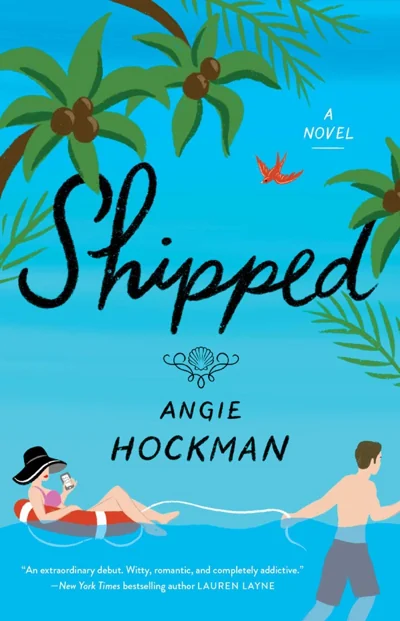
Shipped
Angie Hockman
Journey evidence: Qualified shared-travel comparison; read the transport and scope
Best for: Workplace competitors reconsidering each other while traveling together
Henley and Graeme must take the same company cruise to the Galápagos while developing competing proposals for a promotion. The author also identifies their exploration of the islands together. The work assignment supplies both the reason for the trip and a continuing source of tension as their assumptions about each other change in person.
Try this qualified choice when you want a shared itinerary and unfamiliar surroundings with a lighter mood than a survival escape. Meeting aboard ship turns email antagonism into an immediate relationship, while the career competition gives attraction something concrete to complicate. The travel is a cruise with island excursions, so it belongs among adjacent journey romances rather than books about driving the same road.
Before choosing: Company cruise and shared island exploration, not road trip. Competitive promotion remains central; travel under employer assignment differs from independent vacation.
What establishes the journey and relationship setup?
Angie Hockman — Shipped official premise: Boss sends promotion rivals on company Galápagos cruise; they meet aboard ship and explore islands together while preparing competing proposals. (inspected 2026-10-10). Source: https://www.angiehockman.com/books/shipped/.
Edition buttons become available when the specific format and destination are checked. Amazon opens a title-and-author search; choose your edition there.
Questions that change the reading choice
Does a vacation automatically count as a road trip?
No. Staying at a destination and traveling together are different setups. The comparisons identify when a book offers shared travel without an established road itinerary.
Can historical travel count?
Yes, when a verified shared land journey changes the relationship. Carriage travel offers a different practical experience from a modern car, so the notes preserve the setting.
Are these all light romantic comedies?
No. Grief, illness, hostility, custody and danger can shape the trip. Read the individual assessment rather than treating movement or scenery as a promise of comfort.
Does forced proximity explain trust?
It explains repeated contact. Trust still depends on what the characters learn and how they behave, particularly after an old breakup or conflict.
Are hiking and prisoner escort conventional road trips?
No. They remain qualified comparisons with their own physical demands and freedom-to-leave limits. Choose them for the exact journey described, rather than assuming an easy holiday.
Where should I start for a reunion?
The Road Trip brings exes into a disrupted wedding journey. Its assessment examines the original breakup and the repair; the journey alone cannot settle either.
How these starting choices were researched
We inspected current competing guides and checked shared travel and relationship premises through author and publisher material, retaining identified criticism where additional interpretation is reported. Each note explains what establishes a shared journey and why neighboring travel remains qualified. These additions link existing researched assessments without adding ratings or claiming first-hand reading. The order groups evidence scopes rather than ranking quality; the collection remains incomplete.