Slow-Burn Dark Romance: Delayed Trust, Desire and Series Payoff
Slow-burn dark romance combines a gradual relationship arc with troubling circumstances or behavior. The delay can concern attraction, admission, trust or commitment, and those stages need not happen at the same speed. Readers choosing this combination should ask what is developing during the wait and where the payoff is supposed to arrive.
This starter guide focuses on relationship timing rather than a book’s numerical heat. Captive Prince is an adjacent fantasy example for a series-level discussion, with an explicit warning that the opening volume does not supply a completed romance. It is not relabelled as strict dark romance, and no first-volume happy ending is promised.
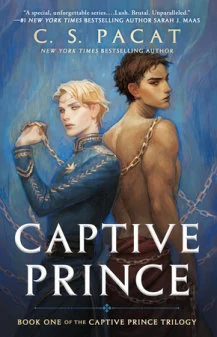
Authentic published cover of one starter selection; not a claim about every book in the guide.
Updated 9 October 2026 · Eikna Editorial Team
Compare the reading choices
Setup
What drives it
What to check
Delayed attraction
Interest itself develops gradually
Whether the opening volume contains romantic movement
Delayed trust
Desire precedes confidence in the relationship
What changes beyond time passing
Series-length development
The arc extends across successive volumes
Reading order and where payoff remains unverified
Narrow the reading experience
Name the part of the relationship that moves slowly
Early awareness of physical appeal can coexist with a long delay in trust. Equally, a book may delay romantic interest itself while building a practical partnership. These are different experiences. If your favorite slow burn involves visible desire and restrained action, a volume focused on political survival may feel more distant than expected. Ask the review what changes, not simply whether the word slow appears.
Check whether delay has meaningful movement
A slow relationship does not need to repeat the same refusal in every chapter. Small changes in knowledge, reliance and interpretation can give the waiting period shape. Readers may enjoy noticing those shifts even when no romantic encounter occurs. The relevant question is whether the story gives you enough development to follow, rather than how many pages separate the leads from a kiss.
Distinguish postponement from romanticizing harm
Time passing does not independently make an unequal or abusive situation safe. If the darker material concerns the central relationship, ask what the delay permits the characters to reconsider or change. A late romantic development may feel earned to one reader and inadequate to another. Keep that disagreement visible; calling the arc slow burn cannot settle the story’s treatment of power or injury.
Decide whether you want a volume or a series
A one-volume slow burn offers a different reading commitment from an arc that extends across a trilogy. The first installment may establish conflict rather than deliver recognizable romantic payoff. Choose the unit that suits you and check reading order before starting. A series-level trope label should not be used to imply that each volume independently supplies the entire relationship experience.
Starting points and their evidence
These are small starter examples, not a completed or ranked recommendation list. Reviewed selections link to existing evidence-based editorial assessments. Other examples are identified as researched premises or pending research leads; they have no new rating or claim of first-hand reading.
Purchases through Amazon, Bookshop.org and Libro.fm links may earn us a commission. As an Amazon Associate, Eikna Romance earns from qualifying purchases, at no extra cost to you.
Captive Prince
C. S. Pacat
Adjacent political fantasy · strict dark-romance classification not established
Renee Sevinsky at The Game of Nerds describes Captive Prince as the beginning of a slow-burn enemies-to-lovers arc while explicitly rejecting a strict dark-romance label. We use that attributed timing claim to explain the commitment involved in a trilogy. The existing reviewed first volume is a boundary example, not a completed romantic payoff.
Before choosing: Captive Prince is the opening volume of a political-fantasy trilogy. Kristen at Metaphors and Moonlight reports no romance in book one, and Renee Sevinsky rejects a strict dark-romance label. Slavery, sexual abuse and violence are material reading considerations. This is an adjacent boundary example, not a completed standalone dark romance; numerical heat and a first-volume romantic ending remain unassigned.
Identified critical source · checked 9 October 2026
Edition buttons become available when the specific format and destination are checked. Amazon opens a title-and-author search; choose your edition there.
Questions that change the reading choice
Does slow burn mean low heat?
No. Slow burn describes timing, while heat describes sexual presentation. A late intimate encounter can be explicit, and a long relationship arc can remain closed-door. Neither frequency nor intensity should be assigned from pacing alone. This guide preserves unknown numerical heat instead of inventing a score.
Why is Captive Prince only an adjacent example?
Renee Sevinsky describes the series as slow-burn enemies to lovers while rejecting a strict dark-romance label. Kristen reports no romance in the first book. We retain both limitations and use the reviewed volume to explain series-level expectation rather than claim it delivers a complete slow-burn dark romance on its own.
How does this page differ from dark enemies to lovers?
The enemies guide asks what creates hostility and what would justify trust. This page asks how the relationship moves through time and what the reader receives within a chosen volume. A story can involve either question without the other, even though the boundary example here helps discuss both.