Barbarian’s Heart Review: Renewed Courtship, Memory Loss and Repetitive Grief
Stacy and Pashov already have a relationship and a child when an accident changes what they know about each other. He survives a coma but cannot remember the time that made them a family. She remembers the partnership they had; he must approach a woman and son whose importance he is told about but cannot recall.
This researched assessment recommends the unusual renewed-courtship problem more strongly than its execution throughout. Critics find mutual yearning and room for empathy, while direct readers question repetitive grief and miscommunication. The decisive choice is whether you want a romance about building a present together when a shared past is available to only one person.
Original thematic artwork; not a published cover or a verified scene.
The verdict
A conditional recommendation for an established couple rebuilding intimacy after memory loss. Emotional stakes are substantial, but repeated distress and withheld feelings can slow the experience. The provisional core assessment leaves ending satisfaction and reread value unscored; a reviewer’s happy-note report does not establish a precise HEA/HFN classification.
★★★★★★★★★★Provisional Eikna score: 3.5/5. Four core dimensions cover 85% of the quality weight. Ending satisfaction and reread appeal remain unscored; heat is excluded. Researched editorial assessment; no firsthand reading claimed. Evidence confidence: moderate.
Spice, ending and series
Is Barbarian’s Heart spicy?
A numeric heat level has not been established. Read the review’s heat and content discussion for attributed descriptions before choosing. An unknown level is not a closed-door or no-spice promise.
The romantic outcome is not established in this summary. A romance label does not independently confirm an ending. Consult the discussion before choosing if closure is essential.
For the difference between romantic commitment and wider plot closure, compare HEA, HFN and cliffhangers.
Can I read it on its own?
Standalone or continuing-series status is not established in this summary. Read the existing format and series guidance for any available context; do not assume a missing series entry means the book stands alone.
The series-order guide explains what to check when a complete romance belongs to a connected world.
Book and edition facts
Identity facts and explicit research limits
Title
Barbarian’s Heart
Author
Ruby Dixon
Inspected edition
Berkley · paperback
Publication scope
2025-01-28
ISBN-13
9780593954768
Print length
288 pages
The author or publisher evidence identifies the work. Publication dates refer to the stated edition or release scope, not automatically the first appearance of the story. Unknown identifiers and formats are left open.
One relationship, two starting points
The official author premise makes the missing two years specific: Pashov does not remember Stacy or their son. That creates an unequal emotional starting point. She is facing the loss of familiar intimacy while he faces expectations built from experiences he cannot access. Readers should expect renewed courtship, rather than simply watching their original attraction unfold. Verified premise.
kiiitasticbooks likes seeing a couple who had already reached happiness begin again. The reader finds this quieter and more romance-focused than the previous installment without calling it a personal favorite. That qualified enjoyment is useful: the different relationship structure may be enough to interest you even if it does not become the most exciting entry in the series. Direct reader response.
The emotional case is mutual yearning
Cheri at All In Good Time values the longing on both sides. The review recognizes that Stacy and Pashov make mistakes, misread each other and hold back to avoid causing pain. Its enthusiasm comes from wanting the pair to succeed despite those errors. That supports our stronger emotional assessment, while leaving the communication problem visible. Independent relationship criticism.
The book is therefore especially suited to readers who find effort within an established relationship compelling. Familiarity has stopped doing its usual work: ordinary gestures need new meaning. As an editorial reading choice, that premise offers more than reunion alone, because love must make room for the person who is present rather than depend entirely on someone being exactly as remembered. Relationship setup.
When distress becomes repetition
Maria Rose finds the amnesia premise effective and the viewpoints empathetic but tires of Stacy’s frequent tears. turkeedurkee23 similarly finds the emotional movement repetitive, with miscommunication producing frustration rather than a satisfying ache. These responses identify the same potential weakness from different positions: substantial feeling does not always create enough narrative change. Specialist criticism; Direct pacing response.
This limitation matters if you need each difficult conversation to alter the relationship. A story can plausibly return to grief without making those returns equally useful to the reader. Our writing judgment remains mixed because the sources support a strong emotional situation more clearly than they support consistently varied handling of it. Choose for the problem, with patience for its repetitions. Frustration within a positive response.
Memory, agency and body image
sarahhbeth_reads objects to Stacy treating the missing memories as something Pashov needs to fix and finds her signals inconsistent. The reader also rejects weight shame that seems to depend on male reassurance for resolution. We treat these as attributed interpretations, not a diagnosis of either character. They are meaningful limits for readers seeking disability or body-image sensitivity. Contrasting reader criticism.
All About Romance finds renewed honesty useful to the couple, while kiiitasticbooks responds affectionately to a separate courtship episode framed as kidnapping. That episode should not be rewritten as a blanket guarantee of consent because a reader found it amusing. The assessment supports a hopeful relational reading, with boundaries left explicit where a full scene-level audit is unavailable. Courtship response and its limits.
Choose it for rebuilding an established family bond and the tension between remembered intimacy and present choice. Consider another book if repeated grief or prolonged miscommunication makes you disengage, if you want a new couple’s origin on the page, or if body-image shame and memory-loss framing are decisive boundaries. It is a quieter emotional route through this continuing world.
What the contrasting responses mean
The named reviews and directly inspected reader posts above are selected testimony, not a representative survey. Agreement on a premise does not establish agreement on its execution. Our recommendation follows the specific strengths and limitations discussed, rather than averaging other people’s stars.
Format, series and purchase guidance
Ice Planet Barbarians: full-length book 9 in Berkley’s sequence; the author catalogue calls it book 10, counting Ice Planet Holiday. Edition facts here describe the special paperback, not original publication. Publication order gives fuller community context.
A direct US product edition has not been verified. The Amazon link is a title-and-author search, with no specific format or availability promised. A verified Bookshop or Libro edition link is not yet available for this review.
Quality scale: 1 substantial weaknesses; 2 weaknesses outweigh strengths; 3 mixed; 4 strengths outweigh limitations; 5 exceptional sustained strengths. Half points are allowed. Weights: romance 30%, characters 20%, writing 20%, emotional impact 15%, ending satisfaction 10%, reread appeal 5%. A provisional overall score divides the supported weighted sum by its supported weight and rounds once to one decimal. Heat is descriptive and excluded. These scores express the evidence-based judgment explained in this review.
No. Stacy and Pashov are already partners and parents. The current premise involves him losing the memories of that relationship.
Can I start here without earlier books?
It follows a major event in Taming, and All About Romance warns that its own review spoils that previous installment. Publication order gives the clearest community context. Standalone suitability is not fully verified.
Does it have a happy ending?
Maria Rose reports a happy note for the couple and clan. That supports hopeful resolution, but the research does not securely distinguish HEA from HFN, and ending satisfaction remains unscored.
Is the emotional tone universally successful?
No. Cheri finds mutual yearning powerful; selected direct readers find repetition and miscommunication wearing. The recommendation depends on tolerance for that pattern.
The Heart Principle similarly makes emotional difficulty and relationship care inseparable from larger personal pressures. Its contemporary family conflict differs from an already-mated couple coping with amnesia.
The Flatshare is useful for comparing communication as the mechanism of trust. Its developing relationship and shared domestic space differ from Stacy remembering a life Pashov cannot recall.
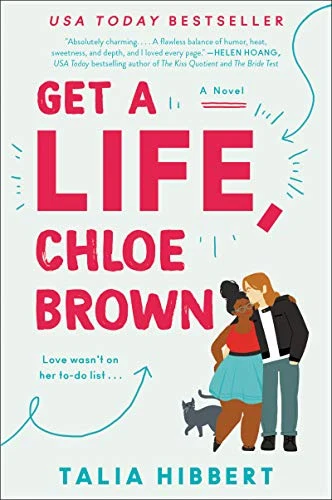
Get a Life, Chloe Brown offers a different approach to bodily vulnerability, agency and a supportive relationship. Its heroine’s chosen life changes differ from a family disrupted by sudden memory loss.
Follow the discovery route
The science-fiction romance collection includes this book among other choices. Compare those options if its premise appeals but a limitation gives you pause. The romance discovery guide explains the surrounding reading route and what to check before choosing.
Final recommendation
A conditional recommendation for an established couple rebuilding intimacy after memory loss. Emotional stakes are substantial, but repeated distress and withheld feelings can slow the experience. The provisional core assessment leaves ending satisfaction and reread value unscored; a reviewer’s happy-note report does not establish a precise HEA/HFN classification. Choose it for rebuilding an established family bond and the tension between remembered intimacy and present choice. Consider another book if repeated grief or prolonged miscommunication makes you disengage, if you want a new couple’s origin on the page, or if body-image shame and memory-loss framing are decisive boundaries. It is a quieter emotional route through this continuing world.
Penguin Random House. Inspected for this assessment; source URLs and lineage are retained in the local evidence record.
Ruby Dixon. Inspected for this assessment; source URLs and lineage are retained in the local evidence record.
All About Romance, Maria Rose. Inspected for this assessment; source URLs and lineage are retained in the local evidence record.
All In Good Time, Cheri. Inspected for this assessment; source URLs and lineage are retained in the local evidence record.
StoryGraph, kiiitasticbooks. Inspected for this assessment; source URLs and lineage are retained in the local evidence record.
StoryGraph, sarahhbeth_reads. Inspected for this assessment; source URLs and lineage are retained in the local evidence record.
StoryGraph, turkeedurkee23 and other named readers. Inspected for this assessment; source URLs and lineage are retained in the local evidence record.
Checked October 5, 2026. The How this assessment was researched preserves attributions and research limits. Unknown details do not establish absence. Purchasing links use our account.
As an Amazon Associate, Eikna Romance earns from qualifying purchases, at no extra cost to you.
Explore the surrounding relationship choice
The Amnesia Romance: Forgotten History, Present-Day Choices guide compares the different circumstances behind this reading route. It compares remembered relationships with unknown pasts and explains why present choices and series context matter.
Compare missing memories and romantic trust
The amnesia romance reading collection explains the missing-memory evidence and relationship context for this choice and compares it with other reviewed books.