How to End a Love Story by Yulin Kuang Review
Eikna Score: 7.5/10. Recommended.
How to End a Love Story is a bold debut: a romance between two people bound together by the worst night of their lives, set in a Hollywood writers' room that Yulin Kuang clearly knows from the inside. The grief and the career detail are excellent; the leap from guilt to intimacy comes fast, and the ending divides readers.
Read it if you want an emotionally heavy, adult romance about grief, family blame and creative work, with real heat and dual points of view. Skip it if suicide bereavement is a hard topic for you right now, or you need the romance to grow through long, careful conversation.
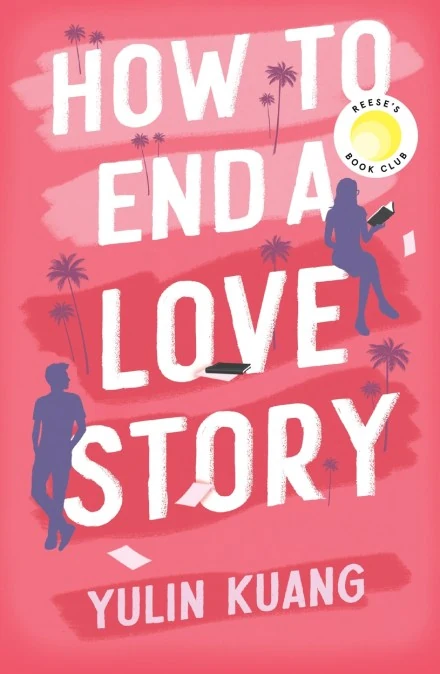
How to End a Love Story at a Glance
How to End a Love Story is a standalone contemporary romance and the debut novel of Yulin Kuang, published by Avon on April 9, 2024. Novelist Helen Zhang and screenwriter Grant Shepard alternate points of view as they work on a TV adaptation of her books. It has moderate open-door heat and a happily ever after.
| Author | Yulin Kuang |
|---|---|
| Series | Standalone |
| Subgenre | Contemporary romance |
| Main tropes | Writers' room workplace romance, shared tragic past, forbidden attraction, Hollywood setting, family guilt |
| Spice level | 3/5: Moderate, some open door |
| Content warnings | Suicide bereavement, death of a sibling, panic attacks, car accident (full list below) |
| POV | Dual point of view, Helen and Grant |
| Ending | HEA |
| Pages | 384 (Avon trade paperback) |
| Audiobook | Narrated by Katharine Chin and Andrew Eiden, about 11 hours (HarperAudio) |
| First published | April 9, 2024 (Avon in the US; Hodder & Stoughton in the UK) |
| Publisher | Avon, an imprint of HarperCollins |
What Is How to End a Love Story About?
Helen Zhang is a bestselling young adult novelist, anxious, private and still living in the shadow of her sister's death thirteen years ago. Her parents have never stopped grieving, and Helen has never stopped trying to be the daughter who makes up for it.
When her books are adapted for television, Helen joins the writers' room in Los Angeles. One of the other writers is Grant Shepard, the man whose car was involved in the accident that killed her sister. He has built a career and a charming public self on top of his own guilt. The two have to work together every day, and what starts as avoidance turns into something neither of them can justify to anyone, least of all Helen's family.
What Makes This Writers' Room Romance Work
How to End a Love Story works because its obstacle is not a misunderstanding. Helen and Grant share a real, unchangeable tragedy, and any love between them has to survive her parents' grief and their own. Kirkus noted how present the absent sister is throughout, and that sense of a third person in every scene gives the romance its weight.
The workplace is the other hook. Kuang is a screenwriter and director, and the writers' room scenes, with their pitches, politics and long days, have an authenticity that most Hollywood romances fake. Publishers Weekly praised the way Helen comes to see Grant's competence and care for his coworkers, and Kaley at Books Etc. praised the career detail.
Reviewers outside the trade press were also warm: BookPage gave it a starred review, calling it mature and compelling, and Booklist starred it for witty banter and electric chemistry. For readers who like forbidden love where the forbidding comes from grief, this is unusual and strong.
My Review
How to End a Love Story is the kind of debut that makes you look forward to the second book. It is ambitious, emotionally honest and specific about a working world, and it is willing to put two people in a situation with no tidy answer. Not everything lands, but the things that do land hard.
The best of it is about grief in a family that cannot talk. Helen's parents, the silence around her sister and the way guilt has shaped both leads' adult lives are written with real care, and Kuang's author's note makes clear how seriously she takes the subject. The weaker part is the romance's pacing, which several thoughtful reviewers questioned and which I questioned too.
Romance and Chemistry
Helen and Grant have strong, uneasy chemistry, and the book gets a lot from the friction between his easy charm and her guardedness. Jen at MMB Book Blog found Grant sympathetic and the blame directed at him unfair, and enjoyed their dialogue. The banter in the writers' room is quick and often funny, which keeps the heaviness from becoming oppressive.
The problem is the turn to intimacy. Dabney Grinnan at All About Romance was strongly negative, finding too little substantial conversation to support the move into a sexual relationship, and Denise at Life With No Plot thought the shift from distance to intimacy too abrupt. On r/RomanceBooks, sneakybrownnoser felt the chemistry lacked real conversation about the loss, while Kitten-teeth praised how the feeling is shown. I sit closer to the critics. The attraction is real, but the book skips some of the talking that would make it feel earned.
The Characters
Helen is a frustrating and very real heroine: anxious, self-punishing, prone to panic attacks and loyal to parents who lean on her grief. Elna at Confessions of a Serial Reader noted that the shared past sometimes makes the relationship uncomfortable, and that discomfort is part of Helen's arc rather than a flaw in it.
Grant is the more sympathetic of the two, a man who has made himself easy to like because he cannot stand himself. His family, and especially Helen's, matter, and the Booksmart hosts on the Missing Perspectives podcast valued the career and family complexity. The supporting writers in the room are a lively, varied group.
Writing and Pacing
Kuang writes with a screenwriter's ear: tight scenes, sharp dialogue and well-placed cuts between Helen and Grant. The first half moves well, and the writers' room gives it shape. Kaley at Books Etc. praised the career detail, and the Hollywood material is the most convincing I have read in a romance in some time.
The final act is where opinions part. Tree at Words About Words wanted more development during the final repair, and both Booksmart hosts objected to how the ending is executed. Kaley reported a satisfying happily ever after. I found the resolution moving but hurried: the book spends a long time on the wound and less on the healing.
How to End a Love Story is a brave, grown-up debut about grief, guilt and creative work, with a romance that moves into intimacy faster than its conversations justify. Read it if you want weight and heat and can handle suicide bereavement on the page.
How Spicy Is How to End a Love Story?
How to End a Love Story is a 3 out of 5 on our scale: Moderate, some open door. There are a few open-door, consensual sex scenes once Helen and Grant act on their attraction, frank and emotionally charged. Kate Clayborn called the book heart-flutteringly sexy, and All About Romance discussed the sexual relationship directly.
The heat sits inside a very heavy story, and the sex is often tangled with grief. For more in this range, see our spicy romance list.
Content warnings, drawn from Yulin Kuang's author's note and reader reviews:
- Suicide bereavement and the death of a sibling, central to the plot
- Grief, family blame and guilt
- Panic attacks
- A car accident
- On-page sexual content
Our content warnings guide explains how we compile these lists, and our romance heat levels guide explains the scale.
Who Should Read How to End a Love Story?
How to End a Love Story suits readers who want an emotionally serious, adult contemporary romance about grief and guilt, with sharp workplace detail and moderate heat. It suits readers less well if they want a light rom com or a slow, conversation-led path to intimacy.
Best for:
- Readers who like heavy, grief-centered romance
- Fans of Hollywood and writers' room settings
- Anyone who wants dual points of view
- Readers who enjoyed Emily Henry's more serious books
Not for:
- Readers avoiding suicide or sibling death
- Anyone who wants a light, funny rom com
- Readers who need a slow, well-talked-through build to sex
- Those who want a long, careful final reconciliation
What Readers and Critics Are Saying
How to End a Love Story arrived with heavy buzz, partly because Yulin Kuang was already known for adapting Emily Henry's novels for film, and Emily Henry, Tessa Bailey and Carley Fortune all blurbed it. Trade reviews were strong, with starred reviews from BookPage and Booklist and positive notices from Publishers Weekly and Kirkus.
Where they agree. Grief and craft. Publishers Weekly praised Grant's competence and care, Kirkus found the absent sister emotionally consequential, BookPage called it mature and compelling, and Kaley at Books Etc. praised the career detail and reported a happy ending. Jen at MMB Book Blog enjoyed the dialogue and Grant.
Where they split. The road to intimacy and the ending. Dabney Grinnan at All About Romance was strongly negative about the lack of substantial conversation before sex, Denise at Life With No Plot found the shift too abrupt, and Elna at Confessions of a Serial Reader found the shared past uncomfortable at times. Tree at Words About Words wanted more from the final repair, and both Booksmart hosts disliked how the ending is handled.
The Eikna Evidence Scorecard
How to End a Love Story scores 7.5 out of 10 on the Eikna Evidence Scorecard, with its top mark for emotional impact and strong marks for characters and writing, and its lowest for the ending, which reviewers found hurried.
| Dimension | Score (/5) | Why |
|---|---|---|
| Romance (20%) | 3.5 | Charged chemistry; All About Romance and Life With No Plot find the move to intimacy too fast. |
| Characters (15%) | 4 | Complicated, believable leads; MMB Book Blog finds Grant deeply sympathetic. |
| Writing and pacing (15%) | 4 | Sharp dialogue and writers' room detail praised by Books Etc. and BookPage. |
| Emotional impact (15%) | 4.5 | Kirkus finds the absent sister emotionally consequential; the grief lands hard. |
| Heat level (10%) | 3.5 | Moderate, emotionally charged heat that matches the story. |
| Ending satisfaction (15%) | 3 | A HEA per Books Etc., but Words About Words and Booksmart find the repair rushed. |
| Reread appeal (10%) | 3.5 | The writers' room and family scenes reward a second read. |
The Eikna Overall Ranking: How to End a Love Story is one of the stronger romance debuts of 2024, heavier and more ambitious than most of its peers, and it earns a final Eikna Score of 7.5/10.
Is How to End a Love Story a Standalone?
Yes. How to End a Love Story is a standalone novel and Yulin Kuang's debut, with no series or required earlier book. Start here.
Best format: the HarperAudio edition uses two narrators, Katharine Chin for Helen and Andrew Eiden for Grant, and runs about 11 hours. Dual narration suits a book that alternates so closely between the two. Print may be easier if you want to pace the heavier chapters yourself. For connected romance series, see our series order guide.
If You Loved How to End a Love Story, Read These Next
If you loved How to End a Love Story, look for adult romances where writers, grief and a painful shared history drive the story.
- Beach Read by Emily Henry: two writers, grief and a summer bet, from the author Kuang has adapted.
- Seven Days in June by Tia Williams: two novelists with a painful shared past meet again in New York.
- The Rom-Commers by Katherine Center: a screenwriting partnership in Hollywood that turns romantic.
- Love and Other Words by Christina Lauren: grief, a long separation and a love that will not stay buried.
- Happy Place by Emily Henry: exes, old friends and a painful secret kept over one week.
Frequently Asked Questions
How to End a Love Story raises a few common questions: how spicy it is, what the content warnings are, whether it has a happy ending and who narrates the audiobook. Short answers below.
Is How to End a Love Story spicy?
Yes, moderately. How to End a Love Story is a 3 out of 5 on our scale, with a few open-door, consensual scenes.
What are the content warnings for How to End a Love Story?
The central ones are suicide bereavement and the death of a sibling, plus grief, family blame, panic attacks and a car accident.
Does How to End a Love Story have a happy ending?
Yes. How to End a Love Story ends with a happily ever after for Helen and Grant, though some readers found the final reconciliation rushed.
Is How to End a Love Story a standalone?
Yes. How to End a Love Story is a standalone novel and Yulin Kuang's debut.
Who narrates the How to End a Love Story audiobook?
Katharine Chin and Andrew Eiden narrate the HarperAudio edition, which runs about 11 hours.
Is How to End a Love Story told from both points of view?
Yes. The novel alternates between Helen and Grant.
The Bottom Line
How to End a Love Story earns a 7.5/10 and a Recommended badge. It is for readers who want a serious, adult romance about grief and guilt, set in a convincing Hollywood writers' room, and who can accept a fast turn to intimacy and a hurried ending. The one reason to pick it up is its honesty about a family that cannot stop grieving, rare in the genre and handled with care.
Buy on Amazon Buy at Bookshop.org Listen on Audible Listen on Libro.fm
Some links on this page are affiliate links: Eikna Romance may earn a small commission at no extra cost to you.
Sources
- How to End a Love Story audiobook, Libro.fm (narrators, length, description)
- How to End a Love Story audiobook, Blackstone Library (BookPage and Booklist reviews, author blurbs)
- Publishers Weekly and Kirkus Reviews reviews of How to End a Love Story
- Dabney Grinnan, All About Romance
- Jen, MMB Book Blog; Denise, Life With No Plot; Kaley, Books Etc.; Tree, Words About Words; Elna, Confessions of a Serial Reader (blog reviews)
- Booksmart hosts, Missing Perspectives podcast
- Kitten-teeth and sneakybrownnoser, r/RomanceBooks reader discussion
How we review: every Eikna score is built from a seven-part evidence scorecard. Read our methodology.