Paperback edition
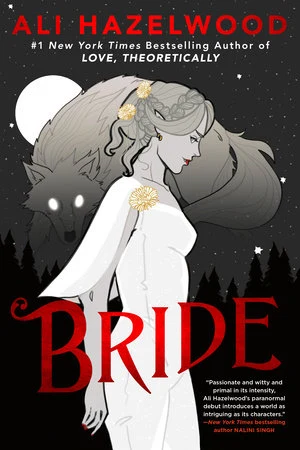
Bride · Ali Hazelwood
ISBN 9780593550403
View publisher edition details
Current publisher artwork may differ from earlier printings.
Our verdict
Bride is a promising fit if you want a marriage-of-convenience romance built around mistrust, reluctant belonging and a devoted supernatural hero. The strongest reason to try it is Misery: her dry humour and loyalty give the political setup a personal stake. Go in for the relationship rather than a promise of extensive fantasy lore. Check the knotting, biting and marking content first if unfamiliar anatomy or possessive mate dynamics affect your reading choices.
Best for: readers drawn to arranged marriages, fated mates and a heroine who has learned to protect herself by expecting little from other people. Consider another book first: if explicit supernatural sex is a firm boundary, or sustained personal hostility between the leads is your main attraction.
Spice, ending and series
Is Bride spicy?
A numeric heat level has not been established. Read the review’s content discussion for attributed descriptions before choosing. An unknown level is not a closed-door or no-spice promise.
The heat-level guide explains detail and frequency; the glossary entry for spice separates sexual content from quality.
Does it have a happy ending?
The romantic outcome is not established in this summary. A romance label does not independently confirm an ending. Consult the discussion before choosing if closure is essential.
For the difference between romantic commitment and wider plot closure, compare HEA, HFN and cliffhangers.
Can I read it on its own?
Standalone or continuing-series status is not established in this summary. Read the existing format and series guidance for any available context; do not assume a missing series entry means the book stands alone.
The series-order guide explains what to check when a complete romance belongs to a connected world.
Where to buy Bride
As an Amazon Associate, Eikna Romance earns from qualifying purchases.
Selected print listing: ISBN 9780593550403. Check the selected format and delivery territory before ordering.
What is Bride about?
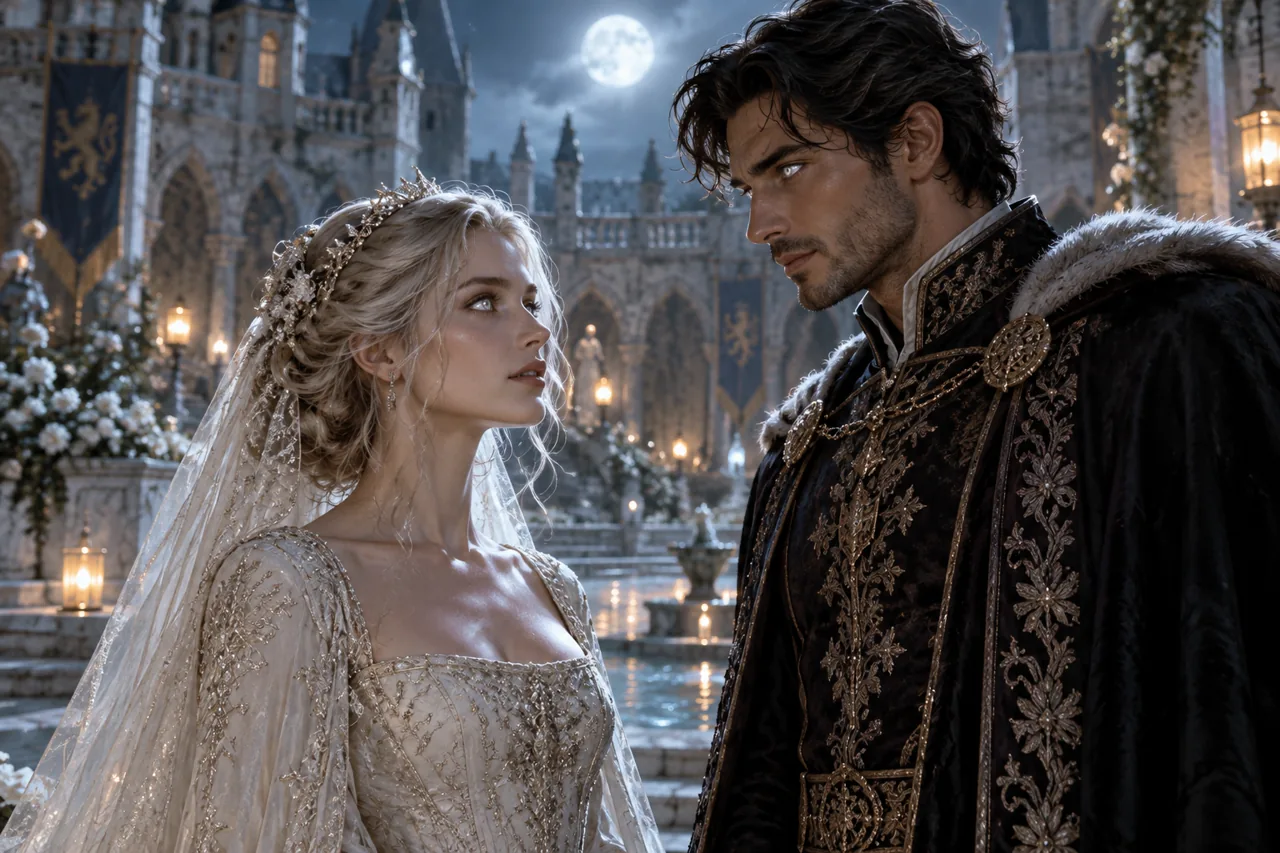
Misery belongs to a powerful Vampyre family but has spent part of her life among humans as collateral for a political agreement. A new truce requires her to marry Lowe Moreland, a Were Alpha. She accepts with her own purpose: the disappearance of her best friend has led her toward Were territory. Those circumstances make domestic closeness difficult to separate from suspicion. Kirkus’s review supports that premise and identifies the developing romance as a slow burn.
That search is worth paying attention to when deciding whether the book suits you. Misery is not simply waiting for her husband to explain himself. She has a loyalty outside the marriage and a reason to investigate the place she has entered. Angela’s Smexy Books review singles out the missing-friend plot as a reason she kept reading.
The romance: trust across an arranged marriage
The attraction has more than proximity working for it. Misery’s history makes trust costly; Lowe’s position makes his behaviour hard to read as purely personal. In the American Booksellers Association interview, Hazelwood describes a loving, self-sacrificing hero struggling with a mate from another species. She also explains how Lowe’s sister Ana helped her develop Misery’s guarded but tender side.
Our interpretation is that the emotional appeal lies in becoming welcome somewhere, as well as becoming wanted by someone. A reader looking for warmth beneath guarded behaviour has a clear reason to consider this story. A reader who dislikes a hero deciding what is best for the heroine should examine that same self-sacrificing dynamic carefully: intention and agency are different questions.
Is it really enemies to lovers?
The political opposition is supported. How intensely the leads themselves behave as enemies is disputed. Smexy Books classifies the romance as enemies to lovers; the supplied Goodreads worksheet records three readers challenging that label. We could audit those worksheet rows, but could not independently retrieve their full review texts.
For our shelves, marriage of convenience across enemy factions is the clearest supported description. We are withholding a definitive personal-enmity grade. That distinction helps you choose: rival species create danger around a relationship, while active hostility between the lovers creates a different kind of romantic tension.
Does the worldbuilding hold up?
The checked reviews disagree. Angela at Smexy Books finds the worldbuilding complex and the plot threads compatible with the romance; her grade is B+. The Library Mouse’s Book Nook also enjoys the politics and lore, while describing the book as an accessible introduction to vampire–werewolf romance. Bloom Reviews likes the story but wants a fuller account of the divided world and its politics.
Hazelwood’s interview supplies useful context: she aimed to build enough of the world to ground the love story and its trust problems. Our reader-fit conclusion is conditional. If the politics need to support a romance, that approach may suit you. If understanding the societies is a main pleasure in itself, the criticism about limited development deserves more weight. Neither expectation makes the opposing response invalid.
How spicy is Bride?
It contains explicit, open-door sexual scenes. Smexy Books confirms that description, and Bloom Reviews identifies knotting, scent-related mate attraction, biting and marking. Hazelwood’s ABA interview independently confirms the inclusion of knotting scenes. We are not assigning a numerical heat score or claiming a verified romance.io band.
Knotting refers here to a fictional anatomical element in the werewolf sexual scenes. It is useful advance information even if you enjoy other explicit romances: familiar heat preferences do not automatically predict your comfort with supernatural anatomy. Some checked commentary welcomes the paranormal elements; other supplied reader notes criticise them.
Content information and its limits
The supported premise includes childhood used as political collateral, a missing loved one and danger between hostile communities. The sexual elements above are supported by identified sources. This is a selective content note, not a complete warning inventory. We cannot certify the absence of consent concerns, violence or other sensitive material from a limited source review.
Author content notes — includes plot spoilers
Hazelwood’s published notes flag references to deaths in interspecies warfare and blood; kidnapping; violence she describes as mild; poisoning and attempted murder; an attempted attack or kidnapping involving a child, who she says remains unharmed; parental deaths occurring off page; graphic sex, knotting and strong language.
This is the author’s reported list. We have checked the list itself, rather than independently assessed every scene or established a complete warning inventory.
Relationship-structure spoiler: is there a third-act breakup?
Angela’s Smexy Books review reports a third-act breakup and describes its resolution as brief. Readers who avoid that structure should treat it as a relevant warning. Detailed ending events and a separate cliffhanger assessment remain pending; we have not added an invented firsthand spoiler summary.
Where reader responses differ
The most useful disagreement concerns expectations. The Library Mouse enjoys the accessible supernatural world; Bloom Reviews wants more political development. A romance-first reader and a worldbuilding-first reader can therefore respond differently to the same approach.
Our supplied Goodreads worksheet points to further questions about the late conflict and sexual content, but its underlying review texts have not all been independently rechecked. We do not use it to claim a consensus or a percentage of all readers.
Publication, formats and what to read next
| Detail | What we can support |
|---|---|
| Author | Ali Hazelwood |
| US publication | Berkley, 6 February 2024 |
| US paperback | ISBN 9780593550403; 416 pages in the linked publisher paperback listing. |
| Primary discovery description | Paranormal romance; marriage of convenience; fated mates. Personal enemy intensity disputed. |
| Audio | The publisher’s format overview lists a 12-hour-48-minute download and credits Thérèse Plummer and Will Damron. The audio purchase destination remains unconfirmed. Publisher format overview Find this book on Amazon. |
| Review method | Evidence synthesis by Eikna Editorial Team; evidence synthesis; no firsthand read. Numerical overall score pending. |
The publisher lists Mate, published 7 October 2025, as a companion novel following Serena Paris and Koen Alexander. It follows a different central couple. That does not, by itself, prove every ending or standalone detail about Bride; those questions stay separate.
For further discovery, compare this with our researched review of The Love Hypothesis if Hazelwood’s devoted-hero dynamic is the appeal. Use the enemies-versus-rivals guide if you came for opposition, or the subgenre guide if you want to compare paranormal romance with other settings.
Professional reviews and reader discussions: what agrees?
| Source inspected | What it contributes | How we use it |
|---|---|---|
| Publishers Weekly Find this book on Amazon | Positive: humour and the developing supernatural romance. | A professional review supports the romantic appeal; it does not establish universal reader satisfaction. |
| Reddit: critical discussion Find this book on Amazon | The original poster finds the development superficial; replies include enjoyment of a lighter, entertaining read. | Depth expectations explain a meaningful split. The thread is criticism-led and is not a representative sample. |
| Reddit: enthusiastic discussion Find this book on Amazon | Readers praise Misery, banter and memorable scenes; some replies dislike the prose. | Enjoyment of the heroine and style is substantial for these readers, while the dissent prevents a universal claim. |
| Goodreads: named reader counterexample Find this book on Amazon | The displayed review by aleksandra enjoys the devoted hero but objects to his late decision for Misery. | A favourable book verdict can coexist with criticism of the ending conflict. We do not recode it as wholly negative. |
The added sources strengthen the case for a romance-first recommendation. Professional praise and the enthusiastic discussion both support humour and attraction; the critical discussion gives more weight to thin development and predictable plotting. Our conclusion is therefore narrower than “good fantasy”: try it for Misery and the relationship, and be cautious if detailed supernatural societies are your main pleasure.
These sources were inspected on 3 October 2026. Discussions were selected to include different responses, not randomly sampled. We do not count upvotes as readers, treat comments in one thread as fully independent, or turn the balance of these selected posts into a satisfaction percentage. Film discussion and automated recommendation bots are excluded from the book assessment.
The Eikna Evidence Scorecard
Provisional Eikna score: 3.8/5. Based on romance, characters, writing, emotional impact (85% of the full weighting), normalized over those supported dimensions. Ending satisfaction, re-read appeal remain unscored. Evidence confidence: Moderate. This researched editorial judgment may change when those gaps are assessed.
Romance
4/5 · Strength, with a caveat
- Kirkus praises the slow build between Misery and Lowe.
- The political marriage gives the relationship a practical beginning.
- Trust and belonging are the main emotional reading route.
- Enemy factions do not prove sustained hostility between the lovers.
Trade praise for the slow build is supported by enthusiastic reader discussion; thin-development criticism limits the verdict.
Characters
4/5 · Strength
- The Library Mouse highlights Misery’s dry humour.
- Her missing friend gives her a purpose beyond the marriage.
- The author interview explains Lowe’s self-sacrificing devotion.
- Readers who dislike protective decision-making should examine its effect on Misery’s agency.
Independent praise for Misery’s humour and purpose outweighs reservations about Lowe’s protective decisions.
Writing
3.5/5 · Mixed
- Checked reviews respond positively to the humour.
- The Library Mouse enjoys the politics and lore.
- Bloom Reviews wants fuller political development.
- The world is a stronger fit when you want it to support the romance rather than dominate it.
Humour and accessibility are strengths, balanced against thin political development and predictable plotting.
Emotional impact
3.5/5 · Promising; response-dependent
- Misery enters a community that has reason to distrust her.
- Her loyalty to her friend adds a non-romantic stake.
- The author interview connects her guardedness with tenderness.
- These observations explain an emotional route, not a guaranteed reader response.
Belonging and devotion offer a supported emotional route; critical readers find the relationship less earned.
Heat level
Explicit; not a quality score
- Open-door scenes are reported by checked reviewers.
- The author’s notes identify knotting.
- Biting and marking appear in the checked critical discussion.
- No numerical Eikna heat assessment has been completed.
Ending satisfaction
Unscored
- Smexy Books reports a third-act breakup.
- That reviewer describes the resolution as brief.
- The companion Mate follows a different couple.
- Detailed payoff and cliffhanger assessments remain unresolved.
Re-read appeal
Unscored
- Misery’s humour gives a possible return-reading route.
- The central relationship is the focus of Kirkus’s praise.
- We have no documented Eikna re-read assessment.
- Audio availability is recorded as a format fact, not a quality deduction.
Heat is descriptive and excluded from the quality score. Our rubric and provisional-score method.
What to read next
Choose the part of this story you want to carry into another book. These two routes use the books’ premises to suggest a connection; they do not promise the same heat, ending or reading experience.
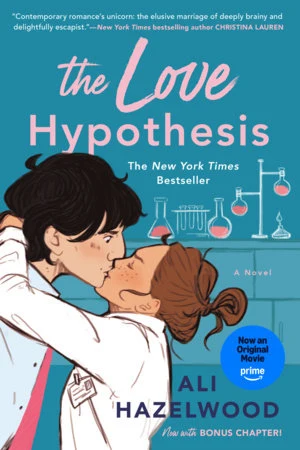
The Love Hypothesis
Ali Hazelwood
Stay with Hazelwood, leave the supernatural world
Both premises give the central pair an arrangement with a practical purpose.
A political marriage becomes fake dating between scientists. The author connection is direct; the institutions, stakes and relationship bargain change. Read the academic-power discussion before choosing this as your next route.
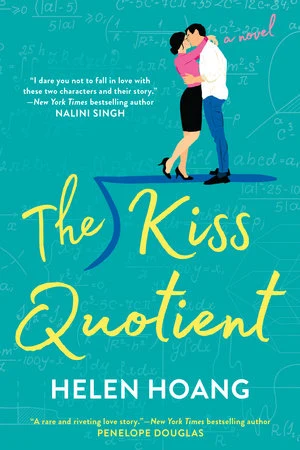
The Kiss Quotient
Helen Hoang
Try a contemporary relationship bargain
Both premises bring two people together through an arrangement rather than an ordinary date.
Stella pays Michael for intimacy lessons; Misery enters a political marriage to Lowe. Choose this if the bargain interests you more than the species conflict. Contemporary intimacy coaching is a substantial shift from supernatural politics.
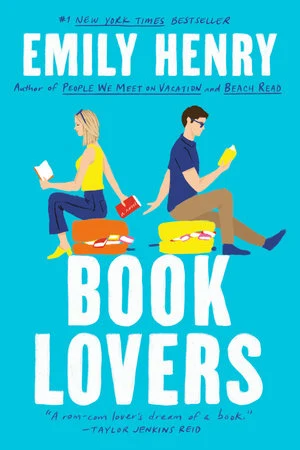
Book Lovers
Emily Henry
Change political marriage to publishing-world compatibility, with family obligations still in view.
How we made these connections
These are editorial comparisons of publisher-supported premises, not a reader-similarity score or a claim that we have read each novel. The underlying descriptions are available from the publisher of this book and the publisher links in the linked assessments. Book-specific cautions remain in each assessment.
Find this book in our reading routes
Fantasy and paranormal guide compares invented worlds and supernatural communities through the relationships inside them. It explains the individual setups rather than treating magic as a complete description of the romance.
Romance discovery guide helps you start with the relationship, setting or reading experience you want, then narrow that choice to a collection.
Questions before you choose
Is Bride a fantasy romance or a paranormal romance?
Its central couple are a Vampyre and a Werewolf in a contemporary supernatural setting. Paranormal romance is the most useful starting shelf; our fantasy and paranormal hub explains the surrounding choices.
Is Bride genuinely enemies to lovers?
The species are politically opposed. Whether Misery and Lowe themselves sustain an enemies dynamic is disputed, so we use marriage of convenience across enemy factions as the more precise description.
Should I read Bride before Mate?
Mate is a companion about a different central couple. Its existence does not by itself establish that Bride has no cliffhanger. See the format and reading-order discussion before treating either claim as settled.
View Bride on Amazon US · Keep exploring the reading list
Explore the surrounding reading choice
Enemies-to-Lovers Paranormal Romance: Enemy Communities and Personal Trust compares the surrounding relationship dynamics and explains the evidence limits for this selection.
Explore the surrounding reading choice
Paranormal Fated Mates: Supernatural Bonds, Earned Trust and Personal Choice compares the surrounding relationship dynamics and explains the evidence limits for this selection.
Explore the surrounding reading choice
Paranormal Forbidden Love: Divided Loyalties, Political Marriages and Personal Choice compares the surrounding relationship dynamics and explains the evidence limits for this selection.
Explore the surrounding reading choice
Paranormal Arranged Marriage: Political Duty, Private Motives and Earned Trust compares the surrounding relationship dynamics and explains the evidence limits for this selection.
Explore the surrounding reading choice
Paranormal Forced Proximity: Shared Territory, Limited Privacy and Growing Trust compares the surrounding relationship dynamics and explains the evidence limits for this selection.
Explore the surrounding reading choice
Paranormal Marriage of Convenience: Public Alliances and Private Reasons compares the surrounding relationship dynamics and explains the evidence limits for this selection.
Explore the surrounding reading choice
One Bed Paranormal Romance: Boundaries, Trust and Otherworldly Proximity compares the surrounding relationship dynamics and explains the evidence limits for this selection.
Compare the marriage bargain
Explore the marriage-of-convenience and political-marriage collection to compare this relationship’s starting agreement with other reviewed choices. The guide distinguishes practical negotiation from externally arranged or imposed unions.
Compare who arranges the match
The arranged-marriage reading collection explains the arrangement and its limits for this choice and compares it with other reviewed books.
Compare mate connections and choice
The fated-mates romance reading collection explains the bond evidence and relationship context for this choice and compares it with other reviewed books.