Paranormal Forced Proximity: Shared Territory, Limited Privacy and Growing Trust
Paranormal forced proximity gives two people a practical reason to keep encountering each other when avoiding the relationship would be easier. Shared territory, an assignment, shelter or a supernatural restriction can create that pressure. Choose by what keeps them close and what the repeated contact reveals. Being attracted to someone through a mate bond is a different idea from having to share space with them.
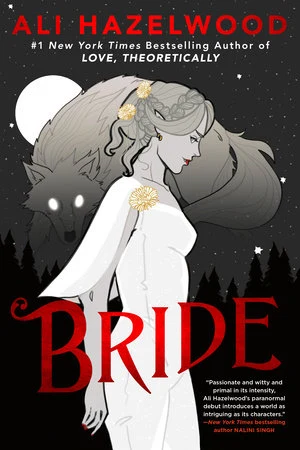
Bride is the current existing reviewed example. Ali Hazelwood’s official premise places Misery in Were territory through a political marriage with Lowe. This guide interprets that arrangement as imposed proximity; the author premise does not explicitly use the trope label or establish literal confinement. The focus here is on familiarity, privacy and trust, rather than on who arranges the wedding. One starter does not complete the wider paranormal collection.
Authentic published cover of one starter selection; not a claim about every book in the guide.
Updated 9 October 2026 · Eikna Editorial Team
What keeps the partners encountering each other?
Setup
What drives it
What to check
Shared territory
An obligation places someone inside an unfamiliar community.
How much contact the particular setup actually requires.
A common assignment
Work or a mission repeatedly brings the pair together.
Circumstances make separation difficult or dangerous.
Whose decisions govern access and freedom.
A supernatural restriction
A specific world rule limits distance or movement.
Evidence of that rule rather than a mate label alone.
Narrow the reading experience
Distinguish repeated contact from captivity
Forced proximity covers a range of constraints. Sharing a household for practical reasons creates a different experience from being physically unable to leave, and neither should be assumed from a marriage alone. Bride’s premise establishes entry into Lowe’s territory under an alliance. Its use here is a transparent editorial interpretation of the setup, not a new claim that Misery is locked up. Readers seeking literal confinement should check for direct evidence rather than treating any inconvenient living arrangement as captivity.
Decide what you want familiarity to reveal
Repeated contact can expose habits, priorities and small acts of reliability that a distant courtship would miss. It can also make misunderstandings harder to avoid. Ask whether you want awkward domestic adjustment, practical cooperation or a tense environment where privacy is difficult to find. These are comparison questions, not a list of scenes guaranteed in the starter. The existing Bride assessment identifies trust and belonging as its emotional route, so its most useful connection to this guide is the movement from an unfamiliar community toward personal attachment.
Notice how boundaries work when distance is difficult
Closeness creates opportunities to learn about another person, but it should not be treated as evidence that every interaction is wanted. Consider who controls the space, what information each partner has and whether either can ask for privacy or disagree. A supernatural leader’s protection can carry appeal and an unequal balance of influence at the same time. The existing starter assessment keeps an agency reservation alongside praise for devotion. That tension gives readers a concrete fit question instead of assuming that enforced contact guarantees trust.
Check the romantic pace and the wider story separately
A couple can spend considerable time close together while affection develops gradually, or recognize attraction quickly while emotional understanding lags behind. Proximity describes access; slow burn describes development. The existing Bride assessment praises humor and a developing bond while preserving disagreement about political depth. Choose whether you want the supernatural world mainly to support the couple or demand extensive attention of its own. Explicit content and ending closure also require separate checks. Neither frequent contact nor a mate connection tells you how satisfying the resolution will be.
Starting points and their evidence
These are small starter examples, not a completed or ranked recommendation list. Reviewed selections link to existing evidence-based editorial assessments. Other examples are identified as researched premises or pending research leads; they have no new rating or claim of first-hand reading.
Purchases through Amazon, Bookshop.org and Libro.fm links may earn us a commission. As an Amazon Associate, Eikna Romance earns from qualifying purchases, at no extra cost to you.
Bride
Ali Hazelwood
Editorial interpretation
The author premise places Misery in Lowe’s Were territory under a peacekeeping marriage. This guide interprets the imposed arrangement as a proximity setup, without claiming literal captivity. The existing review’s focus on trust and belonging helps explain the relationship experience to consider.
Before choosing: Choose this starter for dry humor and a romance-focused supernatural relationship. The existing assessment reports open-door scenes and paranormal sexual elements, including knotting. Numerical heat and detailed ending payoff remain unassessed.
Author or publisher premise source · checked 9 October 2026
Edition buttons become available when the specific format and destination are checked. Check the selected format before buying.
Questions that change the reading choice
Is Bride directly labeled forced proximity by its author?
Not in the official premise checked for this guide. The political marriage and placement in Were territory support an editorial interpretation, which is identified on the card. No canonical classification is upgraded.
Does forced proximity require one bed?
No. A shared community, household, assignment or shelter can keep people close without requiring a shared bed. A one-bed claim needs its own book-specific evidence.
Is forced proximity the same as arranged marriage or fated mates?
No. Arranged marriage concerns the match’s organization; fated mates concerns a destined connection. Either may coexist with proximity, but neither automatically proves physical restrictions or repeated contact of a particular kind.
What limitations should I check before choosing the starter?
The existing assessment reports open-door scenes and paranormal sexual elements, but assigns no numerical heat tier. Detailed ending payoff and cliffhanger assessment remain unresolved. Its companion Mate follows another couple and does not settle those questions.