Paranormal Arranged Marriage: Political Duty, Private Motives and Earned Trust
Paranormal arranged marriage begins with someone outside the couple helping determine their union. Families, supernatural communities or political leaders may need an alliance that the partners would not have chosen on romantic grounds. Start with who makes the arrangement, what it is meant to achieve and how much room each person has to negotiate. A supernatural mate connection alone does not establish an arranged wedding.
Bride is the current existing reviewed starter. Ali Hazelwood’s official premise places Vampyre Misery and Were alpha Lowe in a peacekeeping marriage between opposed communities, while giving Misery a private reason to agree. The arrangement is the entry point; learning to trust the person inside it is a separate question. This guide offers one starter rather than a completed paranormal list, and adds no new review or rating.
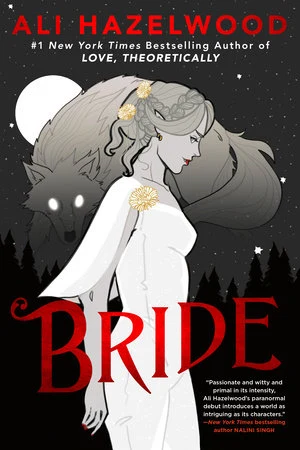
Authentic published cover of one starter selection; not a claim about every book in the guide.
Updated 9 October 2026 · Eikna Editorial Team
What do you want the arrangement to bring to the relationship?
Setup
What drives it
What to check
A political alliance
Leaders need a public union to support an agreement.
What the arrangement asks of the two people privately.
Family expectations
Relatives influence the choice of partner.
Whether the partners can negotiate or refuse.
An individual bargain
A partner has a separate reason to accept.
How that goal interacts with the public obligation.
A shared household
Marriage brings unfamiliar partners into daily contact.
How communication and reliability build trust.
Narrow the reading experience
Follow who chooses the marriage and why
An arranged marriage describes how the match is organized. A marriage of convenience describes a practical purpose for marrying. Both can apply to one relationship: outsiders arrange the union while a partner sees a personal benefit in accepting it. Bride’s official premise supports that overlap. Keeping the two questions separate helps you choose between a couple negotiating their own bargain and people responding to an alliance already expected of them. The guide does not assume every arranged marriage involves identical pressure or that agreement removes every constraint.
Look for a private life beyond the treaty
The public arrangement can provide a reason to marry without telling you why the partners will enjoy being together. Everyday attention, conversations and dependable behavior need to make the personal relationship convincing. The existing Bride assessment emphasizes trust and belonging and identifies Misery’s missing friend as a priority beyond the union. That independent motive is useful context for readers who want a protagonist with something to pursue besides romance. Decide whether you enjoy discovering affection through practical cooperation or want more emphasis on political negotiations themselves.
Consider the freedom each partner retains
A leader and someone entering an unfamiliar community may have different amounts of influence even when both accept a marriage. Ask who controls information, whose priorities shape decisions and whether disagreement is possible. Protective behavior can appeal while still prompting questions about agency. The existing starter assessment preserves that caveat instead of treating devotion as proof that every decision is welcome. Arranged, forced and freely negotiated marriages should not be used as interchangeable labels; the pressure and choices need to be established for the individual book.
Choose the tone and scope after checking the setup
An alliance premise can support a humorous, closely focused romance or a large story of supernatural politics. The existing Bride assessment records enthusiasm for dry humor alongside disagreement about political depth, so decide how much worldbuilding you need around the couple. It also reports open-door scenes and paranormal sexual elements. Those details are independent of how the marriage begins. Neither a wedding nor a mate bond guarantees a particular heat level, an uncomplicated relationship or a satisfying resolution. Check the existing review’s content and ending limitations before choosing.
Starting points and their evidence
These are small starter examples, not a completed or ranked recommendation list. Reviewed selections link to existing evidence-based editorial assessments. Other examples are identified as researched premises or pending research leads; they have no new rating or claim of first-hand reading.
Purchases through Amazon, Bookshop.org and Libro.fm links may earn us a commission. As an Amazon Associate, Eikna Romance earns from qualifying purchases, at no extra cost to you.
Bride
Ali Hazelwood
Confirmed premise example
Misery enters a peacekeeping marriage with Lowe across opposed supernatural communities. The author premise establishes the alliance and her separate reason to accept it. The existing assessment follows the resulting trust and belonging while preserving reservations about agency and political depth.
Before choosing: Choose this starter for dry humor and a romance-focused supernatural relationship. The existing assessment reports open-door scenes and paranormal sexual elements, including knotting. Numerical heat and detailed ending payoff remain unassessed.
Author or publisher premise source · checked 9 October 2026
Edition buttons become available when the specific format and destination are checked. Check the selected format before buying.
Questions that change the reading choice
Why does Bride fit an arranged-marriage guide?
The author premise establishes an expected marriage alliance between supernatural communities and Misery’s separate reason to agree. Inclusion is based on that setup, not merely the title or cover.
Is arranged marriage the same as marriage of convenience?
The labels answer different questions: who organizes the match and what practical purpose the marriage serves. They can overlap, as in the starter, without being interchangeable in every book.
Does an arranged marriage prove the partners are enemies or fated mates?
No. Outside opposition and an arranged union do not establish personal hostility or a destined connection. Each dynamic needs its own evidence; nearby guides explain those separate reading choices.
Is the starter’s heat or ending newly assessed here?
No. The existing review reports explicit scenes but leaves numerical heat unassessed. Detailed payoff and cliffhanger evaluation remain unresolved; Mate follows another couple and does not by itself answer those questions.