A Rogue of One’s Own Review: Suffrage, Sexual Bargains and Divided Reader Trust
Lady Lucie wants a publishing business that can carry the suffrage movement’s arguments into print. Lord Tristan Ballentine owns the shares that stand between her and control. Their opposing plans have a personal history, and his proposed price for a concession brings sexual pressure directly into a dispute about women’s freedom.
A Rogue of One’s Own offers fierce political commitment, a childhood antagonist and a romance that attracts both chemistry praise and serious reservations. The sexual bargain, uneven pacing and representation of colonial and queer material all matter to the recommendation. This researched editorial assessment compares specialist criticism and directly inspected reader testimony. Eikna does not claim a firsthand reading.
Original editorial artwork inspired by this page’s theme; not an official book cover or a claimed book scene.
Eikna’s editorial assessment
★★★★★★★★★★Provisional Eikna score: 3.5/5. Based on romance, characters, writing, emotional impact, ending satisfaction (95% of the full weighting), normalized over those supported dimensions. Re-read appeal remains unscored. Evidence confidence: Moderate. This researched editorial judgment may change when those gaps are assessed.
Researched editorial assessment, not a firsthand reading review. Checked 2026-10-03.
Our verdict
Best for readers who want an outspoken activist heroine and are willing to engage with an uncomfortable bargain rather than expect an uncomplicated courtship. The appeal is Lucie’s commitment and the possibility of recognition across opposing interests. If sexual access tied to business power is a firm boundary, choose another romance even if the suffrage setting interests you.
Spice, ending and series
Is A Rogue of One’s Own spicy?
A numeric heat level has not been established. Read the review’s heat and content discussion for attributed descriptions before choosing. An unknown level is not a closed-door or no-spice promise.
The romantic outcome is not established in this summary. A romance label does not independently confirm an ending. Consult the discussion before choosing if closure is essential.
For the difference between romantic commitment and wider plot closure, compare HEA, HFN and cliffhangers.
Can I read it on its own?
Standalone or continuing-series status is not established in this summary. Read the existing format and series guidance for any available context; do not assume a missing series entry means the book stands alone.
The series-order guide explains what to check when a complete romance belongs to a connected world.
Selected edition and book facts
Author
Evie Dunmore
Selected ISBN
9781984805706
Format
US paperback
Imprint
Berkley
Selected edition date
1 September 2020
Selected length
448 pages; earlier trade review reports 352
Series
A League of Extraordinary Women, book 2
Publisher premise and format guidance We may earn a commission from purchases through our links, at no extra cost to you. Find this book on Amazon. Edition details also checked against the linked retailer; dates refer to this edition, not necessarily first publication.
These leads really do want conflicting things
The official premise identifies Tristan as Lucie’s old nemesis and the obstacle to control of a publishing house. Her political project depends on the business. Opponents-to-lovers and business rivalry therefore have concrete support, rather than being inferred from sarcasm or attraction.
For trope readers, the distinction is useful. This is a dispute over a resource with consequences beyond the couple, alongside childhood friction. That can give courtship stakes, but it also means the competition is harder to set aside as playful teasing. Decide whether you want a conflict that reaches into the heroine’s ability to do her work.
The sexual bargain belongs in the early recommendation
The author’s synopsis openly states Tristan’s demand for a night with Lucie in return for relinquishing control. Magneticwave finds his use of sexist advantages against her off-putting, despite enjoying the ending. That response is a clear reason to make the setup visible before a reader follows a purchase button.
Attraction alone does not resolve the concern. A reader may enjoy a morally awkward premise and its eventual development; another may find the initial condition unacceptable regardless of later tenderness. We do not label the relationship unproblematic because favorable critics praise the chemistry. The question is whether the particular power arrangement is one you want in fiction.
What Lucie’s political work gives her character
Hanalillian values Lucie’s ownership of a cause and her active role in her own life. The movement shapes the way she thinks about collaborating with and loving a man. That supplies a reason to recommend the heroine beyond calling her strong or independent.
Mediaevalmuse likes the later attention to Lucie making room for personal happiness, but finds the earlier political material too scattered to become a satisfying plot. These accounts describe different reading needs. If you want substantial organizing work on the page, you may welcome it; if you want each political scene to change the romantic relationship, the balance may feel less effective.
Can Tristan’s vulnerable side overcome his first impression?
At All About Romance, Caz Owens finds the developing tenderness persuasive. Bri at Bri’s Own World appreciates the way Tristan becomes more understandable without every unpleasant quality disappearing. Those favorable readings support a romance with a difficult starting point, rather than a hero who is merely misunderstood from the outset.
_bookedbyjenny reaches a different conclusion, finding the shift from notorious behavior to trustworthy partner difficult to believe. The useful question is how much evidence of change you need within the courtship. If a concealed softer side rarely compensates for manipulative behavior in your reading, this hero may remain a poor fit even when the prose appeals.
Representation criticism is part of the evidence
Keira Soleore praises the heroine and chemistry but strongly objects to colonial exoticization, particularly the use of South Asian imagery in Tristan’s tattoo. That criticism concerns cultural treatment, not a preference for more or less sexual content. We retain it as a material reservation in a book promoted through its feminist themes.
Publishers Weekly also criticizes underdeveloped secondary characters, specifically an Indian servant and a rejected gay antagonist. Mediaevalmuse questions the function of the queer subplot. These are attributed critical assessments; this page does not pretend to have independently audited every depiction. Nor does it treat a white heroine’s political progress as answering the objections about other people’s representation.
Attractive prose, a less consistent narrative
Publishers Weekly praises the prose and sexual chemistry while finding the plot unwieldy. Mediaevalmuse also separates sentence-level writing from structure: the prose works better for them than the extended early political activity. Their useful distinction is between enjoying the language and feeling the story move.
_bookedbyjenny enjoys Dunmore’s writing style but struggles with the drawn-out narrative. Our craft score preserves both strengths and reservations. If you like a long build with room for political discussion, try the opening. If you want romantic development to accumulate steadily from the start, the pacing criticism is especially relevant.
Freedom, work and the emotional stakes
Bri particularly values the attention to overwork, perception and refusing to surrender core ideals. Hanalillian responds to the combination of political ownership and the protagonists’ family difficulties. Those are specific emotional reasons to consider the story, independent of a store average.
Keira’s response demonstrates why chemistry praise need not produce a positive overall experience when cultural treatment feels alienating. We keep emotional impact at a qualified strength level rather than assume that forceful political themes will feel empowering to every reader. Choose by the values and relationship behavior you want to spend time with.
Heat and content notes
Publishers Weekly explicitly identifies sexual scenes; All About Romance describes a sensual relationship. Mediaevalmuse flags sexual content, child abuse, animal death and homophobia. We retain those as selected source-reported cautions and leave numerical heat unassigned. A sexual bargaining premise does not establish exact frequency or intensity.
All About Romance also objects to physical violence by a lead. The detailed source discussion reveals a late event, so this page keeps the warning broad rather than retell the scene. Cultural-representation criticism is linked above. Missing warnings remain unknown; the listed concerns are not a complete inventory of the book.
The ending preserves a debate worth keeping
Bri appreciates a resolution that treats independence differently from a conventional historical-romance ending. Owens considers the choice consistent with Lucie but too easily secured, with practical risks left insufficiently persuasive. Our ending-satisfaction score reflects the appealing idea and the objection to its execution.
Magneticwave also likes the payoff while disliking the relationship’s starting dynamic. An enjoyable ending therefore does not necessarily erase earlier reservations. We keep the actual resolution out of the prose and assess satisfaction separately from a factual ending label. Re-read appeal remains unscored; a wish to revisit is not a documented repeat-reading comparison.
Selected paperback, conflicting lengths and series order
The publisher catalogue and checked Amazon paperback list 448 pages and a 1 September 2020 publication date for ISBN 9781984805706. Publishers Weekly’s earlier review lists 352 pages under that same ISBN. This discrepancy is preserved; the selected-edition table uses the current publisher catalogue, with the earlier figure explicitly retained in the structured record.
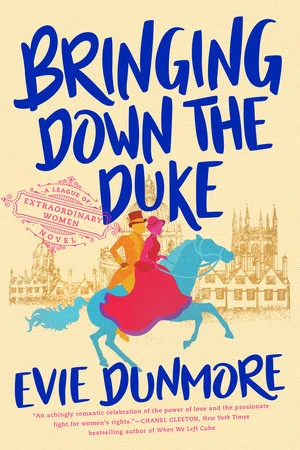
This is book two in A League of Extraordinary Women, as the author confirms. Bringing Down the Duke introduces the connected group and Annabelle’s relationship. Start there if you want the friendship’s earlier context; this review does not invent a prerequisite or claim the book has no connections. Audio destination, narrator and exact runtime verification remain outstanding.
What critics and readers agree on, and where they differ
Enjoys prose and Lucie but questions length and the credibility of Tristan’s romantic change.
Checked 3 October 2026. These are selected responses, not a representative reader survey. Promotional quotations are traced to their original review; bots and secondhand recommendations do not count as reading testimony.
The Eikna Evidence Scorecard
★★★★★★★★★★Provisional Eikna score: 3.5/5. Based on romance, characters, writing, emotional impact, ending satisfaction (95% of the full weighting), normalized over those supported dimensions. Re-read appeal remains unscored. Evidence confidence: Moderate. This researched editorial judgment may change when those gaps are assessed.
Romance
★★★★★★★★★★3.5/5 · Strength with reservations
Chemistry praise has independent support
Sexual bargain is a material reader boundary
Jenny questions romantic credibility
Later tenderness does not erase the setup
Independent chemistry and tenderness praise is balanced by specific objections to sexual leverage and credibility.
Specific payoff praise is balanced by concrete reservations about predictability, pacing or feasibility; ending satisfaction is not inferred from category.
As an Amazon Associate, Eikna Romance earns from qualifying purchases. The linked title and ISBN were checked; checkout and commission credit were not tested. Bookshop and Libro.fm links await destination checks, and Audible affiliate setup remains pending. A missing button does not mean a format is unavailable.
Questions before you choose
Is this genuine enemies to lovers?
The official premise establishes old antagonism and conflicting control of a business needed for Lucie’s cause. That supports opposition beyond banter; the sexual price also makes it a more uncomfortable dynamic.
Is the feminist theme a guarantee of respectful romance?
No. Inspected sources praise Lucie’s independence while others object to sexual leverage and representation. This review keeps those judgments separate so readers can choose.
Why do sources give different page counts?
The current publisher catalogue and checked Amazon paperback give 448 pages. The earlier PW review gives 352 under the same ISBN. We retain the conflict instead of silently removing it.
Keep a historically constrained heroine with substantial commitments; change a sexual business bargain to a fake engagement arranged around shared ambitions.
Keep a heroine negotiating independence; change political business rivalry to a closed-door marriage with secrets and different trust concerns.
How we made these connections
Each route carries forward a particular premise or reader preference. These editorial comparisons do not promise identical heat, endings or personal response.
Keep exploring
Historical-romance collection compares courtships shaped by the rules and circumstances of their periods. It helps you choose the relationship pressure as well as the historical setting.
Our final recommendation
Choose A Rogue of One’s Own if Lucie’s political work and a difficult opponents-to-lovers premise both interest you. Read the consent and representation discussions before buying if those are decisive concerns. Its strengths support a qualified recommendation, and the specific objections remain part of that recommendation.
This page contains affiliate links, including Amazon, Bookshop.org and Libro.fm. As an Amazon Associate, Eikna Romance earns from qualifying purchases, at no extra cost to you.