Bringing Down the Duke Review: Political Opposition, Class Barriers and Unequal Power
Annabelle Archer has earned an opportunity to study at Oxford, but her scholarship comes with work for the women’s suffrage movement. Recruiting influential supporters brings her into contact with Sebastian Devereux, Duke of Montgomery. He has political obligations and marriage expectations that make attraction to a penniless student inconvenient for far more than his pride.
Bringing Down the Duke gives a familiar historical-romance pairing concrete disagreements about status, freedom and influence. Trade critics praise its yearning and period setting; some community readers question the chemistry and the balance of power. This researched editorial assessment compares those positions. Eikna does not claim a firsthand reading or present selected reviews as an audience survey.
Original editorial artwork inspired by this page’s theme; not an official book cover or a claimed book scene.
Eikna’s editorial assessment
★★★★★★★★★★Provisional Eikna score: 3.7/5. Based on romance, characters, writing, emotional impact (85% of the full weighting), normalized over those supported dimensions. Ending satisfaction, re-read appeal remain unscored. Evidence confidence: Moderate. This researched editorial judgment may change when those gaps are assessed.
Researched editorial assessment, not a firsthand reading review. Checked 2026-10-03.
Our verdict
Best for readers who want slow courtship alongside women’s education, political organizing and class barriers. The main caution is the unequal relationship: Sebastian’s money and status do not disappear because Annabelle is intelligent. If dominant aristocratic heroes are a poor fit for you, the suffrage premise alone may not make this an enjoyable romance.
Spice, ending and series
Is Bringing Down the Duke spicy?
A numeric heat level has not been established. Read the review’s heat and content discussion for attributed descriptions before choosing. An unknown level is not a closed-door or no-spice promise.
The romantic outcome is not established in this summary. A romance label does not independently confirm an ending. Consult the discussion before choosing if closure is essential.
For the difference between romantic commitment and wider plot closure, compare HEA, HFN and cliffhangers.
Can I read it on its own?
Standalone or continuing-series status is not established in this summary. Read the existing format and series guidance for any available context; do not assume a missing series entry means the book stands alone.
The series-order guide explains what to check when a complete romance belongs to a connected world.
Selected edition and book facts
Author
Evie Dunmore
Selected ISBN
9781984805683
Format
US paperback
Imprint
Berkley
Selected edition date
3 September 2019
Selected length
368 pages
Series
A League of Extraordinary Women, book 1
Publisher premise and format guidance We may earn a commission from purchases through our links, at no extra cost to you. Find this book on Amazon. Edition details also checked against the linked retailer; dates refer to this edition, not necessarily first publication.
The political disagreement is part of the courtship
The publisher sets the story in England in 1879 and makes Annabelle’s political work a condition of her scholarship. Sebastian is an influential figure she needs to persuade. This supplies an actual conflict of goals rather than a trope label based only on teasing dialogue.
Political opponents and class-crossing attraction are precise starting descriptions. Enemies-to-lovers can be a useful browsing route, but it should not promise prolonged personal hatred or a hostile relationship at every stage. Choose this book if competing commitments interest you; look elsewhere if your priority is sustained antagonism between the two people.
Annabelle’s opportunity is also a financial pressure
Onegalonelife27’s actual reread account emphasizes the burden of studying, activism and economic survival at the same time. Their reading makes the scholarship more than an attractive university backdrop. Annabelle cannot approach each choice with the freedom available to her better-resourced friends.
That gives readers a practical way to assess the class difference. A heroine’s determination does not make her independent of money, housing or social reputation. Our recommendation treats the unequal circumstances as part of the relationship, rather than assuming a clever woman and a powerful man automatically meet as equals.
A slow burn that some readers find persuasive
Publishers Weekly responds favorably to the growing compatibility and the pressure of their different positions. Kirkus’s book review praises the combination of romantic longing and a woman’s struggle for a voice. These are independent critical endorsements, rather than publisher praise quotations counted twice.
Caz Owens at All About Romance particularly enjoys the intellectual flirtation and the developing bond. For readers who like attraction expressed through conversation, that is a specific reason to try the book. It offers a different appeal from choosing a historical solely for a large number of explicit scenes.
Power and boundaries deserve their own consideration
The Kirkus audiobook review praises Elizabeth Jasicki’s narration but warns that the large power imbalance may limit enjoyment. StoryGraph reader jelkebooks goes further, finding Sebastian unpleasant and his behavior too close to Annabelle’s boundaries. That is a critical interpretation of the relationship, not a legal finding or an established reader consensus.
The difference between these objections and the favorable criticism matters. A reader can recognize the period’s social constraints while still wanting the romantic behavior to feel more respectful. If that is your threshold, sample scenes between the leads before committing. Historical plausibility does not settle personal reader comfort.
Does the heroine retain her determination?
Owens appreciates Annabelle’s intelligence but questions a later self-sacrificing stance and finds Sebastian less developed. Jelkebooks also likes Annabelle’s initial ambition while feeling that the romance eventually weakens her distinctive personality. Their concerns are useful even though their overall recommendations differ sharply.
Our character score retains that objection instead of treating a suffragist heroine as a guarantee of satisfying agency throughout. Consider what you want to see: a woman maintaining a separate ambition at every stage, or a courtship in which difficult compromises are part of the drama. Readers can reasonably prefer different balances.
How much does the writing carry the experience?
Kirkus’s book review strongly favors the integration of history and romantic yearning. Publishers Weekly likewise finds the setting immersive. Those judgments support a positive craft score, though neither substitutes for a fact-check of every historical claim in the novel.
Jelkebooks finds the pacing slow enough to undermine the experience. All About Romance has a more favorable response while still wanting less circling around one obstacle. The useful caution is about sustained momentum: if you enjoy returning to the implications of an impossible match, the pace may suit you; if you want each scene to change the situation quickly, it may frustrate.
Emotion and friendship around the couple
Onegalonelife27 sees two heavily self-reliant people finding companionship in each other. That actual repeat-reading response supports the book’s emotional appeal, but does not establish that all readers will find comfort in the same relationship. Personal response remains especially relevant where the power dynamic is disputed.
Borealis_this appreciates the series’ feminist historical material while placing this installment below others. That is a useful reminder that enjoying a series can coexist with reservations about one couple. If the friendship and political interests attract you more than this pairing, the wider series may still be worth exploring after a sample.
Heat and source-reported content cautions
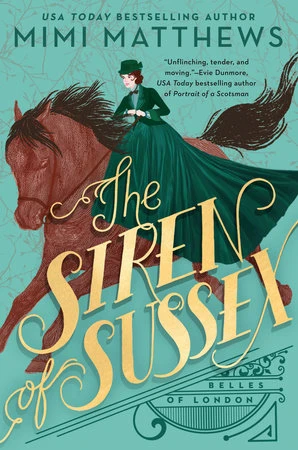
Borealis_this flags graphic sexual content; the professional reviews also describe a sensual romance. We do not convert those descriptions into a numerical Eikna heat label. Readers expecting closed-door courtship should treat this as a different route from The Siren of Sussex.
Onegalonelife27’s warning list includes misogyny, sexism, classism, miscarriage, sexual assault, police brutality and sexual harassment. Borealis_this adds emotional abuse and abandonment. These are selected reader-supplied flags, not a comprehensive inventory. Detailed source pages can include spoilers, and a missing warning on one account is not evidence of absence.
Edition and audiobook guidance
The checked paperback is a 368-page Berkley edition published 3 September 2019, ISBN 9781984805683. The publisher also lists ebook and audio formats. This is the first A League of Extraordinary Women novel; the central relationship starts here, so there is no earlier installment in this series to read first.
The publisher lists 12 hours 20 minutes for the audio. Kirkus’s audiobook review lists 12 hours 15 minutes and names Elizabeth Jasicki. We retain the five-minute discrepancy rather than silently choosing one duration as exact. Confirm the listing for the edition you plan to obtain and listen to a narration sample if possible.
Ending and repeat-reading evidence: the remaining work
The criticism of later agency and repetition is relevant to the payoff, but our inspected evidence does not yet give a sufficiently detailed contrasting evaluation of the entire ending. Ending satisfaction remains unscored; final events stay out of this assessment. A romance’s category and an enjoyable overall review cannot fill that gap automatically.
We have one directly inspected actual reread account, and it is favorable. That is retained as testimony rather than discarded or inflated into a rereader consensus. A repeat-reading score still needs stronger comparison of what improves, holds up or becomes less effective on another reading. The provisional overall rating covers the four core dimensions only.
What critics and readers agree on, and where they differ
Appreciates feminist history while preferring other installments; explicit-content and abuse flags.
Checked 3 October 2026. These are selected responses, not a representative reader survey. Promotional quotations are traced to their original review; bots and secondhand recommendations do not count as reading testimony.
The Eikna Evidence Scorecard
★★★★★★★★★★Provisional Eikna score: 3.7/5. Based on romance, characters, writing, emotional impact (85% of the full weighting), normalized over those supported dimensions. Ending satisfaction, re-read appeal remain unscored. Evidence confidence: Moderate. This researched editorial judgment may change when those gaps are assessed.
Romance
★★★★★★★★★★3.5/5 · Strength with reservations
PW values the developing compatibility
Owens enjoys intellectual flirtation
Jelkebooks questions chemistry and boundaries
Power imbalance affects reader fit
Specific praise for courtship is qualified by directly inspected chemistry and power-boundary objections.
As an Amazon Associate, Eikna Romance earns from qualifying purchases. The linked title and ISBN were checked; checkout and commission credit were not tested. Bookshop and Libro.fm links await destination checks, and Audible affiliate setup remains pending. A missing button does not mean a format is unavailable.
Questions before you choose
Is this a Regency romance?
The publisher places it in 1879, making it Victorian rather than Regency. Its education and political context are part of that reader distinction.
Is Bringing Down the Duke closed door?
The inspected sources identify sexual content and a sensual relationship. It is not the closed-door route described for The Siren of Sussex; a numerical heat label remains unassigned.
Which audiobook runtime is correct?
The publisher lists 12 hours 20 minutes while Kirkus lists 12 hours 15 minutes. Check the exact edition you obtain; this review preserves the discrepancy.
Keep Victorian social barriers, shifting political opposition to a quieter client-and-tailor collaboration without on-page sex.
How we made these connections
Each route carries forward a particular premise or reader preference. These editorial comparisons do not promise identical heat, endings or personal response.
Keep exploring
Historical-romance collection compares courtships shaped by the rules and circumstances of their periods. It helps you choose the relationship pressure as well as the historical setting.
Our final recommendation
Choose Bringing Down the Duke when political disagreement, ambition and slow courtship are all part of your interest in historical romance. Its favorable critical evidence supports a qualified recommendation. If aristocratic dominance or prolonged obstacles tend to frustrate you, weigh the contrary accounts before purchasing.
This page contains affiliate links, including Amazon, Bookshop.org and Libro.fm. As an Amazon Associate, Eikna Romance earns from qualifying purchases, at no extra cost to you.