Hani and Ishu's Guide to Fake Dating by Adiba Jaigirdar Review
Eikna Score: 7.7/10. Recommended.
Hani and Ishu's Guide to Fake Dating is a sharp, warm young adult rom com that cares more about two Bengali Irish girls learning to stop performing for other people than about the fake relationship itself. The romance is sweeter than it is swoony for some readers, but the family threads and the honesty about bad friendships make it worth a teenager's weekend, or an adult's.
Read it if you want a sapphic YA fake dating story with real cultural texture, or you like a prickly heroine who thaws on her own terms. Skip it if you want a romance with steady banter and slow-burn tension, or repeated biphobia from a main character's friends would wear you down.
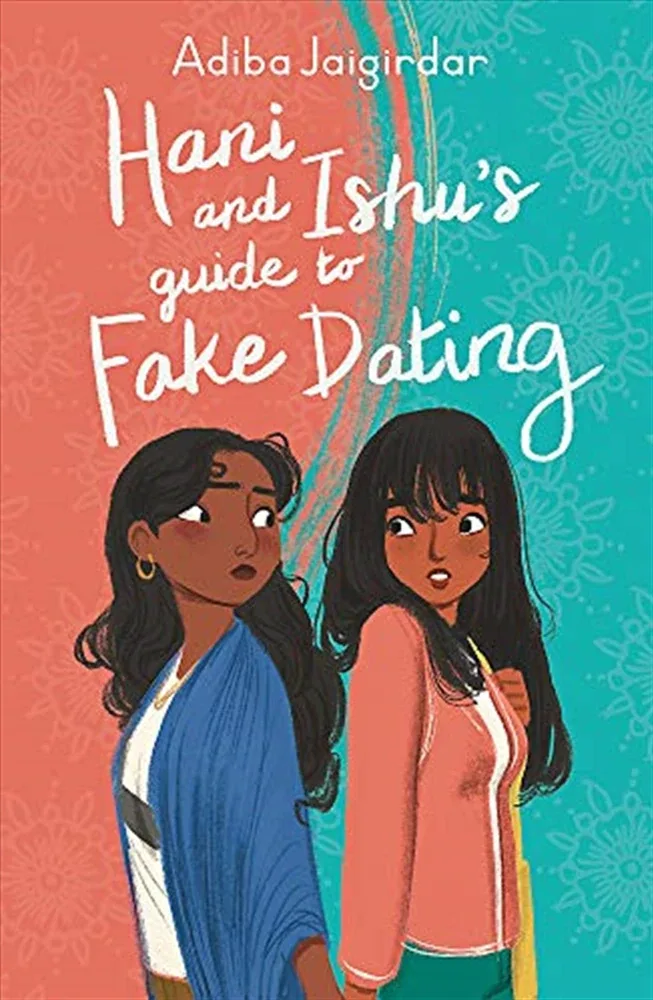
Hani and Ishu's Guide to Fake Dating at a Glance
Hani and Ishu's Guide to Fake Dating is a standalone young adult sapphic rom com by Adiba Jaigirdar, first published by Page Street Kids in May 2021 for readers aged 14 and up. It alternates between its two leads, keeps the romance closed door with kisses at most and was a Lambda Literary Award finalist.
| Author | Adiba Jaigirdar |
|---|---|
| Series | Standalone |
| Subgenre | LGBTQ romance (young adult sapphic rom com, contemporary Ireland) |
| Age range | Young adult, 14 and up (publisher and Penguin Random House audio listing); School Library Journal suggests grade 9 and up |
| Main tropes | Fake dating, opposites attract, popular girl and outsider, school election, coming out |
| Spice level | 1/5: Kisses only / closed door |
| Content warnings | Racism, Islamophobia, biphobia and homophobia, toxic friendship and bullying, family pressure (full list below) |
| POV | Alternating first person, Hani and Ishu |
| Ending | Happy for now, fitting for teen leads |
| Pages | 352 (hardcover); the 2023 paperback runs 368 |
| Audiobook | Narrated by Reena Dutt and Shubhangi Karmakar, 9 hours 36 minutes (Listening Library) |
| First published | May 25, 2021 |
| Publisher | Page Street Kids (Page Street Publishing); Hodder Children's Books in the UK and Ireland |
What Is Hani and Ishu's Guide to Fake Dating About?
Hani and Ishu's Guide to Fake Dating starts with Humaira Khan, known as Hani, coming out as bisexual to her friends at school in Ireland. They do not believe her, because she has only ever dated boys. Cornered, Hani says she already has a girlfriend: Ishita Dey, the serious, straight-A student nobody in her circle likes.
Ishu agrees to play along for a price. She wants to be elected Head Girl, partly to win her parents' approval, and she needs Hani's popularity to get there. So the two girls set rules and start performing a relationship in public. Then Hani's friends begin to resent the time she spends with Ishu, and the act gets harder to keep separate from what both of them feel.
What Makes This Fake Dating Romance Work
Hani and Ishu's Guide to Fake Dating works because the fake relationship is a lie told to people who should never have needed one. Hani invents a girlfriend because her friends will not take her word about who she is, and that makes the whole setup sadder and sharper than the usual bet or wedding-date premise.
The two girls also want opposite things from the arrangement. Hani wants to be believed. Ishu wants to be seen as someone worth voting for. Both are Bengali, both are the children of immigrants in a mostly white Irish school, and almost everything else about them clashes: Hani is a devout Muslim who is out to her parents, Ishu is not religious and has not come out at home, and Hani wants everyone to like her while Ishu has stopped trying.
Kirkus, which gave the book a starred review, singled out its attention to culture, family and personal integrity alongside the romance. That is the real hook. Readers who come for the fake dating trope stay for two girls quietly working out that they have been asking the wrong people for permission.
My Review
Hani and Ishu's Guide to Fake Dating is a book I would hand to a fifteen-year-old without a second thought and then quietly reread myself. It is a gentle book on the surface, all school corridors, campaign posters and awkward lunches, and underneath it is pretty unsparing about what it costs to keep shrinking yourself so other people stay comfortable.
School Library Journal called it "a sweet queer romance with outstanding Desi representation," and recommended it for all collections. I agree with both halves, though I would put the weight on the second. The romance is fine. The representation, the family scenes and the friendship plot are where Adiba Jaigirdar does her best work.
Romance and Chemistry
The romance is sweet, low-key and a little underpowered. Hani and Ishu start as near strangers who share a heritage and not much else, and the fake dating rules give them reasons to sit together, walk together and learn each other's habits. Their feelings grow out of small kindnesses rather than sparks, which is honest and suits two teenagers who have each been burned in different ways.
It will not work for everyone. One reviewer on the blog of Madeline Todd gave it three stars and said she never felt the chemistry: to her the girls read like friendly acquaintances, and the "rom" in rom com went missing. I understand that. If you want two leads trading barbs on every page, this is not that book. A StoryGraph reviewer, on the other hand, found the developing chemistry fun to follow, and SLJ called the growing affection authentic. I land in between. The relationship convinced me, but it is a slow warming rather than a fall, and what matters about any kiss here is what it means to Hani, never heat.
The Characters
Ishu is the reason I liked this book as much as I did. She is guarded, blunt and lonely in a way she would never admit, and her thread with her sister carries more emotional weight than anything in the romance. GeekMom's Sophie Brown preferred Ishu's chapters too and found Hani more abrasive. One blog reviewer at Utopia State of Mind said the sister storyline left her close to tears; I was not far off.
Hani is harder to love at first, and I think that is deliberate. She is a people pleaser whose friends, led by Aisling, keep telling her who she is, and she keeps letting them. Watching her accept small cruelties is uncomfortable. It is also the point. Her parents already know she is bisexual, which sharpens the contrast: the trouble is not her family or her faith, it is the friends she chose.
The friends are the weak spot. Several readers, including Madeline Todd, felt Hani's friends are invalidating in nearly every scene, and that the biphobia piles up past the point where it teaches anything. For a bisexual teen reading for comfort, that repetition may sting. The book does show how hard it is to walk away from a friend group, though, and I would rather a YA novel admit that than pretend it is easy.
Writing and Pacing
The prose is plain, quick and often funny, especially in Ishu's dry chapters. The alternating first person keeps both girls' motives in view, and the Head Girl campaign gives the middle of the book a clock. It reads fast. GeekMom's reviewer finished it in a day, and that tracks.
A sixteen-year-old reviewer for Pasadena Public Library called it a familiar, formulaic read for regular YA fans, though one she found delightfully remixed. That is fair. The beats of the fake dating plot land where you expect. What is less familiar is everything around them: the Bengali Irish setting, the Islamophobia Hani runs into, the casual racist remarks at school. SLJ noted that some Irish references might puzzle American readers without slowing the book down, and I found those details one of its pleasures.
Hani and Ishu's Guide to Fake Dating is a kind, specific coming-of-age story whose family and friendship plots outshine its romance. Read it if you want a sapphic YA rom com with heart and real stakes, and go elsewhere if you need fireworks.
How Spicy Is Hani and Ishu's Guide to Fake Dating?
Hani and Ishu's Guide to Fake Dating is a 1 out of 5 on our scale: Kisses only / closed door. It is a young adult novel for readers 14 and up, and the romance stays at feelings, the public performance of the fake relationship and, at most, kisses.
Hani and Ishu's Guide to Fake Dating has no sexual content: the publisher, Kirkus (print and audiobook reviews), School Library Journal and the author's own content warnings mention none. For more romance at this heat level, see our closed door romance list, and our romance heat levels guide explains the scale.
Content warnings, drawn from the author's notes, critics and reader reports:
- Racism and racist microaggressions
- Islamophobia
- Homophobia, including biphobia and lesbophobia, much of it from the lead's friends
- Toxic friendship, bullying and gaslighting
- Family pressure and parental expectations, including a closeted character
- Parental abandonment
- Underage drinking (reported by readers)
Our content warnings guide explains how we compile these lists.
Who Should Read Hani and Ishu's Guide to Fake Dating?
Hani and Ishu's Guide to Fake Dating suits teen readers aged 14 and up, and adults who enjoy YA, who want a sapphic fake dating story with strong family and cultural threads. It is less suited to readers who want intense romantic chemistry or who would find repeated biphobia from friends hard to sit through.
Best for:
- Teens looking for queer romance that reflects Muslim, Desi or immigrant family life
- Readers who like a prickly, ambitious heroine
- Anyone who has had to leave a friend group that was not good for them
- Fans of school-set rom coms with a contest or election at the centre
- Parents, teachers and librarians who want a clean, closed door YA romance
Not for:
- Readers who want slow-burn tension and constant banter
- Bisexual readers seeking pure comfort, given how often Hani is invalidated
- Anyone looking for adult romance heat
- Readers who dislike predictable trope beats
What Readers and Critics Are Saying
Hani and Ishu's Guide to Fake Dating drew strong trade reviews: a Kirkus star, positive notices from School Library Journal, Booklist and The Horn Book, and a place among the finalists for the 34th Lambda Literary Awards. Readers mostly agree on its warmth and split on the romance.
Where they agree. The cultural detail and characterisation. Kirkus called it "an intelligent, insightful, and utterly swoon-y coming-of-age story" and praised its well-rounded characters. SLJ praised the rich, nuanced depictions of Desi culture and the sensitive handling of biphobia, racist microaggressions and Islamophobia. Booklist, as summarised by Wikipedia, said it explores things most romances skip. The Irish Independent liked its inclusive storyline, and The Horn Book called it a lighthearted read. Kirkus's audiobook reviewer praised Reena Dutt's light, emotive Hani and Shubhangi Karmakar's deliberate, husky Ishu.
Where they split. The romance and the friends. Some readers, like the StoryGraph reviewer who compared it favourably to The Henna Wars, found the relationships the highlight. Others, like Madeline Todd, felt no chemistry and thought the biphobia was overdone for a book sold as feel-good. GeekMom's reviewer and others enjoyed one heroine much more than the other, usually Ishu.
The Eikna Evidence Scorecard
Hani and Ishu's Guide to Fake Dating scores 7.7 out of 10 on the Eikna Evidence Scorecard, with its top mark for characters, where critics and readers praise Ishu, the sister thread and the family scenes, and its lowest for romance, writing and reread appeal, where some readers missed chemistry and found the beats predictable.
| Dimension | Score (/5) | Why |
|---|---|---|
| Romance (20%) | 3.5 | SLJ calls the affection authentic; Madeline Todd's review felt little chemistry. |
| Characters (15%) | 4.5 | Kirkus praises well-rounded characterisation; Ishu's sister thread moves readers. |
| Writing and pacing (15%) | 3.5 | Quick and funny per GeekMom; a Pasadena teen reviewer calls it formulaic. |
| Emotional impact (15%) | 4 | Family, faith and friendship scenes land, per SLJ and Utopia State of Mind. |
| Heat level (10%) | 4 | Delivers the sweet, closed door YA romance its age range and blurb promise. |
| Ending satisfaction (15%) | 4 | A StoryGraph reviewer found the friendship resolution satisfying. |
| Reread appeal (10%) | 3.5 | A comfort read for its leads, though the trope beats offer few surprises. |
The Eikna Overall Ranking: Hani and Ishu's Guide to Fake Dating sits comfortably among the better sapphic YA fake dating novels, a touch quieter than She Drives Me Crazy and richer in family detail, with a final Eikna Score of 7.7/10.
Is Hani and Ishu's Guide to Fake Dating a Standalone?
Yes. Hani and Ishu's Guide to Fake Dating is a standalone young adult novel with a complete story, so you can start here with no prior reading. It followed Adiba Jaigirdar's debut, The Henna Wars, another sapphic YA romance about Bengali Irish teens, but the two books are not connected.
Best format: the Listening Library audiobook is a strong choice. Its two narrators voice Hani and Ishu in Bengali-inflected Irish accents, which suits the alternating chapters, and Kirkus's audiobook reviewer singled out the dual narration. The 2023 paperback is the easiest print edition to find. Our series order guide covers romance series if you want something longer next.
If You Loved Hani and Ishu's Guide to Fake Dating, Read These Next
If you loved Hani and Ishu's Guide to Fake Dating, the closest matches are young adult queer romances with fake relationships and family pressure. The last two picks are adult sapphic romances with more heat, for older readers only.
- She Drives Me Crazy by Kelly Quindlen: YA, kisses only. Two high school rivals fake a relationship to win back an ex and get revenge, with the same sapphic fake dating hook.
- How to Excavate a Heart by Jake Maia Arlow: YA. A sapphic holiday romance about a college student finding her footing after a breakup.
- Fake Dates and Mooncakes by Sher Lee: YA. A queer fake dating story with a family restaurant and a cooking competition at its heart.
- Kiss Her Once for Me by Alison Cochrun: adult, 4/5 spice. A holiday fake engagement that leads a young woman back to the stranger she fell for a year earlier; for adult readers.
- Written in the Stars by Alexandria Bellefleur: adult, 3/5 spice. A sapphic fake dating rom com between opposites; for adult readers.
Frequently Asked Questions
Hani and Ishu's Guide to Fake Dating raises the same questions for most readers and parents: what age it suits, whether there is sexual content, whether it is a standalone, how it ends and whether there is an audiobook. Short answers below.
What age is Hani and Ishu's Guide to Fake Dating for?
The publisher lists it as young adult for ages 14 and up, and School Library Journal recommends it for grade 9 and up. The two leads are secondary school students in Ireland.
Is Hani and Ishu's Guide to Fake Dating spicy?
No. It is a 1 out of 5 on our scale, kisses only and closed door. None of the critics, the author's content warnings or reader trigger lists we checked mention sexual content.
Is Hani and Ishu's Guide to Fake Dating a standalone?
Yes. It is a complete standalone novel and is not connected to Adiba Jaigirdar's other books, including The Henna Wars.
Does Hani and Ishu's Guide to Fake Dating have a happy ending?
Yes. It ends on a hopeful, happy for now note that suits teenage leads, without a cliffhanger.
What are the content warnings for Hani and Ishu's Guide to Fake Dating?
The main ones are racism, Islamophobia, biphobia and homophobia, toxic friendship and bullying, gaslighting, family pressure, parental abandonment and some underage drinking.
Is there a Hani and Ishu's Guide to Fake Dating audiobook?
Yes. Listening Library published an audiobook narrated by Reena Dutt and Shubhangi Karmakar, running about 9 hours 36 minutes.
Where is Hani and Ishu's Guide to Fake Dating set?
It is set in Ireland, at a secondary school where Hani and Ishu are two of the few Bengali students. Kirkus places the story in Dublin.
The Bottom Line
Hani and Ishu's Guide to Fake Dating earns a 7.7/10 and a Recommended badge. It is for teen readers aged 14 and up, and the adults who love YA, who want a closed door sapphic rom com with real family, faith and friendship stakes. The one reason to pick it up is Ishu: a spiky, ambitious girl whose slow decision to let people in is more moving than any kiss in the book.
Buy on Amazon Buy at Bookshop.org Listen on Audible Listen on Libro.fm
Some links on this page are affiliate links: Eikna Romance may earn a small commission at no extra cost to you.
Sources
- Hani and Ishu's Guide to Fake Dating, Adiba Jaigirdar (blurb, editions, audiobook, praise)
- Book Trigger Warnings (author-provided content warnings)
- Trigger Warning Database
- Hani and Ishu's Guide to Fake Dating, Kirkus Reviews (starred)
- Hani and Ishu's Guide to Fake Dating audiobook, Kirkus Reviews
- Hani and Ishu's Guide to Fake Dating, School Library Journal
- Hani and Ishu's Guide to Fake Dating, Wikipedia (Booklist reception, Lambda Literary finalist)
- Audiobook listing, Penguin Random House (narrators, length, age 14 and up)
- Paperback listing, Pan Macmillan (Page Street YA, 368 pages, age 14+)
- I'm Your Neighbor Books listing (age 14 and older)
- Pride Month: Hani and Ishu's Guide to Fake Dating, GeekMom (Sophie Brown)
- Review, Utopia State of Mind
- Book Review Tuesday, Madeline Todd
- Teen book review, Pasadena Public Library
- Reader review, StoryGraph
- The Horn Book and Irish Independent quotes are as listed on the author's site.
How we review: every Eikna score is built from a seven-part evidence scorecard. Read our methodology.