Iris Kelly Doesn’t Date Review: Fake Dating, Anxiety and Learning to Trust
Iris Kelly writes romance but wants her own connections to stay casual. Stevie Scott is an actress whose anxiety and complicated friendship circle make starting again difficult. A disastrous encounter becomes harder to leave behind when they meet through a queer production of Much Ado About Nothing. Their proposed solution is a relationship they can rehearse without calling it real.
This is a promising choice for readers drawn to patient intimacy, theatre and a fake-dating arrangement that includes lessons in both courtship and sex. It also asks for tolerance of intrusive friends and a leisurely pace. Our researched editorial assessment compares critical reviews with named reader accounts; it does not claim a firsthand Eikna reading.
Original editorial artwork inspired by this page’s theme; not an official book cover or a claimed book scene.
Eikna’s editorial assessment
★★★★★★★★★★Provisional Eikna score: 3.8/5. Based on romance, characters, writing, emotional impact (85% of the full weighting), normalized over those supported dimensions. Ending satisfaction, re-read appeal remain unscored. Evidence confidence: Moderate. This researched editorial judgment may change when those gaps are assessed.
Researched editorial assessment, not a firsthand reading review. Checked 2026-10-03.
Our verdict
Best for readers who enjoy a tender, explicit sapphic romance about learning what makes intimacy feel safe. The main reservations are length and consistency: some readers see believable growth, while others find the leads shaped too heavily around their assigned difficulties.
Spice, ending and series
Is Iris Kelly Doesn’t Date spicy?
A numeric heat level has not been established. Read the review’s heat and content discussion for attributed descriptions before choosing. An unknown level is not a closed-door or no-spice promise.
The romantic outcome is not established in this summary. A romance label does not independently confirm an ending. Consult the discussion before choosing if closure is essential.
For the difference between romantic commitment and wider plot closure, compare HEA, HFN and cliffhangers.
Can I read it on its own?
Standalone or continuing-series status is not established in this summary. Read the existing format and series guidance for any available context; do not assume a missing series entry means the book stands alone.
The series-order guide explains what to check when a complete romance belongs to a connected world.
Selected edition and book facts
Author
Ashley Herring Blake
Selected ISBN
9780593550571
Format
US paperback
Imprint
Berkley
Selected edition date
24 October 2023
Selected length
416 pages
Series
Bright Falls, book 3
Publisher premise and format guidance We may earn a commission from purchases through our links, at no extra cost to you. Find this book on Amazon. Edition details also checked against the linked retailer; dates refer to this edition, not necessarily first publication.
What the fake relationship is supposed to solve
Berkley’s premise gives Iris a writing deadline and Stevie a reason to maintain a dating story in front of her friends. The arrangement also lets them practise experiences that feel uncertain. That makes fake dating an actual mechanism in the book, rather than a label attached simply because the leads hesitate to commit.
Kirkus praises the way attraction develops alongside confidence. The theatre setting offers another layer of performance, but acting a romantic part and deciding what you want privately are separate decisions. Choose this for the tension between rehearsed intimacy and emerging attachment, rather than expecting two sworn enemies to overcome serious opposition.
Anxiety representation: affection and disagreement
Publishers Weekly finds Stevie’s anxiety realistic while questioning how explicitly the narration introduces it. StoryGraph reader finnickdeservedbetter values the distinction between having anxiety and being defined by it. Another reader, adriannasophiabookss, reaches the opposite conclusion, finding that Stevie has too little identity outside that difficulty.
Our character judgment gives weight to the supportive relationship without declaring this a universally successful portrayal. Those conflicting readings matter if representation is your deciding factor. A romantic partner’s reassurance is part of the story; we do not frame it as a treatment or promise that falling in love resolves an anxiety disorder.
Does Iris retain the independence that makes her appealing?
Kirkus describes family and friends who keep pressing Iris toward partnership. Her wish for casual connections deserves to be understood on its own terms. The appeal of this particular romance is whether a specific connection changes her choices, not a lesson that every single person needs to settle down.
The critical StoryGraph assessment questions how naturally the novel gives Iris a new career and how evenly the fake relationship is performed. Those are useful reservations about execution. Readers attracted to an established side character may want to sample this book’s voice before assuming that liking Iris previously guarantees liking her as a lead.
Writing, pace and emotional payoff
Rebecca Mills at Culturess praises the pining and the combination of sexual and dating lessons, but also thinks the novel could be shorter. PW finds genuine emotion in the couple’s mutual support. Our craft score is more reserved than our romance score: a compelling arrangement can still meander while working through its implications.
The emotional recommendation rests on how the leads make room for each other’s vulnerability. For readers who enjoy repeated encounters and a surrounding friendship network, that time may be welcome. If you prefer a compact romantic arc with little interference from exes or friends, the same breadth may feel like a delay.
Heat, friendship boundaries and reading order
PW and the inspected reader accounts establish explicit sexual material. We do not turn one reader’s scene count into a precise Eikna heat rating. Anxiety, intrusive matchmaking and uncomfortable friendship dynamics are also relevant; Kirkus describes an earlier relationship deception in Iris’s history. These are selective cautions, not a complete inventory.
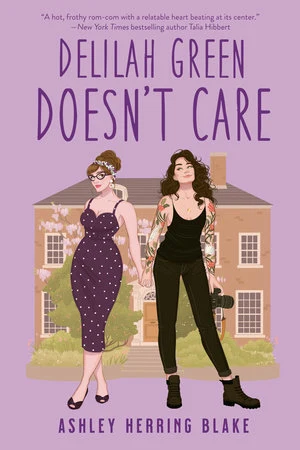
This is Bright Falls book three. The earlier titles are Delilah Green Doesn’t Care and Astrid Parker Doesn’t Fail. Prior couples return, so publication order is the better route if their stories matter to you. The couple’s premise is accessible on its own, but later appearances can reveal earlier outcomes. Our score does not yet include a separate ending-satisfaction or repeat-reading assessment.
What critics and readers agree on, and where they differ
Finished after an initial DNF; criticizes characterization and uneven fake-dating effort. ARC disclosed.
Checked 3 October 2026. These are selected responses, not a representative reader survey. Promotional quotations are traced to their original review; bots and secondhand recommendations do not count as reading testimony.
The Eikna Evidence Scorecard
★★★★★★★★★★Provisional Eikna score: 3.8/5. Based on romance, characters, writing, emotional impact (85% of the full weighting), normalized over those supported dimensions. Ending satisfaction, re-read appeal remain unscored. Evidence confidence: Moderate. This researched editorial judgment may change when those gaps are assessed.
Romance
★★★★★★★★★★4/5 · Strength with reservations
Kirkus praises attraction
PW values mutual support
Mills enjoys the pining
A contrary reader finds uneven effort
Detailed favorable accounts support tenderness and developing attraction; uneven effort is a retained limitation.
As an Amazon Associate, Eikna Romance earns from qualifying purchases. The linked title and ISBN were checked; checkout and commission credit were not tested. Bookshop and Libro.fm links await destination checks, and Audible affiliate setup remains pending. A missing button does not mean a format is unavailable.
Questions before you choose
Do I need the first two Bright Falls books?
You can understand this couple’s setup, but earlier leads return. Read Delilah Green Doesn’t Care and Astrid Parker Doesn’t Fail first if you want to preserve their discoveries.
Is it closed door?
No. Inspected trade and reader reviews report explicit sexual material; we have not assigned an exact Eikna heat number.
Do all readers praise the anxiety representation?
No. Named reviewers disagree about whether Stevie has enough characterization beyond anxiety. Our recommendation keeps that disagreement visible.
Keep a romance writer facing creative uncertainty; move from theatre and practice dates to a two-writer challenge with separate grief cautions.
How we made these connections
Each route carries forward a particular premise or reader preference. These editorial comparisons do not promise identical heat, endings or personal response.
Keep exploring
Fake-dating guide compares why a couple agrees to perform a relationship in public. It shows how that arrangement creates a different kind of tension from friendship or an actual marriage bargain.
LGBTQ romance collection offers relationship-based ways into its queer romance selections. It compares what brings the lovers together while keeping the specific book identities visible.
Our final recommendation
Choose Iris Kelly for tenderness that grows through an awkward arrangement and shared vulnerability. Begin earlier in Bright Falls if the returning friends are part of the attraction; sample this installment first if pacing or anxiety representation will decide your purchase.
This page contains affiliate links, including Amazon, Bookshop.org and Libro.fm. As an Amazon Associate, Eikna Romance earns from qualifying purchases, at no extra cost to you.