Found family describes meaningful bonds built outside or beyond biological kinship. Friends, neighbors or a chosen community can give characters a place to belong while the central romantic relationship develops.
Compare 10 researched starting choices through the household, friendship circle or community that surrounds the romance. The evidence notes separate explicit chosen family from qualified support, so you can choose how central belonging should be. Follow each full assessment for the relationship’s strengths, reservations and content guidance.
Original editorial artwork inspired by this page’s theme; not an official book cover or a claimed book scene.
Updated 10 October 2026 · Eikna Editorial Team · Researched editorial assessments
Compare who makes room for the relationship
A chosen household offers different kinds of care from a friendship circle or a community rebuilding after danger. These notes identify the actual bonds and their evidence. Community support can matter deeply without the inspected source calling it family.
An outsider welcomed into relatives’ disputed household
Found-family judgment attributed to an identified critic
A family circle drawing an unexpected visitor into its daily concerns
Who helps the characters build a life?
Found family gives the romance a wider circle of attachment. Look for people who choose to offer care, accept help and make room for one another beyond a formal obligation. That circle might be a household, friends or a community built over several books. Decide how much attention you want it to receive. A close supporting bond can deepen the couple's story; an ensemble can become a major story of belonging in its own right.
Starting point
What drives it
What to check
A chosen household
Care creates a shared daily life
Look for the needs and agency of everyone involved
Friends who act as family
Loyalty includes practical help and accountability
A frequent supporting cast is not enough by itself
A welcoming community
Belonging extends beyond one relationship
Check whether community life complements or competes with the romance
A recurring series circle
Earlier bonds continue around a new couple
Check entry points and spoilers before starting in the middle
Notice the work of belonging
Concrete care matters: showing up, making space, taking a difficult conversation seriously or offering help that respects the recipient's choice. A cheerful group introduction cannot establish these bonds alone. In our selections, the full assessments discuss how supporting relationships function and retain criticism when the family appeal exceeds the depth given to individual characters.
Biological ties and chosen ties can coexist
Found family need not require rejection of every relative. A new partner can join an existing household; friends can support someone who also has loving kin. The useful distinction is the care people choose to build. Avoid treating adoption, guardianship or parenting as interchangeable labels. Those circumstances need their own book-specific evidence.
Warm company does not settle content boundaries
Characters may form new bonds after grief, rejection, abuse or estrangement. A supportive destination does not make the journey low angst. When you want comfort, check the events and tone as well as the community. When you want a strong central romance, check that the ensemble leaves enough room for the relationship rather than assuming all found-family fiction is genre romance.
Choose this collection when the bond between the leads is your main interest. Found family concerns a wider support network; friends to lovers concerns the couple's starting relationship.
Use the mood guide to decide whether you want comfort, tension or a heavier emotional journey. A chosen community can appear in each, so belonging alone does not determine the tone.
Use this broader route for stories shaped by work, homes and ordinary social life. The individual selections still need evidence before being called found-family books.
10 researched starting points for belonging around the romance
1 choices have explicit chosen-family evidence. The remaining 9 retain qualified community support or an attributed critic’s family interpretation. Read the distinctions before choosing: this is a bounded starting collection from our existing reviewed catalogue, not a comprehensive list.
Explicit chosen-family bonds
In a Jam
Kate Canterbary
Belonging evidence: Explicit found-family classification in author-hosted material
Best for: Domestic belonging alongside a marriage needed to keep a home
Shay returns to Friendship with a farm inheritance that requires her to move home and marry within a year. Noah, who has loved her since their school years, is raising his young niece. The author-hosted Polish edition description explicitly includes found family among the book’s dynamics; that classification goes beyond assuming every small-town return fits the trope.
Choose this for a household in which the adults’ romantic future has consequences for everyday family life. The niece remains Noah’s niece, rather than being relabeled his biological daughter. A domestic circle can contain relatives and chosen relationships together. The existing assessment weighs the warmth and banter against length, possessiveness and characterization, so the family appeal should be considered alongside those reservations.
Before choosing: Explicit found-family classification in author-hosted foreign-edition description; kinship parenting remains accurately identified. Not a claim that all small-town or niece-care stories are found family.
What establishes the family or support context?
Kate Canterbary — author-hosted Polish edition description: Names In a Jam, return and marriage condition, niece household, and explicitly lists found family. (author hosted edition classification inspected). Source: https://katecanterbary.com/foreign-editions/slodkie-klopoty/.
Attributed family and qualified community comparisons
The evidence below either attributes the family reading to a critic or establishes support without a firm chosen-family classification. These can help readers who enjoy belonging, but do not all promise the same family dynamic.
Happy Place
Emily Henry
Belonging evidence: Found-family judgment attributed to an identified critic
Best for: A close friendship group whose shared rituals are as consequential as the reunion romance.
Harriet and Wyn conceal their breakup during the annual Maine trip with their closest friends. The group has returned to the cottage for a decade, treating it as a refuge where they spend time with the people who understand them best.
This is a strong starting point when you want chosen family to have its own emotional stakes. The cottage’s sale threatens a shared tradition, while the couple’s attempt to protect their friends from hurt makes the group part of the romantic conflict. Expect a valued bond under strain, rather than effortless group harmony.
Before choosing: Longstanding intimate friend group verified by synopsis; chosen-family label attributed to People in publisher praise.
What establishes the family or support context?
Official author/publisher book page: Synopsis establishes longstanding group rituals, refuge and concern for friends; publisher quotes People explicitly identifying chosen family. (reported classification). Source: https://www.penguinrandomhouse.com/books/704944/happy-place-by-emily-henry/.
Belonging evidence: Found-family judgment attributed to an identified critic
Best for: A family circle drawing an unexpected visitor into its daily concerns
Mel’s attempt to rebuild her influencer career places her in a Canadian fishing village. After Evan’s boating accident, his relatives mistake her for his fiancée; their warmth and dispute over the bed-and-breakfast turn her stay into a pretend engagement. Belonging matters here through an outsider’s connection to an existing family, rather than through a group with no biological ties.
Michigan Daily identifies found family in its assessment, reproduced in the publisher’s praise. We retain that attribution instead of treating a welcoming family as automatic proof. Choose it when entering a messy but inviting circle appeals alongside the fake relationship. The one-week bargain and Mel’s city life create practical limits on the connection; the full assessment explores both ensemble appeal and reservations about the contrivance.
Before choosing: Family interpretation attributed to Michigan Daily in publisher praise; publisher premise directly verifies welcome, fake engagement and family feud.
What establishes the family or support context?
Penguin Random House — premise and identified Michigan Daily praise: Welcoming relatives and B&B dispute establish setup; Michigan Daily explicitly reports a found-family theme. (primary premise and reported critic classification). Source: https://www.penguinrandomhouse.com/books/673411/the-catch-by-amy-lea/.
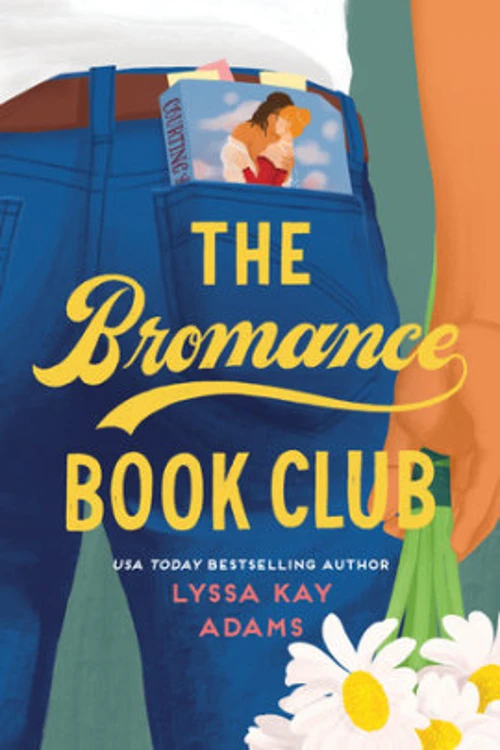
Best for: A chosen support circle that challenges a friend’s behavior during a marital crisis.
When Gavin Scott’s marriage is in trouble, a secret romance-reading club offers help. Its members coach him through trying to regain Thea’s trust, creating an explicit support relationship beyond the romantic couple and their biological household.
Choose this for the way friends participate in emotional growth rather than simply appearing at parties. The publisher’s authorized opening shows teammates coming to Gavin’s hotel room and looking after him in distress, but the source calls the group a club rather than a replacement family; the community qualification should stay visible.
Before choosing: Concrete nonrelative support verified; family label is an editorial interpretation, not explicit publisher classification. Marriage repair is central.
What establishes the family or support context?
Official author/publisher book page: Synopsis confirms the club coaches Gavin to repair his marriage; authorized opening shows teammates and club associates assisting him during distress. (direct premise example). Source: https://www.penguinrandomhouseretail.com/book/?isbn=9781984806093.
Best for: A qualified community comparison for readers interested in starting over socially.
Daphne’s broken engagement leaves her in Waning Bay without nearby friends or family. Her job as a children’s librarian and her new living arrangement with Miles frame a story about finding a life beyond the relationship that brought her there.
The publisher reproduces a New York Times assessment identifying a community of supporting characters alongside family trauma. That supports a community-focused comparison, but it does not independently establish a particular group as chosen family; readers seeking an explicit family-like ensemble should begin with a stronger direct selection.
Before choosing: Qualified: publisher synopsis establishes isolation; community evidence comes from an identified critic quoted by publisher. Do not claim named friends provide specific unverified care.
What establishes the family or support context?
Official author/publisher book page: Synopsis establishes Daphne initially lacks local friends/family; New York Times praise reproduced by publisher identifies community of side characters. (reported classification). Source: https://www.penguinrandomhouse.com/books/704945/funny-story-by-emily-henry/.
Best for: Readers interested in preserving friendship and belonging alongside a new romantic commitment.
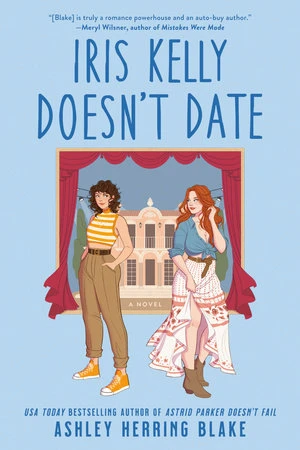
The publisher’s reading guide singles out Stevie’s concern about moving far from her friends and community, then notes that she maintains those friendships while making new ones. That supplies a concrete community question beyond simply giving the heroine friends: what happens to established belonging when a relationship changes where someone lives? The evidence supports a qualified community comparison, without confirming that the group is explicitly treated as a replacement family.
Choose this when you want the romance to leave room for connections that do not disappear once a partner becomes important. Stevie’s decision is framed alongside anxiety, personal change and attachment, and the guide keeps maintaining her wider relationships part of the discussion. This is a useful companion to more explicit chosen-family stories, particularly for readers weighing the difference between joining a romantic future and leaving every existing support behind.
Before choosing: Qualified community comparison: the publisher verifies maintained friendships and new community after relocation, but does not explicitly establish a family-like support structure. Do not count it as a definitive chosen-family example.
What establishes the family or support context?
Berkley / Penguin Random House — Iris Kelly Doesn’t Date reading guide: Question eight explicitly describes Stevie’s concern about moving away from friends/community and her maintaining those ties while making new ones. (primary community continuity verified). Source: https://www.penguinrandomhouse.com/books/722345/iris-kelly-doesnt-date-by-ashley-herring-blake/9780593747858/readers-guide/.
Best for: Readers who want a romance to acknowledge the fear of losing one’s place in an important friend group.
Margot’s reunion with Olivia begins while she is accompanying engaged friends to a wedding venue. Bellefleur’s own interview explains the emotional pressure behind that setting: as the last single person in a group, Margot fears friendships changing and no longer being someone else’s most important person. The circle is therefore consequential to her romantic situation, although the checked primary evidence does not establish specific family-like caregiving or mutual aid.
Before choosing: Qualified community comparison, supported by the author’s account of changing central friendships. Concrete family-like support beyond friendship is not independently established in the checked primary sources.
What establishes the family or support context?
Alexandria Bellefleur author interview — Fresh Fiction: Bellefleur discusses fear of changing friendships and losing importance in a friend’s life; accompanying synopsis places Margot’s reunion at her engaged friends’ wedding-venue visit. (primary author community stakes verified). Source: https://blog.freshfiction.com/alexandria-bellefleur-exclusive-interview-count-your-lucky-stars/.
Best for: An isolated librarian learning to accept help and contribute to a new home
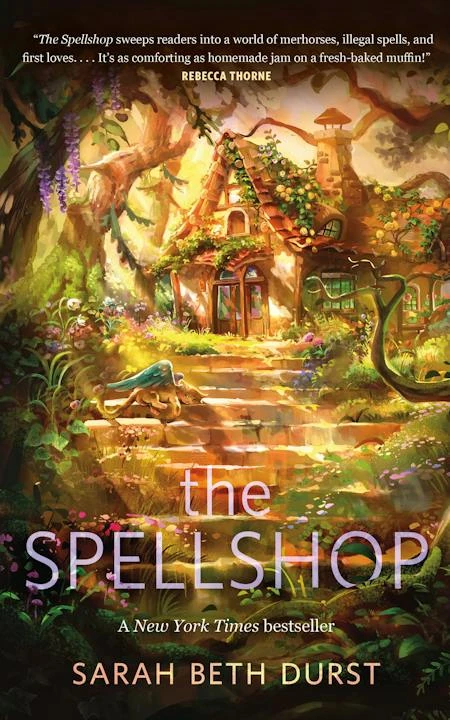
Kiela escapes a burning library with Caz, her sentient plant assistant, and returns to an island where she expects to hide with her rescued books. The author describes her surprise at a neighbor who feeds her and helps repair her home, and at her growing affection for the island’s residents. Belonging begins through practical kindness rather than an inherited family obligation.
Choose this qualified community selection for a fantasy story about making knowledge useful to others and allowing other people into a carefully protected life. Kiela’s secret spellshop turns refuge into participation: she has something the island needs, while its people offer support she did not expect. The canonical review treats the romance as a subplot within cozy fantasy, so readers seeking a couple-focused romance should check that distinction.
Before choosing: Qualified community rather than a verified formal chosen-family household. Cozy fantasy with romantic subplot per canonical review; publisher markets it as romantasy.
What establishes the family or support context?
Sarah Beth Durst — author letter at Macmillan Library: Author describes escape with Caz, neighbor’s practical care, love for island residents, sharing knowledge and sanctuary. (inspected 2026-10-10). Source: https://macmillanlibrary.com/2024/03/12/sarah-beth-dursts-letter-to-librarians/.
Best for: Established allies protecting vulnerable people beyond their own households
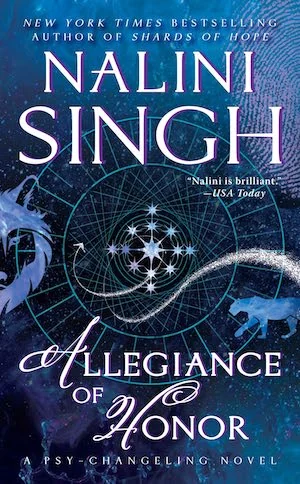
The author’s excerpt gives a concrete example of care extending beyond blood ties: Kaleb helps protect a DarkRiver child because the pack previously protected and nurtured Sahara. Friends who once worked together in secret also maintain a standing commitment to help one another. These relationships support a community reading beyond the biological families present in the ensemble.
This is a qualified choice for readers who already know the Psy-Changeling cast and want to see loyalty carry across old divisions. The broader plot tests cooperation among former enemies and new allies, combining personal obligations with the protection of a shared future. As book fifteen, it is an ensemble continuation with many established couples; it should not be presented as an accessible standalone romance about forming one new household.
Before choosing: Qualified community: explicit non-biological care and enduring friendship, alongside biological families and political alliance. Book 15; ensemble continuation, not one newly forming family or single-couple standalone.
What establishes the family or support context?
Nalini Singh — Allegiance of Honor official excerpt and premise: Kaleb reciprocates DarkRiver’s nurturing of Sahara by protecting Naya; friends maintain help commitments, and Trinity requires loyalty across divisions. (inspected 2026-10-10). Source: https://nalinisingh.com/books/psychangeling-series/allegiance-of-honor/.
Best for: A dangerous team discovering that survival requires attachment
The opening sets the Arrows’ rule against personal attachment beside their actual dependence on each other. Vasic continues living for fellow squad members who still have hope, and the group maintains a shared space because experience has taught them that no member can always cope alone. That supports chosen comradeship rather than a claim that membership by itself constitutes family.
Try this qualified selection if belonging matters most when people were trained to suppress it. Vasic’s connection with Ivy develops within a larger effort involving protectors and empaths, so the romance sits beside collective recovery and mutual reliance. It is the thirteenth Psy-Changeling novel and carries the consequences of earlier institutional violence; the community angle offers a different experience from a cozy household assembled through ordinary friendship.
Before choosing: Qualified chosen comrades/community; inspected opening establishes mutual reliance, not an explicit family designation. Book 13; institutional conditioning and prior violence require checking the canonical review.
What establishes the family or support context?
Nalini Singh — Shield of Winter official opening excerpt: Arrow code forbids attachments, but Vasic lives for squad members and their communal space acknowledges inability to stand alone. (inspected 2026-10-10). Source: https://nalinisingh.com/books/psychangeling-series/shield-of-winter/.
Does a small town automatically mean found family?
No. A setting supplies people and places; chosen care requires book-specific evidence. Qualified community examples are separated from explicit family classifications.
Must characters reject their relatives?
No. Chosen support can supplement biological relationships. Repairing a bond with a sibling alone, however, does not establish a wider chosen family.
Is a romantic couple enough to count?
These choices look beyond the couple to a household, friendships or a wider circle. Attraction between two people does not establish that wider support.
Does supportive community mean low angst?
No. Grief, rejection, danger or painful family histories can precede belonging. Check the individual assessment rather than treating warmth as a content guarantee.
Are all these books equally strong trope matches?
No. The notes distinguish explicit classification, an identified critic’s interpretation and verified community support. The Catch retains Michigan Daily’s found-family judgment as attributed criticism.
Can fantasy with a romance subplot belong here?
It may offer the desired circle of care while giving less space to the couple. Such choices need a visible romance-role qualification, so readers seeking a central genre-romance arc can decide deliberately.
How these starting choices were researched
We inspected current competing guides and checked family and community premises through author and publisher material, retaining identified criticism where the family reading is reported. Each note explains what establishes chosen bonds or why community support remains qualified. These additions link existing researched assessments without adding ratings or claiming first-hand reading. The order groups evidence scopes rather than ranking quality; the collection remains incomplete.
Choose how belonging participates in the romance
A friend group can provide practical help, a home can bring new relationships into an existing household, and a community can give someone a place to begin again. Those are valuable reading pleasures without every source explicitly calling them family. The ten existing cards preserve that difference.
Comrades depend on one another despite an ideal of emotional detachment
Shared danger and chosen support are supported; group membership alone does not prove family status.
Choose an existing circle or the work of joining one
Happy Place makes the possible loss of a familiar gathering place part of the emotional problem. The Catch brings a visitor into an already complicated family, while Funny Story starts from a woman rebuilding her social life after an engagement ends. These are different stages of belonging. Someone who wants an established group with years of history may prefer a different route from a reader who enjoys watching new connections accumulate.
Count Your Lucky Stars asks what happens when one person fears being left behind as friends form couples. Iris Kelly Doesn't Date keeps friendship and community relevant when romantic commitment changes where someone lives. Their qualified status is useful: the reading question can concern maintaining important bonds without an explicit source declaring that those friends have replaced a birth family.
Look for what people do for one another
The Spellshop's author describes a neighbor making sure Kiela eats and helping her home become livable. Her growing willingness to accept help and contribute gives community a practical shape. Those details distinguish the appeal from merely placing a romance in a picturesque small town. The source remains an author's account of her own story, not independent critical testimony or proof that every reader will find it comforting.
Sarah Beth Durst's publisher-hosted letter, 12 March 2024
Allegiance of Honor offers a much larger established cast and obligations across old divisions. Shield of Winter places collective care inside a dangerous mission. Readers wanting a quiet, self-contained introduction to a small group should check their series position and existing guidance before choosing either for belonging alone.
A supportive circle can welcome a couple, challenge someone's behavior or have needs of its own. Ask which role you want, how much ensemble time you enjoy and whether you need an explicit family-like bond. Found family, community warmth and an individual caring love interest overlap, but they do not answer exactly the same request.
Follow the part of the feeling that matters to you
Researched editorial synthesis using existing assessments, not new firsthand reading. Original scores, coauthors, source dates and qualified boundaries remain intact. Held retailer actions identify unchecked destinations, not unavailable formats. Cover art does not establish stock; feature artwork depicts fictional adults rather than actual book characters.