Night Song by Beverly Jenkins Review
Eikna Score: 6.9/10. Recommended with reservations.
Night Song is a debut with the seams showing: a slow, clumsy first half, a hero whose swagger tips into pushiness, and history that sometimes stops the story to explain itself. It is also the first Beverly Jenkins novel, a Black Kansas town in 1882 drawn with real affection, and a second half that finally catches fire.
Read it if you want to see where Jenkins started, or you are curious about Buffalo Soldiers and the Black towns of the Kansas plains. Skip it if you have no patience for a hero who keeps pressing after he is told no, or you want her polished later work first (start with Indigo).
Night Song at a Glance
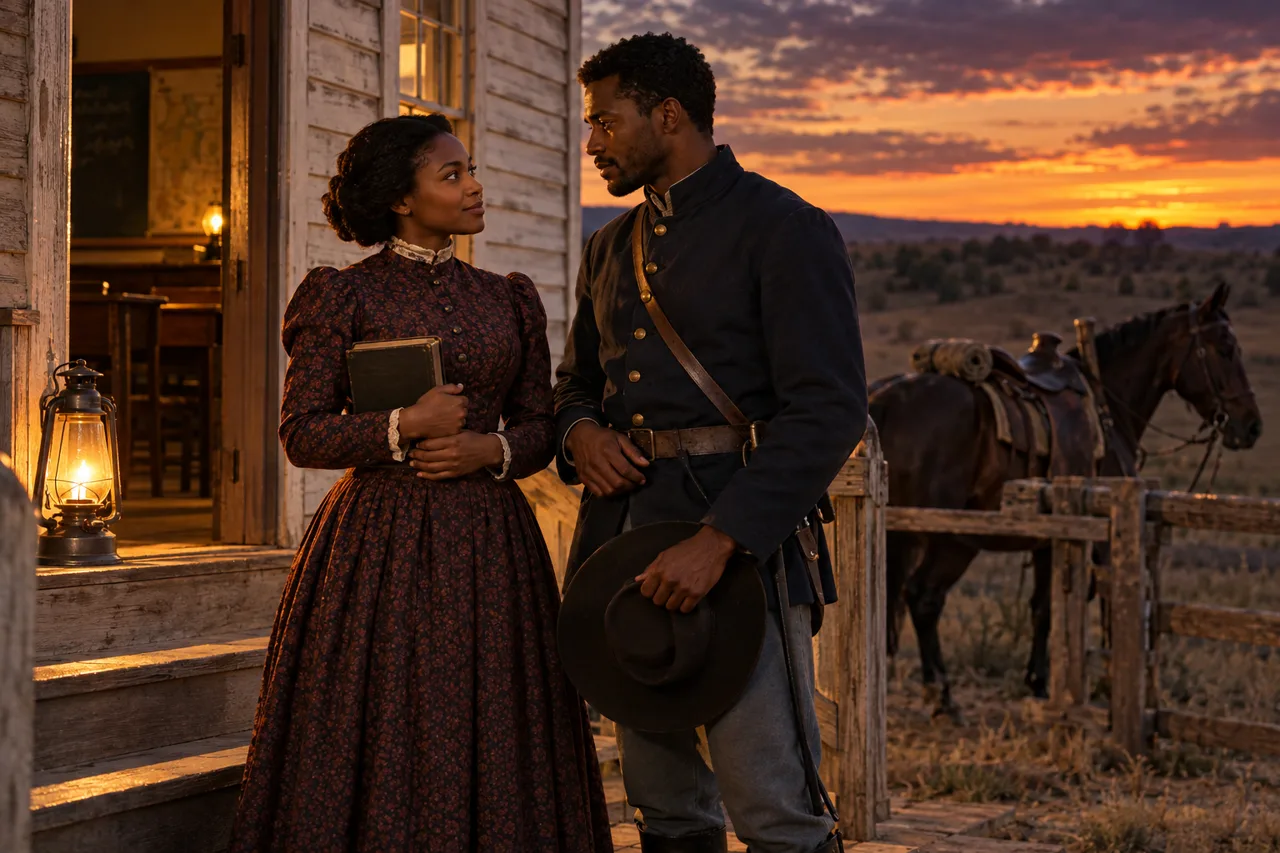
Night Song is Beverly Jenkins's first novel, published by Avon in July 1994: a historical romance between a Kansas schoolteacher and a Tenth Cavalry sergeant, set in 1882. It is a standalone, runs 384 pages in mass market paperback and ends with a happily ever after.
| Author | Beverly Jenkins |
|---|---|
| Series | Standalone (Jenkins's first novel) |
| Subgenre | Historical romance, American West |
| Main tropes | Military hero, schoolteacher heroine, reputation at stake, opposites attract, small-town community |
| Spice level | 3/5: Moderate, some open door |
| Content warnings | Racism and colorism, lynching, murder and attempted murder, kidnapping, miscarriage (full list below) |
| POV | Third person, both leads |
| Ending | HEA |
| Pages | 384 (Avon mass market paperback) |
| Audiobook | Narrated by Kim Staunton, 11 hours 45 minutes (Avon, 2020) |
| First published | July 1, 1994 |
| Publisher | Avon (HarperCollins) |
What Is Night Song About?
Night Song is set in 1882 in a small Black town in Graham County, Kansas, the Henry Adams community named in the publisher's synopsis. Cara Lee Henson teaches the town's children and guards her good name closely, because her job depends on it. Sergeant Chase Jefferson of the Tenth Cavalry, one of the Buffalo Soldier regiments, arrives to be honored by the town.
The local gossip says Chase is not the marrying kind. Cara wants him anyway and refuses to let it show. Chase decides to win her before his orders take him away, and the stakes of their courtship grow once trouble from outside the town finds its way in.
What Makes This Soldier and Schoolteacher Romance Work
Night Song works, when it works, because the soldier and schoolteacher pairing carries real social weight. Cara is not coy for the sake of the plot. A single woman teacher in 1882 could lose her post over talk, and Chase is a man whose job is to leave. Her caution is rational, which gives the chase an edge.
The second draw is the setting itself. Jenkins told NPR in 2015 that publishers struggled with a Black historical romance that was not about slavery, and that "They didn't have a box for it." Night Song is that box being built. The town is Black from top to bottom, families, neighbors, a schoolroom and soldiers in blue, and none of them is there to teach a white character a lesson.
Readers who come to romance for history they never got in school will find a lot here. Readers who come for a tightly built love story will find the history and the romance only partly stitched together, which is the honest trade of this book.
My Review
I read Night Song after a run of Jenkins's later books, which is probably the unkind way to do it. You can feel a writer finding her feet. The first half moves in fits, the dialogue sometimes explains what both characters already know, and the romance runs on misunderstandings that later Jenkins would have cleared up in a page. And yet I kept reading, because the town is alive and because Cara is good company even when she is being foolish.
Romance and Chemistry
The attraction is there from the first meeting, and Jenkins writes desire from Cara's side without apology. That matters. The Journal of Popular Romance Studies essay on her work singles out an outdoor picnic scene as a space for Cara's own pleasure, and I agree that this is where the book is most itself: a Black woman in 1882 wanting something and taking it.
The trouble is Chase. He is confident to the point of deafness. When Cara says no, he hears "not yet," and the book mostly treats that as charm. Mrs. Giggles calls the opening half a run of romance clichés and silly behavior, and that is fair. A StoryGraph reader put it more sharply, saying Cara gave in to Chase too quickly for a woman so set on her independence. Culturess, who loved the book, still admits that Chase can be harsh. I liked him better in the second half, when the plot gives him something to do besides pursue her.
Once the two of them are on the same side, the book improves a lot. Mrs. Giggles noticed this too: the couple talk to each other in the back half, and the suspense builds toward a climax that actually moves.
The Characters
Cara is quick, proud and occasionally reckless. Mrs. Giggles worried about her judgment as a teacher, and there were moments I did too. But she has a life outside Chase, a classroom, friends and a reputation she has built herself, and Jenkins never forgets it.
The supporting cast is the hidden strength. StoryGraph reviewer awishman points to an early female rival who gets a small redemption arc, which is a kinder move than most 1990s romances made. The townspeople feel like a community rather than set dressing. The villain, on the other hand, is drawn in thick strokes; Mrs. Giggles calls him a cartoon, and I would not argue.
Writing and Pacing
This is where Night Song shows its age. Some passages stop to lay out the history of the Tenth Cavalry and the period in a way that reads like a lecture, as Mrs. Giggles put it. Awishman says characters are told to us rather than shown in places. Both are true. Jenkins also leans on a few flowery phrases in the love scenes that will make some readers wince.
Pacing is the bigger issue. The first half circles: he pursues, she resists, the town talks. The second half has real danger and real cost, and I wished the book had reached it sooner. One loss in the later chapters is handled quickly, which a StoryGraph reader found jarring, and I understood why.
What survives the rough edges is the point of view. Night Song treats an all-Black frontier town as the center of the world, not the margin. In 1994 that was close to unheard of at a major romance imprint, and Mrs. Giggles calls the book a "pretty significant milestone in the history of romance novels." That is not a reason to love the book, but it is a reason to read it.
Night Song is a rough first novel with a wonderful setting and a hero I liked less than the town he visits. Read it for the history and for Jenkins's beginnings, and read her later books if you want the romance at full strength.
How Spicy Is Night Song?
Night Song is a 3 out of 5 on our scale: Moderate, some open door. There are on-page love scenes, and Mrs. Giggles describes them as steamy and a little purple, but they are fewer and softer than in later Jenkins books such as Topaz. The intimacy is written from Cara's point of view, with an emphasis on her pleasure.
Consent is the area to know about. Chase keeps pressing after Cara turns him down early in the book, and the story frames that as persistence. The sex itself, when it happens, is mutual. Our heat levels guide explains the full scale.
Content warnings, drawn from the Trigger Warning Database and reader reviews:
- Racism and colorism
- Lynching
- Murder and attempted murder
- Gun violence
- Kidnapping
- Miscarriage, handled briefly
- A hero who persists past the heroine's refusals
Our content warnings guide explains how we compile these lists.
Who Should Read Night Song?
Night Song suits readers who love Black American history, want to read Beverly Jenkins from the beginning, or enjoy a frontier romance with a whole town attached. It suits less well readers who want a tight romantic arc from page one or a hero who takes no for an answer the first time.
Best for:
- Readers working through Jenkins's catalogue in publication order
- Anyone curious about the Buffalo Soldiers and the Black towns of 1880s Kansas
- Fans of community-heavy historical romance
- Readers who enjoy a heroine whose desire is front and center
Not for:
- Readers who want Jenkins at her most polished (try Indigo or Vivid)
- Anyone put off by a pushy hero
- Readers who dislike history explained in long passages
- Readers who want low heat or closed-door scenes (see our closed door picks)
What Readers and Critics Are Saying
Readers and critics treat Night Song as an important first book more than a favorite one. Mrs. Giggles calls it a milestone in a mixed but respectful review, Culturess says every romance reader should read it, and StoryGraph readers split between affection for Cara and frustration with Chase.
Where they agree. The history is the selling point. Culturess praises the balance of romance and history and the details of Chase's missions. StoryGraph reviewer awishman says the book taught them about the Buffalo Soldiers and post-Civil War life, and the Journal of Popular Romance Studies reads it as a book centered on Black women's pleasure and inner life. Almost everyone likes Cara.
Where they split. Chase divides readers. Culturess admits he can be harsh but roots for him anyway; a StoryGraph reader found the chemistry weak and his pursuit unappealing. Mrs. Giggles thinks the first half is weak and the second half strong, while awishman finds some tropes dated but likes how the central conflict resolves. The brief handling of a pregnancy loss bothered at least one reader.
The book's place in history is settled. In her 2015 NPR interview, Jenkins described Night Song as the book publishers did not know how to shelve, and three decades on it has stayed in print and come out as a 2020 audiobook narrated by Kim Staunton.
The Eikna Evidence Scorecard
Night Song scores 6.9 out of 10 on the Eikna Evidence Scorecard. It earns its best mark for the ending and solid marks for romance and heat, and loses most ground on writing and pacing, where critics including Mrs. Giggles point to a slow first half and history delivered as lecture.
| Dimension | Score (/5) | Why |
|---|---|---|
| Romance (20%) | 3.5 | Real heat once Cara stops fighting it; Mrs. Giggles finds the first half leans on stock romance moves. |
| Characters (15%) | 3.5 | Cara is lively and stubborn; a StoryGraph reader found her independence slips too fast around Chase. |
| Writing and pacing (15%) | 3 | Mrs. Giggles calls some history passages a lecture; StoryGraph reviewer awishman notes telling over showing. |
| Emotional impact (15%) | 3.5 | The town's danger lands hard in the second half, though a StoryGraph reader felt one loss was rushed. |
| Heat level (10%) | 3.5 | Open-door scenes that Mrs. Giggles calls purple; they deliver warmth more than craft. |
| Ending satisfaction (15%) | 4 | Culturess found the happy resolution well earned after the long standoff. |
| Reread appeal (10%) | 3 | Worth a reread for history buffs and Jenkins completists more than for the romance itself. |
The Eikna Overall Ranking: Night Song sits in the lower half of Jenkins's historical catalogue for craft but near the top for historical importance, behind Indigo and Vivid, and lands at a final Eikna Score of 6.9/10.
Is Night Song a Standalone?
Night Song (1994) is a standalone historical romance.
Night Song is a standalone with no required reading order. It does not belong to any of Jenkins's official series, and none of its characters lead a later book. If you want to read her historical novels in publication order, Night Song comes first, followed by Vivid in 1995 and Indigo in 1996.
Best format: the Kim Staunton audiobook is a good way in, since her steady narration smooths over the stiffer patches of dialogue. Our series order guide covers Jenkins's linked books.
If You Loved Night Song, Read These Next
If you loved Night Song, the best next reads are Jenkins's other frontier and community romances, plus Black historical romance from writers who followed her lead.
- Vivid by Beverly Jenkins: her second novel, another all-Black town and a much stronger heroine-versus-hero standoff.
- Indigo by Beverly Jenkins: the book where her blend of history and romance comes together.
- Topaz by Beverly Jenkins: a reporter heroine, a lawman hero and more Western terrain.
- Night Hawk by Beverly Jenkins: a later Jenkins Western, for readers who want her frontier voice at its more practiced.
- An Extraordinary Union by Alyssa Cole: a Civil War spy romance that owes a clear debt to the path Jenkins cut.
Frequently Asked Questions
Night Song prompts a few repeat questions: whether it is a standalone, how spicy it is, whether it ends happily and where it fits in Beverly Jenkins's career. Short answers below.
Is Night Song Beverly Jenkins's first book?
Yes. Night Song was published by Avon in July 1994 and is Beverly Jenkins's first novel.
Is Night Song a standalone?
Yes. Night Song is a standalone historical romance and does not belong to any of her series.
Is Night Song spicy?
Moderately. Night Song is a 3 out of 5 on our scale, with some open-door love scenes written from the heroine's point of view.
Does Night Song have a happy ending?
Yes. Cara and Chase get a happily ever after.
Where is Night Song set?
Night Song is set in 1882 in a Black town in Graham County, Kansas, with a hero from the Tenth Cavalry Buffalo Soldiers.
Is there a Night Song audiobook?
Yes. Kim Staunton narrates the unabridged audiobook, which runs 11 hours 45 minutes and was released by Avon in 2020.
Should I start Beverly Jenkins with Night Song?
Only if you want to read her in order. Most readers will enjoy Indigo or Vivid more as a first Jenkins book.
The Bottom Line
Night Song earns a 6.9/10 and a Recommended with reservations badge. It is for readers who want Black frontier history, a heroine who owns her desire and a look at where Beverly Jenkins began, and who can forgive a slow start and a pushy hero. The one reason to pick it up is the town: a Black Kansas community in 1882, written as if it were the center of the world.
Buy on Amazon Buy at Bookshop.org Listen on Audible Listen on Libro.fm
Some links on this page are affiliate links: Eikna Romance may earn a small commission at no extra cost to you.
Sources
- Night Song, Beverly Jenkins official site
- Night Song, FictionDB (edition and page data)
- Night Song, AALBC listing (Avon mass market, 384 pages)
- Night Song synopsis, Powell's Books
- Night Song audiobook, Libro.fm
- Beverly Jenkins Wraps Bitter History in Sweet Romance, NPR
- The Religious Work of Beverly Jenkins's Black Historical Romance, Journal of Popular Romance Studies
- Night Song by Beverly Jenkins, Mrs. Giggles
- #TBRTrending: Night Song by Beverly Jenkins, Culturess
- Night Song review by awishman, StoryGraph
- Night Song by Beverly Jenkins, Trigger Warning Database
- Beverly Jenkins books page (series and standalones), official site
Mrs. Giggles places the town in Texas; the publisher's synopsis and Powell's place it in Graham County, Kansas, which we follow. The number of love scenes is our estimate from reader descriptions.
How we review: every Eikna score is built from a seven-part evidence scorecard. Read our methodology.