
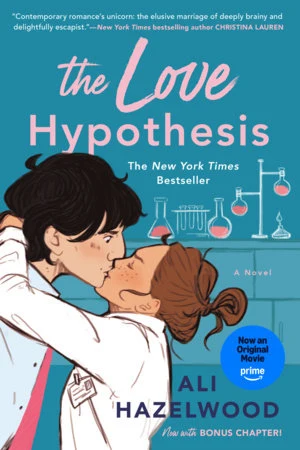
Paperback edition
The Love Hypothesis · Ali Hazelwood
ISBN 9780593336823
View publisher edition details
Current publisher artwork includes a movie badge. Product Details identify the original 2021 paperback ISBN; this is separate from the 2026 tie-in ISBN 9798217195633.
Our verdict
Consider this book if fake dating is your favourite route from awkwardness to intimacy and you enjoy a reserved hero whose public reputation complicates the heroine’s expectations. Pause if a professor–student pairing is a firm boundary, or if a premise built on an avoidable misunderstanding tends to frustrate you. Those preferences matter more than the book’s popularity.
Spice, ending and series
Is The Love Hypothesis spicy?
A numeric heat level has not been established. Read the review’s heat and content discussion for attributed descriptions before choosing. An unknown level is not a closed-door or no-spice promise.
The heat-level guide explains detail and frequency; the glossary entry for spice separates sexual content from quality.
Does it have a happy ending?
The romantic outcome is not established in this summary. A romance label does not independently confirm an ending. Consult the discussion before choosing if closure is essential.
For the difference between romantic commitment and wider plot closure, compare HEA, HFN and cliffhangers.
Can I read it on its own?
Standalone or continuing-series status is not established in this summary. Read the existing format and series guidance for any available context; do not assume a missing series entry means the book stands alone.
The series-order guide explains what to check when a complete romance belongs to a connected world.
Where to buy The Love Hypothesis
As an Amazon Associate, Eikna Romance earns from qualifying purchases.
Selected print listing: ISBN 9780593336823. Check the selected format and delivery territory before ordering.
Why Olive and Adam pretend to date
Olive wants her friend Anh to feel free to date Olive’s ex, Jeremy. Adam has a practical reason to cooperate: the university is holding back research funding because it thinks he might leave, and an apparent relationship can make him look more settled. Kirkus’s review explains both motives. The deal therefore has different stakes for each character: friendship for Olive, professional security for Adam.
For choosing a shelf, fake dating is the clearest starting point. The grumpy–sunshine contrast describes their temperaments; it does not establish that they are genuine enemies. A frightening reputation, an uncomfortable first encounter and personal hostility are different things. Readers who specifically want sustained mutual opposition should check the actual conflict rather than treat every prickly hero as an enemy.
What makes the relationship appealing—and what may get in the way
The attraction of this setup is the space between performance and sincerity. A gesture that is useful to the arrangement may also mean something to the person making it. If you enjoy asking when a fake couple stops acting, that uncertainty is the main reason to explore the book.
Celeste at A Literary Escape describes an initially unconvincing opening that gave way to an enjoyable developing relationship. Her response is useful because it separates the mechanism that starts the plot from the pleasure of watching the couple grow closer. You might accept one without loving the other.
The supplied Goodreads worksheet records recurring objections to miscommunication and exaggerated physical descriptions alongside enthusiasm for the romance. We have checked the worksheet’s arithmetic, not independently re-read every linked review. These themes identify questions to consider; they do not prove a general reader consensus.
The professor–student pairing deserves a clear explanation
Olive is a PhD student and Adam is a faculty member. Sources disagree about the departmental detail: Kirkus describes different departments, while A Literary Escape places them in the same biology department and says Adam is neither Olive’s adviser nor a member of her thesis committee. We leave the department field unresolved rather than turn conflicting secondary accounts into a settled book fact.
Even the absence of direct supervision would not erase differences in status, influence or professional vulnerability. That is our editorial interpretation, not a finding about university policy. Readers can reasonably distinguish “he does not grade her” from “the institutional imbalance does not matter.” The review should help you decide whether the distinction is enough for your own comfort.
The opening kiss is a separate consent question
In the supplied worksheet, areeba’s review is coded as objecting to Olive kissing Adam without asking at the start. The recorded source is this Goodreads review; its full text was not independently accessible in our checks. We therefore report it as an attributed concern from the supplied research, without quoting it or claiming that all readers share it.
Praise for consent in a later sexual scene cannot answer a concern about that opening moment. Nor can one favourable review establish that a whole book is free from consent concerns. Readers for whom an unexpected kiss is a firm boundary should have that distinction available before choosing the novel.
Why checked readers disagree about consent
Common Sense Media Find this book on Amazon praises consent in the book. Sarah at The Little Book Witch Find this book on Amazon instead finds that hesitation is not adequately respected in sexual scenes. These are different interpretations of the same novel; neither makes the other concern disappear. The opening kiss is a separate question from later intimacy.
How much does the academic setting contribute?
The campus does more than provide offices for romantic encounters. In The Stanford Daily, Leyla Yilmaz finds recognisable research concerns and criticism of low pay, sexism and exclusion. She also points out campus details that do not ring true, including transport and social habits. Her assessment supports a useful distinction: a novel can engage with academic pressures without being a reliable guide to daily life at a particular university.
If you want the working life around the romance to carry emotional weight, these concerns may add interest. If precise institutional realism is essential, treat the setting as fiction and keep the review’s qualified assessment in mind.
Sexual content and reading boundaries
Hazelwood’s author content notes identify graphic sexual content and workplace sexual harassment. A Literary Escape also identifies explicit sex and sexual harassment in its content notes. We can therefore describe the book as containing on-page sexual content; we have not verified a numerical heat score, an exact scene count or a complete content-warning inventory.
“Open door” tells you that sexual activity is depicted. It does not tell you how often it occurs, how graphic every passage is, or whether skipping one chapter will remove all sexual references. We do not promise a closed-door experience through selective skipping.
Author content notes — includes mild plot spoilers
Hazelwood also flags a parent’s earlier death from cancer and strong language. She specifies that the harassment is not committed by Adam. Her notes acknowledge the student–professor power difference and describe early clearance of the fake relationship by the Dean.
The author characterises the relationship as involving no abuse of power. That is her interpretation; it does not settle the opening-kiss concern, the departmental conflict or how a reader will respond to the status difference.
| Reading concern | What the evidence supports |
|---|---|
| Explicit sex | Reported by the author and in an independently checked review. |
| Sexual harassment | Reported by the author and the review; the author specifies that Adam is not the harasser. A full warning inventory remains incomplete. |
| Opening-kiss consent | Concern recorded in supplied reader research; underlying review text still needs independent inspection. |
| Scene frequency and numerical heat | Not verified. No score assigned. |
Reader discussion and its limits
The supplied worksheet raises questions about miscommunication and physical descriptions alongside enthusiasm for the romance. Its displayed-review sample is not random, and not all source texts could be independently inspected. We use those notes to identify questions, not to estimate how all readers feel.
Audiobook: verified credits and runtime
The publisher’s audiobook listing credits Callie Dalton and Teddy Hamilton and gives a runtime of 11 hours 52 minutes. The audio-download edition is published by Penguin Audio, dated 14 September 2021, with ISBN 9780593457573.
Those details belong to that audio edition. Paperback, ebook, hardcover and film tie-in versions can have different identifiers and page counts. The purchase section links the checked Amazon print listing. Audio editions have separate identifiers.
The sequel and screen adaptation
Penguin Random House lists The Two-Body Problem as a continuation about Olive and Adam, scheduled for 2 February 2027. It should not be described as a later book about an unrelated couple. The announcement alone does not settle whether the original has an external-plot cliffhanger.
If you arrived through the adaptation, Amazon’s official coverage is the source for the screen version. This page assesses the novel. Casting, scenes and audience reactions to the film are not evidence for what happens in the book.
Professional reviews and reader discussions: what agrees?
| Source inspected | What it contributes | How we use it |
|---|---|---|
| Common Sense Media: book assessment Find this book on Amazon | Mixed: funny banter and women in STEM; the heroine’s decisions strain credibility. It also praises consent. | Familiar tropes can work while their initiating decisions remain implausible. Its content assessment is one interpretation. |
| The Little Book Witch: firsthand review Find this book on Amazon | Sarah enjoys the romance but questions chapter flow and respect for hesitation in sexual scenes. | Consent praise does not settle a contrary scene-specific reading. We retain this concern without declaring the interpretation a verified fact. |
| Reddit: review and replies Find this book on Amazon | The poster enjoys the romantic payoff despite wanting better communication; replies debate the familiar formula. | Miscommunication is a source of tension for some readers and frustration for others. The thread cannot estimate either group’s size. |
| Reddit: reading recommendations Find this book on Amazon | A reader requests similar books after an absorbing read; replies include The Kiss Quotient and Emily Henry. | This supports a reader-reported discovery route, not proof that every recommended book has matching content. |
| Goodreads: named reader counterexample Find this book on Amazon | Phuong’s displayed review praises the couple but finds the final confession and epilogue unsatisfying. | A high personal rating does not necessarily mean strong ending satisfaction; that dimension needs its own assessment. |
The wider evidence supports recommending this for readers who enjoy fake dating and romantic anticipation, with a stronger warning about decision-making and miscommunication. The consent disagreement now has an independently inspected critical source, rather than relying only on the supplied worksheet. An enthusiastic reader can also dislike the ending payoff, so the community average should not replace our separate ending assessment.
These sources were inspected on 3 October 2026. Discussions were selected to include different responses, not randomly sampled. We do not count upvotes as readers, treat comments in one thread as fully independent, or turn the balance of these selected posts into a satisfaction percentage. Film discussion and automated recommendation bots are excluded from the book assessment.
The Eikna Evidence Scorecard
Provisional Eikna score: 3.7/5. Based on romance, characters, writing, emotional impact (85% of the full weighting), normalized over those supported dimensions. Ending satisfaction, re-read appeal remain unscored. Evidence confidence: Moderate. This researched editorial judgment may change when those gaps are assessed.
Romance
4/5 · Promising for trope fans
- Fake dating gives Olive and Adam different practical motives.
- A Literary Escape reports growing enjoyment after a doubtful opening.
- The gap between performance and sincerity is the main premise-based appeal.
- Kirkus raises reservations about the unequal consequences of the arrangement.
Trade and reader praise supports romantic anticipation; miscommunication and institutional status qualify the recommendation.
Characters
3.5/5 · Positive critical reception
- Publishers Weekly praises the central and supporting characters.
- Olive’s friendship with Anh helps drive the setup.
- Adam’s research funding adds a professional motive.
- Institutional status remains a relevant reader-fit concern.
Praise for leads and supporting friendships outweighs concerns about heroine decisions and limited hero growth.
Writing
3.5/5 · Mixed, with strengths
- Publishers Weekly praises the prose and handling of the trope.
- A Literary Escape questions the opening mechanism.
- The Stanford Daily recognises academic pressures.
- That campus assessment also challenges local realism.
Snappy prose and banter work for several critics; opening plausibility, chapter flow and local realism remain weaknesses.
Emotional impact
3.5/5 · Reader-dependent
- An arrangement creates uncertainty about sincere gestures.
- Professional vulnerability gives Olive’s situation weight.
- Harassment is explicitly flagged by the author.
- The status difference can complicate comfort with the romantic fantasy.
Reader accounts support absorbing romantic anticipation; harassment and consent disagreements complicate comfort and emotional payoff.
Heat level
On-page sexual content
- The author flags graphic sexual content.
- A Literary Escape independently reports explicit sex.
- Workplace harassment is a separate content issue.
- Scene count and numerical heat remain unverified.
Ending satisfaction
Unscored
- Kirkus discusses the author’s use of happy-ever-afters.
- We have not verified a detailed ending-specific assessment.
- A same-couple continuation is announced by the publisher.
- A sequel announcement does not establish an original cliffhanger.
Re-read appeal
Unscored
- Fake-dating fans have a clear premise-based reading route.
- Supporting characters receive trade-review praise.
- No documented re-read assessment is available.
- The audiobook is an access option, not evidence of re-read quality.
Heat is descriptive and excluded from the quality score. Our rubric and provisional-score method.
What to read next
Choose the part of this story you want to carry into another book. These two routes use the books’ premises to suggest a connection; they do not promise the same heat, ending or reading experience.
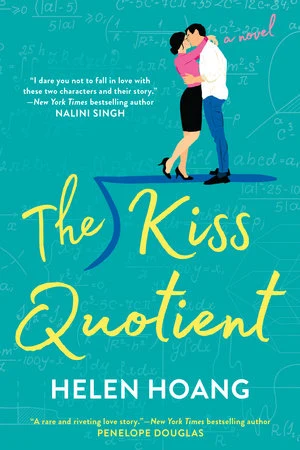
The Kiss Quotient
Helen Hoang
Keep the practical setup, try intimacy coaching
Both premises let an initial arrangement become more emotionally complicated.
Olive and Adam perform dating; Stella hires Michael to help with intimacy. The purpose and power questions differ. Our assessment considers representation and consent rather than treating the shared arrangement as evidence of equal reader comfort.
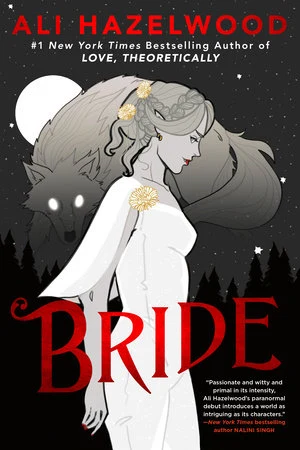
Bride
Ali Hazelwood
Try Hazelwood in a different world
The same author uses another purposeful relationship arrangement.
Misery and Lowe marry within a political alliance between supernatural communities. That moves you away from university life and fake dating. Check the author’s content notes, including knotting, before taking this route.
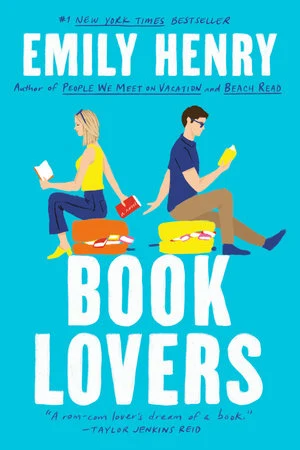
Book Lovers
Emily Henry
Keep career-minded adults; replace the public dating performance with professional friction.
How we made these connections
These are editorial comparisons of publisher-supported premises, not a reader-similarity score or a claim that we have read each novel. The underlying descriptions are available from the publisher of this book and the publisher links in the linked assessments. Book-specific cautions remain in each assessment.
Find this book in our reading routes
Contemporary-romance collection compares relationships in recognisable modern lives, including careers, families and public expectations. The notes explain how those everyday responsibilities shape each premise.
Fake-dating guide compares why a couple agrees to perform a relationship in public. It shows how that arrangement creates a different kind of tension from friendship or an actual marriage bargain.
Questions before you choose
Is The Love Hypothesis enemies to lovers?
Fake dating and opposites attract are the better-supported labels. Adam’s intimidating reputation does not establish that the leads are sustained personal enemies.
Is Adam Olive’s professor?
Olive is a doctoral student and Adam a faculty member. Secondary sources conflict on the department detail. This assessment does not resolve that conflict or treat the absence of direct supervision as the absence of an institutional imbalance.
Does this review cover the movie?
No. It assesses the novel. Screen casting, scenes and reactions are kept separate from book evidence.
View The Love Hypothesis on Amazon US · Keep exploring the reading list
Why this book is in our contemporary collection
Berkley / Penguin Random House: The exact-title publisher page lists Contemporary Romance under Related Genres. Classification verified; checked 2026-10-07.
Reckless Reading: The completed-reading review explicitly recommends this novel for the he-falls-first/harder trope; the publisher separately establishes academic fake dating. He-falls-first evidence verified; checked 2026-10-07.
The contemporary he-falls-first collection compares long-held affection, performed relationships and different readiness for commitment, so you can choose the version of early devotion that appeals.
Explore the surrounding reading choice
Spicy Contemporary Fake Dating: The Performance and the Private Choice compares the surrounding relationship dynamics and explains the evidence limits for this selection.
Compare the timing of his feelings
The he-falls-first reading collection explains the timing evidence and its limitations for this choice and compares it with other reviewed books.
Compare academic status and direct authority
The professor-student romance reading collection explains the specific inclusion evidence and relationship context for this choice without claiming that the professor directly teaches or supervises the doctoral candidate.