Fantasy Forbidden Love: Political Barriers and the Cost of Choosing Each Other
Fantasy forbidden love needs an obstacle outside the couple’s private hesitation. A ruling order, oath, political alliance or enforced social divide can make a relationship dangerous even when the characters want it. Choose by who opposes the bond, what power that opposition holds and how much of the story follows the consequences. Danger elsewhere in the world does not automatically make the romance forbidden.
Crier’s War is the current existing reviewed example: YA fantasy with a developing romance, not a promise of a self-contained adult genre-romance experience. Nina Varela’s official premise confirms the human–Made divide, Ayla’s revenge plan and Crier’s political position; a credited endorsement there explicitly identifies forbidden romance. It is the first volume of a duology, so readers should check continuation expectations before choosing.
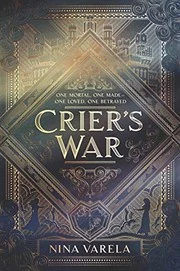
Authentic published cover of one starter selection; not a claim about every book in the guide.
Updated 9 October 2026 · Eikna Editorial Team
What stands between the couple and an open relationship?
Setup
What drives it
What to check
Political allegiance
A relationship conflicts with loyalty to a faction or cause.
What each person would risk by changing sides.
An enforced social divide
The world gives the partners unequal status or rights.
Who maintains the divide and how it affects their choices.
An oath or existing commitment
A duty restricts the relationship someone can pursue.
Whether the barrier is actually established in the premise.
A rule with consequences
A law or magical prohibition can punish the bond.
What enforcement means beyond a vague sense of danger.
Narrow the reading experience
Identify the barrier before the attraction
Two characters can dislike each other without anyone prohibiting a relationship. Likewise, dangerous travel or a deadly competition can threaten both people without making their bond forbidden. Look for the specific institution, commitment or conflict that opposes them being together. This distinction helps you choose between personal mistrust and external pressure. Some stories combine both, but the assessment should explain each rather than treating enemies to lovers as sufficient proof of forbidden love.
Choose how closely politics and intimacy connect
In one version, political conflict mainly creates secret meetings; in another, trusting a partner changes how someone understands the ruling system. Decide whether you want a close focus on the couple or substantial attention to rebellion, diplomacy and other characters. A romantic premise does not establish the proportion of relationship scenes. Use the existing assessment’s discussion of worldbuilding and pacing to judge whether the wider story supports your preferred emotional experience.
Look at unequal power within the bond
A member of a ruling family and someone subject to that family’s authority may face different consequences for the same choice. Consider whether the story acknowledges those differences and gives both people meaningful agency. A supportive interaction can matter without erasing the surrounding system. Readers may disagree about whether affection develops convincingly across that divide. Those disagreements are useful for choosing a book, especially when the political premise is more clearly established than the romantic transition.
Check where the emotional story ends
Fantasy relationships often develop across several volumes. The first book may establish longing and conflict while leaving major decisions unresolved. Decide whether you want to follow that longer path or prefer a complete relationship arc within one book. Book-one closure, series completion and a formal HEA/HFN are separate facts. Do not infer any of them from a romance tag or an attractive pairing, and check continuation guidance before committing to a series.
Starting points and their evidence
These are small starter examples, not a completed or ranked recommendation list. Reviewed selections link to existing evidence-based editorial assessments. Other examples are identified as researched premises or pending research leads; they have no new rating or claim of first-hand reading.
Purchases through Amazon, Bookshop.org and Libro.fm links may earn us a commission. As an Amazon Associate, Eikna Romance earns from qualifying purchases, at no extra cost to you.
Crier’s War
Nina Varela
Classification attributed to a credited promotional endorsement
Ayla is a human servant seeking revenge against the sovereign’s family; Crier is his Made daughter with a political betrothal. Varela’s premise places their growing connection inside human unrest and ruling power. Tara Sim’s promotional endorsement on the same page explicitly identifies forbidden romance.
Before choosing: Choose this for YA fantasy where political division and revenge complicate a developing bond. The existing assessment records differing views of the romance and worldbuilding. Plan for a duology rather than assuming standalone relationship closure.
Author or publisher premise source · checked 9 October 2026
https://www.ninavarela.com/crierswar
Explicit trope attribution: Tara Sim endorsement on the author page: https://www.ninavarela.com/crierswar
Edition buttons become available when the specific format and destination are checked. Amazon opens a title-and-author search; choose your edition there.
Questions that change the reading choice
Does a human–nonhuman pairing automatically mean forbidden love?
No. Different identities can coexist in a world that permits the relationship. The barrier needs specific evidence. In the starter, the author establishes an oppressive political divide as well as the pair’s different circumstances.
Is Crier’s War classified as forbidden romance directly by the author?
The official premise describes the political and personal barriers. The explicit forbidden-romance phrase appears in Tara Sim’s credited promotional endorsement on the author page. This guide reports that attribution separately from the premise and changes no canonical classification.
Is the starter a standalone romance?
No. Varela identifies it as the first book of an epic fantasy duology. The existing assessment distinguishes the interrupted first volume from closure discussed for the second. It should not be selected on the assumption that book one resolves the whole relationship.
What should readers check beyond the trope?
The starter is YA fantasy, with revenge and political conflict in its premise. The existing assessment compares praise for yearning and contrasting voices with concerns about worldbuilding and convincing reciprocation. Consult its audience and content context; no new heat, ending or rating is assigned here.