Historical Grumpy/Sunshine: Reserved Hearts and Playful Courtship
Historical grumpy/sunshine romance pairs contrasting ways of meeting the world: guarded reserve alongside warmth, pessimism alongside hope, or a love of order alongside playful spontaneity. The pleasure can come from seeing those differences become understandable rather than disappear. Neither role belongs to a particular gender, rank or period.
The Duke Who Didn’t is the current existing reviewed starter. Firewhiskeyreader explicitly uses the grumpy/sunshine label and contrasts Chloe’s grumpiness with Jeremy’s optimism. Courtney Milan’s own premise independently establishes Chloe’s ordered plans and Jeremy’s mischievous approach to courtship. The trope label remains an attributed critical classification rather than a newly verified book-record tag.
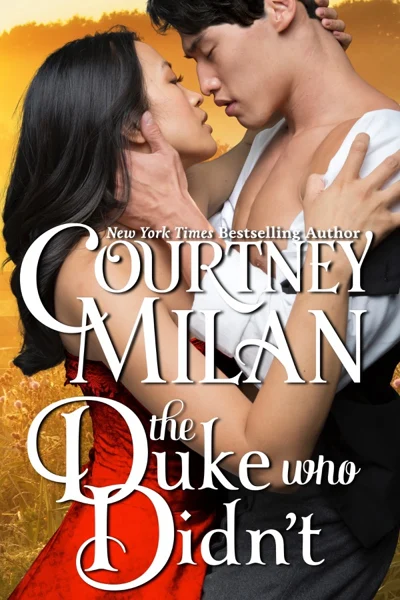
Authentic published cover of one starter selection; not a claim about every book in the guide.
Updated 9 October 2026 · Eikna Editorial Team
What sort of contrast will suit you?
Setup
What drives it
What to check
Reserved and outgoing
Different comfort levels with social openness.
Quietness alone does not establish grumpiness.
Pessimistic and hopeful
Different expectations about people or the future.
Whether optimism respects real problems.
Orderly and playful
Plans and spontaneity meet in courtship.
Organisation is not by itself a hostile personality.
Guarded and warm
One person takes longer to offer trust.
Kindness should coexist with boundaries and mutual effort.
Narrow the reading experience
Choose the behaviour behind the label
A reserved character might avoid company without being cruel; an organised one might enjoy plans without expecting everyone else to obey. Similarly, a playful protagonist can have fears and serious obligations. Look at the particular conduct described in a premise and review before choosing. The grumpy/sunshine label is useful shorthand, but it cannot tell you on its own whether the contrast is gentle, confrontational or difficult to live with.
Leave room for both people to keep their character
The contrast can appeal because each protagonist brings something the other appreciates. Readers may prefer a relationship that makes room for differences rather than demanding that the reserved person become sociable or that the cheerful one abandon optimism. Consult the assessment for how the courtship treats each person’s wishes. Persistence may be charming to one reader and exhausting to another; the important detail is how the book handles the response.
Choose the historical world alongside the personalities
Aristocratic titles do not establish who will be the grump, and historical romance need not take place in a Regency ballroom. Family expectations, work and community can give a personality contrast a particular setting without determining it. Decide whether those parts of the story interest you separately from the couple’s banter. A title containing duke identifies a premise element, not a guarantee of a brooding hero or a cheerful heroine.
Keep tone, heat and conflict separate
A cheerful character does not make a novel uniformly light, and a prickly one does not establish dark romance. The same personality contrast can accompany quiet courtship, secrets or a demanding external plot. Check the existing review for emotional intensity and content guidance, and retain unknown heat or ending details where evidence is absent. This guide helps choose the relationship contrast; it does not assign those other reading dimensions from personality alone.
Starting points and their evidence
These are small starter examples, not a completed or ranked recommendation list. Reviewed selections link to existing evidence-based editorial assessments. Other examples are identified as researched premises or pending research leads; they have no new rating or claim of first-hand reading.
Purchases through Amazon, Bookshop.org and Libro.fm links may earn us a commission. As an Amazon Associate, Eikna Romance earns from qualifying purchases, at no extra cost to you.
The Duke Who Didn't
Courtney Milan
Classification reported by identified critics
Chloe Fong values plans and purposeful work; Jeremy Wentworth returns hoping to court her with a playful temperament he cannot simply put aside. Firewhiskeyreader identifies the pair as grumpy/sunshine and highlights Chloe’s grumpiness alongside Jeremy’s optimism. Milan’s premise supports the contrast in their approaches, while also establishing concealed information that affects the courtship.
Before choosing: Choose this for a grumpier heroine and a playful hero within an established connection. It also has childhood-friendship and reunion overlap. The trope label is reported from an identified critic; organisation alone is not treated as proof of grumpiness. Consult the existing assessment for fit and limitations.
Identified critical source · checked 9 October 2026
Edition buttons become available when the specific format and destination are checked. Amazon opens a title-and-author search; choose your edition there.
Questions that change the reading choice
Must the man be grumpy and the woman cheerful?
No. These are personality roles, not gender rules. The current starter is a critic-reported example with a grumpier heroine and an optimistic hero; that configuration is one possibility rather than an exception requiring a different trope.
Is grumpy/sunshine the same as enemies to lovers?
No. Different temperaments can exist between people who already care about each other. Enemies to lovers concerns opposition and changing trust. Banter or disagreement alone does not establish that the characters are enemies.
Does a playful hero mean the relationship is effortless?
No. Humour and optimism can coexist with uncertainty or information that has not been shared. Look at what the premise and assessment identify as the actual obstacle, rather than assuming a light manner resolves every concern.
Is this a complete or ranked list?
No. It is a focused guide with one existing reviewed starter and an attributed trope classification. The broader collection needs verified additions. No review score or canonical book classification was changed.