Why-choose fantasy romance asks how several romantic relationships can grow inside a world with its own rules. Magic, political alliances and dangerous quests may bring people together, but the relationship promise concerns keeping multiple partners rather than selecting the winner of a love triangle.
This guide helps you choose between court politics, a travelling group and supernatural academy stories. The researched starter is Dark Fae, a fantasy and paranormal crossover whose publisher explicitly describes a multi-partner series. That establishes the intended relationship shape; it does not turn the opening volume into a verified complete romantic resolution.
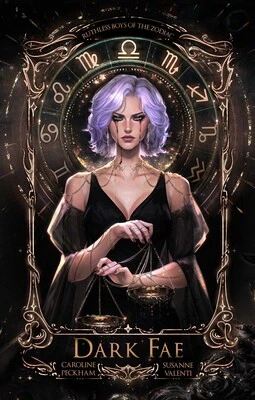
Authentic published cover of one starter selection; not a claim about every book in the guide.
Updated 9 October 2026 · Eikna Editorial Team
Choose the relationship dynamic
Setup
What drives it
What to check
Court or kingdom
Status shapes access to partners
How much political plot accompanies the romance?
Quest ensemble
Travel develops separate connections
Does every relationship receive space?
Magic academy
Hierarchy concentrates danger
Are the characters adults and is this a series?
Narrow the reading experience
Decide how much worldbuilding you want
A story with an invented kingdom can spend substantial time on its history, institutions and magic. A quest may distribute attention across an ensemble, while a court setting can concentrate it on alliances and status. Think about whether you want to learn a world alongside the central character or arrive quickly at the relationship. Multiple partners do not automatically mean that the plot is romance first; check how the description balances the two promises.
Follow the links between partners
One protagonist with several partners and a group in which everyone dates everyone else are different configurations. Neither requires every person to share the same attraction. Look for positive evidence about who is connected, especially if relationships between love interests matter to you. The number of names in a synopsis cannot settle that question, and a bond imposed by magic cannot substitute for freely chosen affection.
Choose a reading commitment
Fantasy can build the group over several volumes. An initial attraction, a shared quest and a settled relationship arrive at different stages. Before starting, distinguish an independently readable series from a single-volume romance. Readers who enjoy gradual ensemble development may welcome a longer arc; readers seeking immediate resolution need specific confirmation about the volume in hand rather than the existence of a completed series.
Starting points and their evidence
Dark Fae
Caroline Peckham and Susanne Valenti
Researched premise · not reviewed or rated
Confirmed premise example
The publisher presents Elise’s investigation at Aurora Academy as a college-age, multi-partner paranormal series.
Before choosing: A fantasy/paranormal crossover and series opening; individual-volume ending remains unverified.
Author or publisher premise source · checked 9 October 2026
No. A network centred on one person can have a different structure from a fully connected group. Relationship configuration deserves its own check rather than an assumption based on the trope name. Decide which connections you want on the page, then look for author or publisher confirmation.
Can the story include jealousy?
Yes. A multi-partner premise can explore insecurity, competing obligations and the work of sharing time. The reading preference is whether those tensions receive attention rather than disappear through a magical explanation. This guide does not claim that a specific book handles them successfully without fuller review evidence.