A happy-for-now ending can offer a meaningful choice to be together without a long view of the couple’s future. For some readers, that immediate commitment is exactly enough; others need a public relationship, a stable shared home or more time after reconciliation.
Below are two named critics’ HFN interpretations—Heated Rivalry and Boyfriend Material—followed by an edition-qualified Glitterland case. The third is not a blanket claim about the current reissue: later packages add an epilogue. These are researched comparisons, not firsthand reading, universal classifications or a claim that queer romance provides less commitment. All three existing reviews, stars and retailer states remain unchanged.
AI-generated editorial artwork of fictional adults; not a scene, character likeness or official jacket from any listed book. The pictured pairing does not classify the books below.
Eikna Editorial Team · Updated 18 October 2026
Researched editorial synthesis, not firsthand reading. Existing Eikna overall scores are reused unchanged. Ending evidence, edition limits and series scope are separate from quality scores.
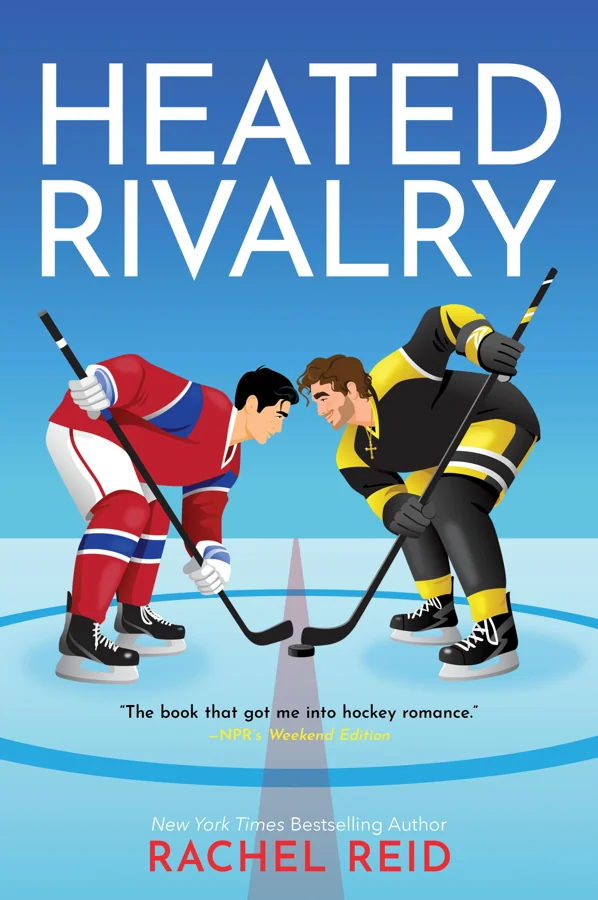
Professional hockey rivals Shane Hollander and Ilya Rozanov sustain a private relationship under the pressure of public competition and secrecy.
Closeting pressure, public scrutiny and sexual content remain relevant. The players are adult professionals, not current college students. Do not infer a content inventory from the sports setting or an adaptation.
Writer Ash Winters meets model Darian Taylor; attraction challenges Ash’s class judgments and the way he treats other people.
The author lists bipolar depression, past suicide attempt and hospitalization, suicidal ideation, self-harm discussion, panic, drug-use material and disclosure of a character’s mental health. This selective paraphrase is not exhaustive. Love is not presented here as a cure.
Two named HFN cases and an edition comparison
These are limited starter selections, not a comprehensive catalogue or an audience consensus. Purchases through Amazon, Bookshop.org and Libro.fm links may earn us a commission, at no extra cost to you. As an Amazon Associate, Eikna Romance earns from qualifying purchases.
Heated Rivalry
Rachel Reid
Professional hockey rivals Shane Hollander and Ilya Rozanov sustain a private relationship under the pressure of public competition and secrecy.
Choose it for: Choose a commitment made under continuing practical pressure. If the emotional decision matters most to you, Caz’s account explains why the ending can work while the public arrangement remains unresolved. If secrecy must be fully overcome within this volume, that same account tells you why to wait or choose differently.
HFN admission: Caz Owens explicitly uses that term for this novel and identifies continued privacy and separate homes. Later books’ resolutions are excluded.
Named reading evidence: Caz Owens explicitly classifies this novel’s ending as HFN: the couple commit to a future while still living apart and keeping the relationship private.
Trade-offs and differing reactions: Caz values the emotional development but finds the long period of secrecy hard to believe. Jess at Love Bytes offers another favorable reading of the movement beyond sex; neither response proves unanimous satisfaction.
Before choosing: Closeting pressure, public scrutiny and sexual content remain relevant. The players are adult professionals, not current college students. Do not infer a content inventory from the sports setting or an adaptation.
Ending and series limit: Game Changers book two. This is Caz’s reading of this installment, not The Long Game’s later outcome. The current publisher catalogue also lists Unrivaled; no completed-series claim is made.
See the evidence behind this choice
Current premise and ending-specific evidence checked 18 October 2026. Some craft and content criticism is retained from the source packs dated 6, 11, 14 or 18 October, not falsely re-dated as new reading. The full review retains its separate unknowns.
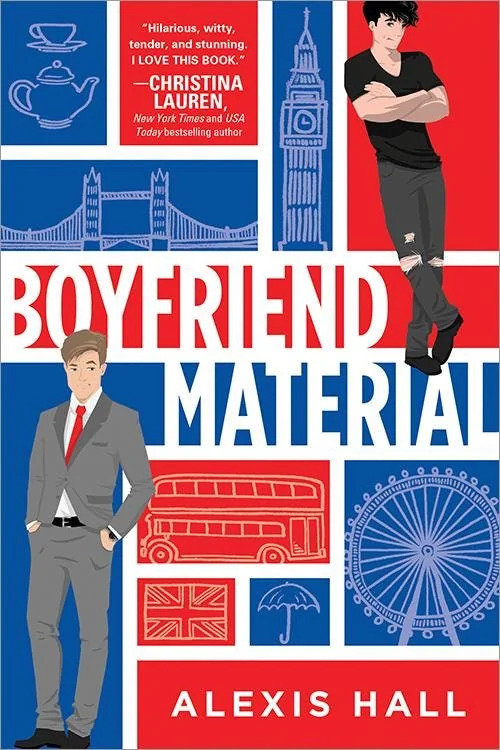
Publicly scrutinized fundraiser Luc and barrister Oliver agree to a presentable fake relationship that grows harder to dismiss as performance.
Choose it for: Choose the possibility of a real relationship after a public performance, with humor that does not remove either man’s insecurity. Jen’s HFN reaction may help if you care about their readiness for the next stage rather than needing a wedding-shaped signal. Her interpretation is not a claim that the publisher mislabels the novel as a complete story.
HFN admission: Jen’s 8 October 2020 reading explicitly felt HFN rather than HEA. This is an attributed interpretation, not an author guarantee or reader consensus.
Named reading evidence: Jen at Firewhiskey Reader explicitly says the 2020 novel felt more HFN than HEA, while enjoying its fake-dating comedy and the care that grows between Luc and Oliver.
Trade-offs and differing reactions: The Smut Report discusses Luc’s destructive mistakes rather than treating him as a frictionless comic hero. A reader’s tolerance for his behavior is an important part of the fit.
Before choosing: Public shame, troubled parental relationships and self-doubt remain central. Self-deprecating humor can be enjoyable without feeling emotionally easy.
Ending and series limit: London Calling book one. Sourcebooks says the novel tells a complete story; Jen’s HFN judgment concerns the amount of future reassurance, not a claim that the book stops mid-scene. Husband Material’s events are not borrowed for this ending.
See the evidence behind this choice
Current premise and ending-specific evidence checked 18 October 2026. Some craft and content criticism is retained from the source packs dated 6, 11, 14 or 18 October, not falsely re-dated as new reading. The full review retains its separate unknowns.
Writer Ash Winters meets model Darian Taylor; attraction challenges Ash’s class judgments and the way he treats other people.
Choose it for: Use this as an edition-checking example if you want to understand why two readers can describe different amounts of reassurance from the same title. Dabney’s original-edition HFN account and Erin’s later epilogue discussion concern different packages. Do not choose an edition on the jacket shown here alone.
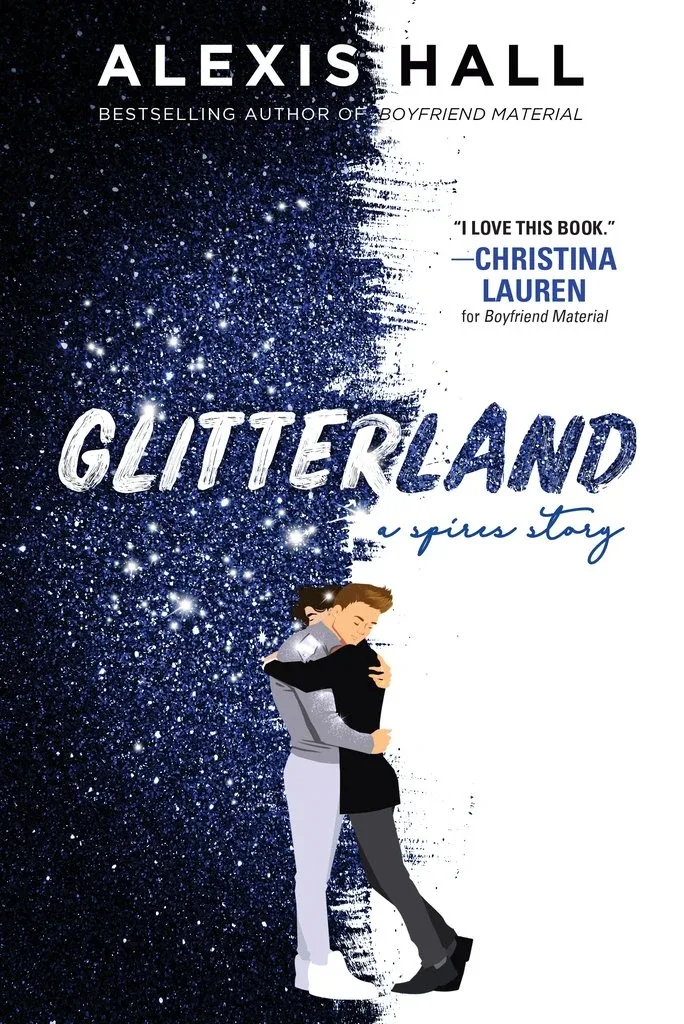
EDITION-QUALIFIED CASE, not an unqualified third current-edition HFN recommendation: Dabney’s 2013 review names HFN; the expanded reissue includes Aftermath. Hall’s current edition note and Erin’s reread must be checked together.
Named reading evidence: Dabney at All About Romance explicitly describes the original 2013 novel as ending HFN. This is an edition-qualified example, not a promise that every current package contains exactly that endpoint.
Trade-offs and differing reactions: Publishers Weekly’s later-edition review values the humor and feeling but questions the phonetic dialect and the handling of personal change. Erin’s reread is warmer about Darian’s voice while acknowledging how difficult the opening can be.
Before choosing: The author lists bipolar depression, past suicide attempt and hospitalization, suicidal ideation, self-harm discussion, panic, drug-use material and disclosure of a character’s mental health. This selective paraphrase is not exhaustive. Love is not presented here as a cure.
Ending and series limit: IMPORTANT EDITION LIMIT: the original 2013 ending is the HFN case. Erin’s 2024 reread explains that the expanded reissue includes Aftermath, an epilogue absent from the original novel. Hall also warns that older ebooks/audio do not automatically update. The displayed later jacket and current actions do not certify original-edition text.
See the evidence behind this choice
Current premise and ending-specific evidence checked 18 October 2026. Some craft and content criticism is retained from the source packs dated 6, 11, 14 or 18 October, not falsely re-dated as new reading. The full review retains its separate unknowns.
The useful distinction is the amount and form of future assurance, not whether the romance counts. A couple choosing each other in the present can be a complete emotional destination. Another reader may need to see how that choice survives family, work or public pressure. Neither preference needs to be dressed up as a moral ranking of commitments.
Heated Rivalry makes the practical question visible. Caz’s HFN reading identifies a future the couple intend to build while their public lives remain difficult. We do not import what happens in The Long Game—or any later continuation—to make this installment look more settled than the critic describes.
Check the edition before debating the label
Glitterland is an important caution against title-only ending claims. A review written for the original novel cannot silently describe every later ebook, paperback or audio package. Erin’s 2024 reread discusses Aftermath as added breathing room beyond the original endpoint. Hall’s current site explains that earlier editions do not automatically update to include new material.
The cover in the card is an authentic later jacket, not proof that the original ending is the text you will receive. The existing work/edition record and unresolved edition details are preserved. If the extra epilogue is essential to your choice, verify the exact edition contents with the publisher or retailer before buying; no shopping action here certifies the bonus text.
Ask for the reassurance you actually want
A more useful request than “a proper HEA” might be: “I want the couple openly together by the end of this volume,” or “I am happy with a private commitment if the emotional decision is clear.” You might instead want a later epilogue, no temporary breakup or no unresolved danger. Each is a different question requiring different evidence.
This page has only two direct named-reader cases and one edition comparison. All happen to be MM works already assessed by Eikna; they are not offered as a representative sample of queer romance or proof that HFN belongs to one identity. No additional title is inserted merely to make the shelf longer.
Questions before choosing
Is HFN an unhappy ending?
Not as used here. It describes a positive present commitment with less settled future reassurance, according to the named critic.
Does HFN mean I must read a sequel?
Not necessarily. Boyfriend Material is described by its publisher as a complete story, while Jen still reads its emotional endpoint as HFN. Reader reassurance and narrative incompleteness are different questions.
Is the current Glitterland reissue simply the original HFN ending?
No such equivalence is claimed. Later expanded packages include Aftermath; older editions do not automatically gain the bonus material. This is an edition-qualified comparison.
Why not give these a new ending score?
The guide records attributed source judgments. It does not replace the existing assessments or invent numeric ending satisfaction.
The author or publisher establishes premise and named series order; critics describe their own reading. Author promises, named HFN interpretations and final-volume testimony are labelled separately. A happy couple does not establish external plot closure, and a standalone does not establish a finished series.
The canonical book records, existing overall stars and retailer evidence remain the authority for those separate fields. We have not inferred a shared heat level, a missing ending, a full warning inventory or current availability. A brief list of considerations does not certify the absence of other material.