Always and Forever by Beverly Jenkins Review
Eikna Score: 6.6/10. Recommended with reservations.
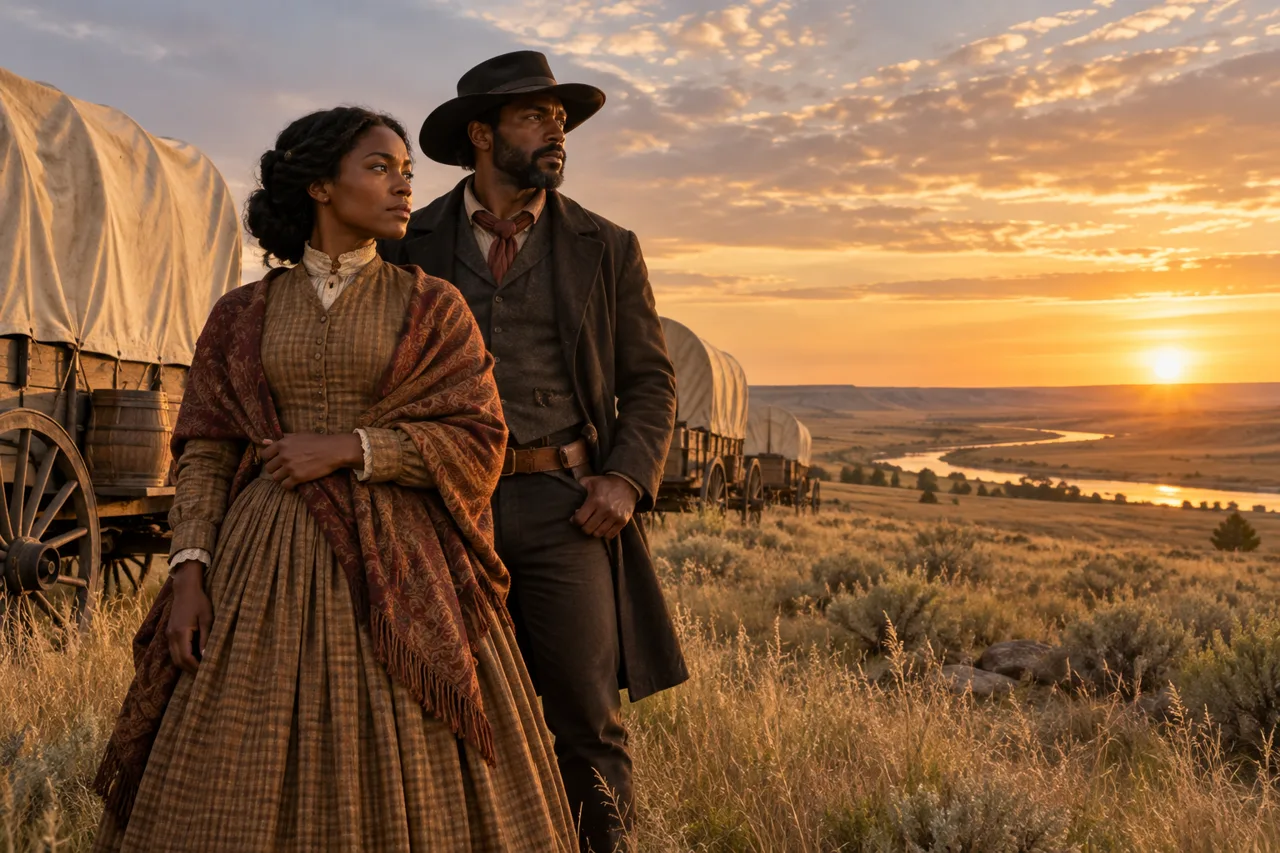
Always and Forever has one of Beverly Jenkins's best backdrops, a wagon train of Black mail order brides leaving Chicago for Kansas in 1884, and the women on that train are better company than the romance at its center. A late swerve into a Texas revenge plot and a marriage pushed through over a possible pregnancy leave it a good setting in search of a stronger book.
Read it if you want a western built around a community of women, or you are tracing the Blake brothers through Jenkins's backlist. Skip it if forced marriage plots irritate you, or you want the romance itself to carry the book.
Always and Forever at a Glance
Always and Forever is a 2000 Avon historical romance by Beverly Jenkins about Grace Atwood, a proper Chicago woman who organizes a wagon train of Black mail order brides to Kansas in 1884, and Jackson Blake, the former Texas lawman she hires to lead it. It runs 384 pages, stands alone, and ends with a happily ever after.
| Author | Beverly Jenkins |
|---|---|
| Series | Standalone (Jackson is the brother of Griffin Blake from The Taming of Jessi Rose) |
| Subgenre | Historical romance, western |
| Main tropes | Wagon train journey, prim heroine and rough hero, mail order brides, hero with a price on his head, marriage after a possible pregnancy |
| Spice level | 3/5: Moderate, some open door |
| Content warnings | Racism and Jim Crow travel restrictions, a parent's murder, revenge violence, pressured marriage (full list below) |
| POV | Third person, both leads |
| Ending | HEA |
| Pages | 384 (Avon mass market paperback) |
| Audiobook | Narrated by Thomas Penny, about 10 hours (Recorded Books) |
| First published | September 5, 2000 |
| Publisher | Avon |
What Is Always and Forever About?
Always and Forever opens in Chicago in 1884. Grace Atwood, a composed and very correct young woman, has agreed to organize a group of Black women traveling west to marry men in a new Kansas settlement. Because of Jim Crow rules, the train is not a reliable option for them. They will go by wagon, and they need someone who knows the trail.
The man for the job is Jackson Blake, a Texan and former lawman with charm to spare and a past he would rather not explain. His first meeting with Grace is awkward enough to set the tone for weeks. As the wagons roll and the women find their footing, Grace discovers she is less straitlaced than she believed, and Jackson's unfinished business starts to catch up with them.
What Makes This Wagon Train Romance Work
Always and Forever works best as a wagon train story, because the trip gives Jenkins a reason to gather a whole community of women in one place and watch them change. The brides are not a chorus. They come from different backgrounds and want different things, and All About Romance's Mary Novak praised how carefully the book separates their circumstances.
The journey also gives the romance its natural forced proximity. Grace and Jackson cannot avoid each other on the trail. She is the organizer and he is the guide, so every decision becomes a negotiation, and those negotiations are where their chemistry lives.
Underneath sits the history that draws readers to Jenkins: the post-Reconstruction movement of Black families west to Kansas, and the everyday humiliation of Jim Crow travel. It is not decoration here. It is the reason the wagons exist at all.
My Review
I wanted to love Always and Forever more than I did. The setup is wonderful: a city woman who has never slept outdoors, a wagonful of brides with their own reasons for leaving, a cowboy with secrets. For the first half I was happily along for the ride. Then the book kept changing what it was about.
My verdict lines up closely with the two critics I trust most on this one. Mary Novak at All About Romance gave it a B minus and loved the setting while staying cool on the couple. Mrs. Giggles was blunter, calling it unfocused and slow to get moving.
Romance and Chemistry
The attraction between Grace and Jackson is immediate and physical, and Jenkins writes their early sparring with real wit. The trouble is that the physical side runs well ahead of the emotional one. Novak made exactly this point: lust arrives quickly, but intimacy of the deeper kind does not keep pace. I agree. I believed they wanted each other long before I believed they knew each other.
Then comes the marriage. After they sleep together, Jackson decides a possible pregnancy means they must marry, and the book treats his insistence as romantic. Several Goodreads readers flagged this as dated, and it bothered me too. Grace has spent two hundred pages proving she can run her own affairs. Watching that get overruled by a hero's sense of duty takes some of the shine off both of them.
The Characters
Grace is likable and capable, and Goodreads readers often call her headstrong in the best way. Jackson is charming and, by many readers' accounts, stubborn and reckless, especially once revenge for his father's murder takes over. Mrs. Giggles found both leads close to flawless and so a little bland, and I see her point about Grace: she is rarely wrong about anything.
The supporting cast is the book's real treasure. Grace's aunts are funny, there is a gambler with a soft heart, a pair of snobbish twins make fine villains of the social kind, and the brides themselves have more texture than many romance leads. Novak wished the book had stayed with these women and their daily lives. So did I.
Writing and Pacing
Two structural choices hurt. First, the wagons do not leave until close to the halfway point; Mrs. Giggles noticed that the entourage barely moves before then, and the Chicago preparation chapters are long. Second, once the brides reach Kansas, the book swerves into Jackson's quest for revenge in Texas. Novak called that late turn clichéd and out of place, and Goodreads readers often describe the shift as disjointed. The book is effectively two shorter novels sharing a couple.
What survives is Jenkins's eye for social history. Novak wrote that she learned a lot but never felt lectured to, which is high praise for a writer whose history sometimes does stop the story. Here it mostly moves with it, and the portrait of Black Chicago and of travel under Jim Crow is worth the read alone.
Always and Forever is a terrific setting wrapped around an ordinary romance and a plot that splits in two. Read it for the brides and the road west, and expect the last act to feel like a different book.
How Spicy Is Always and Forever?
Always and Forever is a 3 out of 5 on our scale: Moderate, some open door. The love scenes are on the page, and All About Romance's sensuality rating for it is Hot, but they are written in Jenkins's lush late 1990s style and take up a modest share of the book. Some Goodreads readers found the prose around them purple.
Consent within the scenes is clear. The pressure comes afterwards, in the push to marry over a possible pregnancy, which is a question of agency rather than consent but worth knowing about. Our romance heat levels guide explains the scale.
Content warnings, drawn from the book's premise, All About Romance and reader reviews:
- Racism, including Jim Crow travel restrictions and hostility on the road
- Murder of the hero's father (backstory) and a revenge plot
- Gun violence and danger to the travelers
- A marriage pressed on the heroine after a possible pregnancy
- Pregnancy
- The hero is a wanted man
- On-page sexual content
Our content warnings guide explains how we compile these lists.
Who Should Read Always and Forever?
Always and Forever suits readers who love ensemble historicals, women's community stories and Black history of the American West. It is less suited to readers who want a tightly plotted romance or who dislike heroes making decisions for heroines.
Best for:
- Readers who enjoy road trip and wagon train westerns
- Anyone interested in the Black migration to Kansas and life under Jim Crow
- Fans of big, funny supporting casts, especially older relatives
- Jenkins readers following the Blake brothers
Not for:
- Readers who dislike forced or convenience marriages triggered by pregnancy
- Anyone who wants the setting to stay put through the final act
- Readers who need slow, earned emotional intimacy before the sex
- People who find long preparation chapters a slog
What Readers and Critics Are Saying
Always and Forever was well received on release: Romance Wiki records a four star review from Romantic Times, four hearts from The Romance Reader and a Romantic Times Reviewers' Choice nomination for 2000. Readers still rate it highly, with a 4.45 average from about 1,550 Goodreads ratings when we checked. Later critics were cooler.
Where they agree. The setting and the women. Mary Novak at All About Romance praised the wagon train scenes, the crowd interactions and the way racism is shown as real without being one dimensional. Goodreads reviewers single out the history of Black Chicago, Grace's spirit and the warmth of the female friendships. Even Mrs. Giggles, the harshest critic here, enjoyed the warm anecdotes and Americana charm in short doses.
Where they split. The couple and the structure. Novak never fully connected with Grace and Jackson and thought the Texas revenge plot belonged in another book. Mrs. Giggles found the leads bland, the brides too passive and the pacing slow. On Goodreads, readers argue about Jackson, some loving him and others calling him high handed, and several object to the forced marriage and virgin heroine conventions as dated.
The Eikna Evidence Scorecard
Always and Forever scores 6.6 out of 10 on the Eikna Evidence Scorecard. Its strongest marks go to the characters and emotional pull of the wagon train community, and its weakest to pacing, the ending and reread value, where the split between the journey and the Texas plot costs the most.
| Dimension | Score (/5) | Why |
|---|---|---|
| Romance (20%) | 3.5 | Sharp early banter, but All About Romance finds the lust outrunning the emotional bond. |
| Characters (15%) | 3.5 | Grace and the brides shine; Mrs. Giggles finds the leads too flawless to be interesting. |
| Writing and pacing (15%) | 3 | Slow Chicago start and a disjointed Texas finale, per Mrs. Giggles and Goodreads readers. |
| Emotional impact (15%) | 3.5 | The women's community and the Jim Crow journey carry real feeling, per All About Romance. |
| Heat level (10%) | 3.5 | Delivers open-door heat that All About Romance rates Hot, in a dated, florid style. |
| Ending satisfaction (15%) | 3 | A clear HEA, reached through a pressured marriage and a revenge plot critics found clichéd. |
| Reread appeal (10%) | 3 | The first half rewards a reread; the second half is the part readers skip. |
The Eikna Overall Ranking: Always and Forever sits in the lower half of Beverly Jenkins's 1990s and 2000s westerns for us, below The Taming of Jessi Rose and Topaz, with a final Eikna Score of 6.6/10.
Is Always and Forever a Standalone?
Yes. Always and Forever is a standalone historical romance, and Beverly Jenkins's own site lists it with her standalone historicals. You do not need any other book to follow it.
Always and Forever (2000) is a standalone historical romance.
Jackson does have family elsewhere in Jenkins's world: his brother Griffin Blake is the hero of The Taming of Jessi Rose (1999), where Jackson is mentioned, and Mrs. Giggles notes that Jackson also appears in Topaz (1997). Reading either first adds a little texture but changes nothing about the plot.
Best format: the Thomas Penny audiobook (about 10 hours) is a good fit for a book that works best taken in short stretches, a point Mrs. Giggles made about reading it too. Our series order guide covers other connected romances.
If You Loved Always and Forever, Read These Next
If you loved Always and Forever, the best follow-ups are other Jenkins westerns with journeys, strong women and connected families.
- The Taming of Jessi Rose by Beverly Jenkins: Jackson's brother Griffin protects a Texas rancher, with a funnier, lighter touch.
- Topaz by Beverly Jenkins: a reporter heroine and a Black Seminole marshal in Indian Territory, with Jackson on the page.
- Night Hawk by Beverly Jenkins: another journey romance, by train and horse, with a grieving lawman and a heroine fleeing a mob.
- Wild Sweet Love by Beverly Jenkins: an outlaw heroine and a Philadelphia banker, for more Black western women who refuse to be managed.
Frequently Asked Questions
Always and Forever raises the usual questions about heat, connected books and the ending, plus a few about its history. Short answers below.
Is Always and Forever by Beverly Jenkins spicy?
Moderately. It is a 3 out of 5 on our scale, with open-door love scenes in a warm, older style; All About Romance rated its sensuality Hot.
Is Always and Forever a standalone?
Yes. It is a standalone, though the hero's brother leads The Taming of Jessi Rose.
Does Always and Forever have a happy ending?
Yes. Grace and Jackson get a happily ever after, after a late revenge plot in Texas.
When is Always and Forever set?
The story begins in Chicago in 1884 and follows a wagon train of Black brides west to Kansas.
Is there an Always and Forever audiobook?
Yes. Thomas Penny narrates the unabridged audiobook from Recorded Books, which runs about 10 hours.
What age is Always and Forever appropriate for?
It is an adult romance with on-page sex and violence, so we recommend it for adult readers.
The Bottom Line
Always and Forever earns a 6.6/10 and a Recommended with reservations badge from us. It is for readers who want a western about a community of Black women heading west together, and who can accept a romance that is more heat than depth and a final act that changes direction. The one reason to pick it up is the wagon train itself, which is as vivid as anything Jenkins wrote in this period.
Buy on Amazon Buy at Bookshop.org Listen on Audible Listen on Libro.fm
Some links on this page are affiliate links: Eikna Romance may earn a small commission at no extra cost to you.
Sources
- Always and Forever, Beverly Jenkins official site (blurb, edition and audiobook details)
- Beverly Jenkins books page (standalone listing)
- Always and Forever, MahoganyBooks listing (pages, date)
- Always and Forever, FictionDB
- Always and Forever, Romance Wiki (setting, reviews and award nomination)
- Always and Forever, All About Romance review by Mary Novak
- Always and Forever, Mrs. Giggles review
- Always and Forever, Goodreads (ratings and reader reviews)
- Always and Forever audiobook, Libro.fm
How we review: every Eikna score is built from a seven-part evidence scorecard. Read our methodology.