The Luckiest Lady in London by Sherry Thomas Review
Eikna Score: 8.8/10. Highly recommended.
The Luckiest Lady in London is Sherry Thomas at her most exacting: two expert social performers, a marquess who plays the perfect gentleman and a practical woman who sees through him, circle each other into a marriage neither fully trusts. It is clever, sensual and sometimes cruel, and the resolution moves faster than some readers like, but few historicals are written this well.
Read it if you love morally gray heroes, sharp intelligent sparring, and a heroine who wants security and pleasure and refuses to apologize for either. Skip it if a manipulative hero is a dealbreaker even when the book takes him apart, or you want lighthearted banter rather than painful misunderstandings.
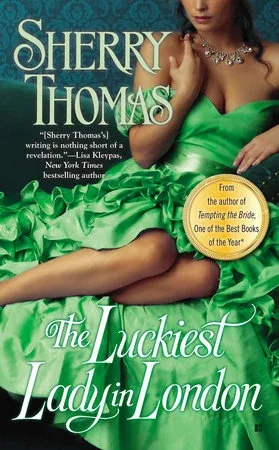
The Luckiest Lady in London at a Glance
The Luckiest Lady in London is Sherry Thomas's 2013 Victorian historical romance, published by Berkley. Louisa Cantwell, who must marry well for her family's sake, faces the Marquess of Wrenworth, London's Ideal Gentleman and a far less ideal man in private. It was a 2014 RITA finalist for Best Historical Romance, runs 304 pages and ends with a happily ever after.
| Author | Sherry Thomas |
|---|---|
| Series | Grouped by the publisher as book 1 of a loose London Trilogy; a full standalone |
| Subgenre | Historical romance (Victorian London marriage market) |
| Main tropes | Enemies to lovers, morally gray hero, marriage for money, two frauds who see each other, slow burn |
| Spice level | 3/5: Moderate, some open door |
| Content warnings | Manipulation, financial coercion toward marriage, childhood emotional neglect, a sibling with epilepsy (full list below) |
| POV | Third person, alternating Louisa and Felix |
| Ending | HEA |
| Pages | 304 (mass market paperback) |
| Audiobook | Narrated by Corrie James, about 8 hours 42 minutes (Tantor Media) |
| First published | November 5, 2013 |
| Publisher | Berkley |
What Is The Luckiest Lady in London About?
The Luckiest Lady in London follows Louisa Cantwell, the eldest of several sisters with no money and one sister whose epilepsy makes the family's future even more precarious. Louisa has one season to marry someone rich enough to keep them all safe, and she has made herself into exactly the debutante the market wants.
Felix Rivendale, Marquess of Wrenworth, is the man society calls the Ideal Gentleman. Louisa distrusts him on sight, and she is right to. Felix sees through her performance as easily as she sees through his, he is not above using her situation against her, and his first offer is not marriage. What follows is a contest between two people who are very good at pretending, and very bad at being known.
What Makes This Enemies to Lovers Romance Work
The Luckiest Lady in London works because both leads are frauds, and both know it. Felix's perfect manners hide a painful childhood and a talent for manipulation; Louisa's sweet debutante act hides a cool, calculating mind. Caz Owens at All About Romance, who called the book brilliant, loved this two-frauds-together dynamic, and it is what makes the enemies to lovers tension so sharp: each of them is the only person in London the other cannot fool.
The second hook is the slow burn. Caz noted that there is no kiss until after the wedding, and the tension before it is enormous.
And then there is Louisa's mind. Felix teaches her astronomy and mathematics, and those lessons are among the most romantic Thomas has written, because they are the only times neither is performing.
My Review
The Luckiest Lady in London is the Sherry Thomas book I recommend to people who say historical romance is too sweet. It is not sweet. It is a precise, often uncomfortable study of two people who have built themselves for public consumption, and the romance is the slow, painful business of letting someone see behind the act. I think it is one of the best-written historicals of its decade.
Romance and Chemistry
The chemistry is a duel. Felix and Louisa read each other instantly, and every conversation is a negotiation in which both of them win something and lose something. Publishers Weekly praised the witty, sensual exchanges between the leads and the carefully built scenes, and that is the pleasure of the first half: two clever people meeting their match.
What makes it romantic, and not merely clever, is that Felix's cruelty has a cause and the book never pretends it does not hurt. Louisa is wounded by him, and she wounds him back. Melinda Parmer at All About Romance, reviewing the audiobook, found those repeated small cruelties tiresome and the conflict hard to empathize with. I understand that. For me the cruelty is the point: the book is about what it costs to stop performing, and the payoff is a love that feels genuinely hard won. Sarah MacLean, reviewing it for The New York Times, praised its lush style and its satisfying happy ending, and the ending earns its happiness.
The Characters
Louisa is one of the great practical heroines. She wants money because her family needs it, she enjoys sex without shame, and she has a scientist's curiosity the book takes seriously. Renae at Romantic Parvenu, otherwise lukewarm, singled out Louisa's frank attitude to pleasure as the book's best quality, and it is rare in the genre even now.
Felix is the risk. He is manipulative, and for a stretch he treats Louisa as a puzzle to be won. Caz at All About Romance described him as Machiavellian but witty, intelligent and sexy, and that is about right. Thomas lets us see the boy he was and the parents who made him, and his hidden kindness surfaces slowly enough to feel like a discovery. Publishers Weekly called the characters intelligent and multidimensional. Not every reader agrees: Renae found the leads insufficiently distinctive, which I cannot see at all.
Writing and Pacing
Thomas writes the best sentences in historical romance, full stop. Library Journal, in a starred review, called the writing flawless and the book one to savor, and Kirkus gave it a star and named it one of the best romances of 2013. The prose is lyrical without going soft, and Thomas trusts readers to catch what her characters will not say.
The pacing is deliberate through the courtship and quicker at the end. Caz noted that some readers found the resolution rushed and Louisa's forgiveness too easy; she disagreed, and so do I, mostly. The final reconciliation is quick, but it is built on everything that came before. If there is a flaw, it is that the communication failures in the middle run a beat long, which Romantic Parvenu found frustrating.
The Luckiest Lady in London is a brilliant, sharp-edged romance between two masterful pretenders, written with rare precision. Read it if you like your heroes morally gray and your romance hard won; skip it if you need the hero to be kind from the start.
How Spicy Is The Luckiest Lady in London?
The Luckiest Lady in London is a 3 out of 5 on our scale: Moderate, some open door. There are several love scenes once Louisa and Felix marry, and Caz Owens at All About Romance said there is a fair amount of sex, not overly explicit but still hot. Romantic Parvenu, by contrast, found it tame. Our read sits in between: open door, sensual and emotionally charged, but restrained in description.
The slow burn is real: no kiss until after the wedding. Louisa enjoys her desire without shame, and consent within the marriage is clear, though the courtship involves manipulation and financial pressure. Our heat levels guide explains the full scale.
Content warnings, drawn from reader reports and our own read:
- A manipulative hero who uses the heroine's financial need
- Financial pressure and coercion toward marriage
- An indecent proposal before any offer of marriage
- Childhood emotional neglect and damaging parents
- A younger sister with epilepsy
- Emotional cruelty between the leads
- On-page sexual content
Our content warnings guide explains how we compile these lists.
Who Should Read The Luckiest Lady in London?
The Luckiest Lady in London suits readers who want an intelligent, morally complex enemies to lovers historical with a slow burn, moderate heat and beautiful prose. It is less suited to readers who want a kind hero from page one, light banter, or a long, slow reconciliation.
Best for:
- Fans of morally gray heroes and enemies to lovers
- Readers who love literary, character-driven historical romance
- Anyone who wants a heroine with a scientific mind
- Readers who enjoy a slow burn into marriage
Not for:
- Readers for whom a manipulative hero is a dealbreaker
- Anyone wanting a breezy, comic historical
- Readers who need high, explicit heat (try our spicy picks)
- Readers who dislike misunderstandings driving the middle act
What Readers and Critics Are Saying
The Luckiest Lady in London is one of the most honored historical romances of 2013. It was a 2014 RITA finalist for Best Historical Romance, won several All About Romance Reader Awards that year including Best Romance, and drew starred reviews from Kirkus and Library Journal, which named it one of its top 10 romances of the year, according to Wikipedia.
Where they agree. The writing and the characters. Publishers Weekly called Thomas's characters intelligent and multidimensional. Library Journal called the writing flawless, and Caz Owens at All About Romance called the book a treat from start to finish. Lulu, reviewing it for the Smart Bitches RITA Reader Challenge, gave it an A for its dialogue and nuanced leads.
Where they split. Felix and the conflict. Melinda Parmer at All About Romance found the characters' actions hard to understand and the small cruelties tiring. Renae at Romantic Parvenu gave it three stars, finding the leads bland and the plot reliant on poor communication. Readers who love it tend to love it for exactly the moral discomfort others dislike.
The Eikna Evidence Scorecard
The Luckiest Lady in London scores 8.8 out of 10 on the Eikna Evidence Scorecard, with top marks for writing and strong scores across romance, characters and emotional impact, and a slightly lower score for a quick resolution.
| Dimension | Score (/5) | Why |
|---|---|---|
| Romance (20%) | 4.5 | A sparring duel turned hard-won love, praised by Publishers Weekly and All About Romance. |
| Characters (15%) | 4.5 | Intelligent, multidimensional leads per Publishers Weekly; Felix divides readers. |
| Writing and pacing (15%) | 5 | Flawless writing per Library Journal's starred review. |
| Emotional impact (15%) | 4.5 | Painful and moving; some reviewers found the cruelty tiring. |
| Heat level (10%) | 4 | Delivers the restrained but charged heat a slow burn promises. |
| Ending satisfaction (15%) | 3.5 | A true HEA, but the resolution feels quick to some, per All About Romance. |
| Reread appeal (10%) | 4.5 | Rewards rereading for the double meanings in every exchange. |
The Eikna Overall Ranking: The Luckiest Lady in London sits with Not Quite a Husband at the top of Sherry Thomas's historical romance catalogue and among the best Victorian romances of its decade, landing at a final Eikna Score of 8.8/10.
Is The Luckiest Lady in London a Standalone?
The Luckiest Lady in London is a standalone. Penguin Random House groups it as book 1 of a loose London Trilogy, alongside Private Arrangements and His at Night, but each book has its own couple and story, and no other book is needed.
Sherry Thomas's Victorian historical romances, in publication order:
- Private Arrangements (2008): Gigi and Camden
- Delicious (2008): The Marsdens, book 1
- Not Quite a Husband (2009): The Marsdens, book 2; Bryony and Leo
- His at Night (2010)
- Beguiling the Beauty (2012): Fitzhugh Trilogy, book 1
- Ravishing the Heiress (2012): Fitzhugh Trilogy, book 2
- Tempting the Bride (2012): Fitzhugh Trilogy, book 3
- The Luckiest Lady in London (2013)
Start here if you want Thomas at her most polished, or with Private Arrangements if you want the debut. Best format: print or ebook, because Thomas's sentences reward slow reading; Corrie James's audiobook drew praise from All About Romance for distinct voices and good pacing. Our series order guide covers more connected romances.
If You Loved The Luckiest Lady in London, Read These Next
If you loved The Luckiest Lady in London, look for historicals with clever, guarded leads, morally complicated heroes and marriages that start as transactions.
- Not Quite a Husband by Sherry Thomas: Thomas's other masterpiece, a second chance romance on the edge of empire.
- Private Arrangements by Sherry Thomas: a marriage gone cold and two very proud people.
- Beguiling the Beauty by Sherry Thomas: a famous beauty, a disguise and a duke who once insulted her.
- Lord of Scoundrels by Loretta Chase: a heroine who sees straight through a hero's act, with more comedy.
- It Happened One Autumn by Lisa Kleypas: an American heiress and a buttoned-up earl who cannot stand each other.
Frequently Asked Questions
The Luckiest Lady in London prompts the same questions from most readers: how spicy it is, whether it stands alone, how it ends and why it is so highly rated. Short answers below.
Is The Luckiest Lady in London spicy?
Moderately. The Luckiest Lady in London is a 3 out of 5 on our scale, with a long slow burn and open-door scenes after the wedding.
Is The Luckiest Lady in London a standalone?
Yes. The publisher groups it in a loose London Trilogy, but Louisa and Felix's story is complete on its own.
Does The Luckiest Lady in London have a happy ending?
Yes. Louisa and Felix get a happily ever after.
Is Felix a manipulative hero?
Yes. Felix, the Marquess of Wrenworth, manipulates Louisa early on, and the book makes him reckon with it.
Did The Luckiest Lady in London win any awards?
It was a 2014 RITA finalist for Best Historical Romance and won several 2013 All About Romance Reader Awards.
Is there a The Luckiest Lady in London audiobook?
Yes. Corrie James narrates the Tantor Media audiobook, which runs about 8 hours 42 minutes.
The Bottom Line
The Luckiest Lady in London earns an 8.8/10 and a Highly recommended badge. It is for readers who want an intelligent, sharp-edged Victorian romance between two expert pretenders, with a slow burn, a morally gray hero and a heroine who never apologizes for wanting security or pleasure. The reason to pick it up is the writing: Sherry Thomas makes every line do double duty, and the love story is better for it.
Buy on Amazon Buy at Bookshop.org Listen on Audible Listen on Libro.fm
Some links on this page are affiliate links: Eikna Romance may earn a small commission at no extra cost to you.
Sources
- The Luckiest Lady in London, Publishers Weekly review
- The Luckiest Lady in London, Library Journal (starred review)
- The Luckiest Lady in London, Wikipedia (awards, reception)
- The Luckiest Lady in London, All About Romance (Caz Owens)
- The Luckiest Lady in London audiobook, All About Romance (Melinda Parmer)
- RITA Reader Challenge: The Luckiest Lady in London, Smart Bitches, Trashy Books (Lulu)
- The Luckiest Lady in London, Romantic Parvenu (Renae)
- The London Trilogy, Penguin Random House
- The Luckiest Lady in London audiobook, Libro.fm
- The Luckiest Lady in London audiobook, Audible
How we review: every Eikna score is built from a seven-part evidence scorecard. Read our methodology.