A booking mistake, a journey or an inconvenient room arrangement leaves characters sharing a bed. The situation makes distance difficult and often turns an unspoken attraction into an immediate practical problem.
Compare 10 researched starting choices through the relationship context and the evidence for shared sleeping space. Some sources directly name bed sharing; others report the micro-trope while leaving exact circumstances uncertain. Use those notes to choose awkwardness, closeness or trust, then read the individual assessment for the wider romance and content guidance.
Original editorial artwork inspired by this page’s theme; not an official book cover or a claimed book scene.
Updated 10 October 2026 · Eikna Editorial Team · Researched editorial assessments
Compare what brings the couple into the same sleeping space
A travel arrangement, a performed relationship and a shared home create different expectations. The notes identify what the inspected source actually establishes. A source naming the micro-trope does not prove the exact night, negotiation or sexual activity.
Temporary studio cohabitation with one available bed
One-bed accommodation verified; shared use and timing qualified
An apartment shortage beside dates devised for a romance writer’s inspiration
What should sharing the bed change?
A bed-sharing scene works through what the characters bring to it. Two strangers negotiating space face a different problem from friends afraid to reveal feelings or fake partners expected to look convincing. Decide whether you want awkward conversation, quiet care, physical awareness or an admission neither person could make in daylight. The sleeping arrangement supplies a moment of closeness; the relationship before and after that moment gives it meaning.
Starting point
What drives it
What to check
Awkward negotiation
Practical decisions make attraction harder to ignore
Can both people state preferences and set limits?
Unexpected comfort
Rest or reassurance changes an initial judgment
Does care continue beyond the scene?
A public performance
Pretend partners must maintain appearances
Distinguish what others expect from what the partners agree to privately
A turning point
Closeness makes a hidden feeling visible
Check whether the scene advances the relationship or briefly interrupts it
A small scene can matter without defining the whole book
Only one bed is often a micro-trope: one episode within a larger romance. A reader who wants an entire story of inescapable closeness may prefer a forced-proximity collection, while a reader seeking this particular scene needs direct bed-sharing evidence. Shared travel, a cabin, roommates or even a shared bedroom does not establish that the characters actually share one bed.
Choose tenderness, comedy or sexual tension separately
A negotiated pillow boundary can make an anxious conversation funny; helping someone through a difficult night can make the same arrangement tender. Neither proves how explicit the book becomes elsewhere. Before choosing by this scene, read the assessment's wider relationship and content discussion. We do not infer a heat tier or promise a particular act from a bed-sharing label.
Look beyond the moment of contact
Consider what the characters do the next morning. Have their assumptions changed? Do they acknowledge what happened, protect one another's privacy or return to denial? That aftermath helps you distinguish a relationship turning point from a decorative scene. A forced sleeping arrangement also deserves a check of alternatives and consent; practical inconvenience does not remove the right to refuse intimacy.
Use this collection when outside expectations create the awkwardness. Each selection explains the audience for the performance and why the characters agree to it.
The pacing guide distinguishes growing trust, acknowledgment and commitment. Bed sharing can occur early or late, so it cannot establish slow burn on its own.
10 researched bed-sharing starting choices
3 have direct author or publisher evidence; 7 retain attributed or qualified sleeping-space evidence. These selections link existing researched assessments. One qualified studio example verifies bed scarcity while leaving the shared-use timeline unconfirmed. They do not imply identical scene outcomes or a complete collection.
Purchases through Amazon, Bookshop.org and Libro.fm links may earn us a commission. As an Amazon Associate, Eikna Romance earns from qualifying purchases, at no extra cost to you.
Direct author or publisher bed-sharing evidence
You, with a View
Jessica Joyce
Bed-sharing evidence: Author or publisher explicitly establishes bed sharing
Best for: A verified bed-sharing moment within a longer shared journey.
Noelle retraces the honeymoon road trip her grandmother never took, accompanied by the former fiancé and his grandson Theo. The publisher explicitly says that Noelle and Theo end up sharing a bed, so this selection rests on actual bed sharing rather than a travel or room-sharing assumption.
Choose it when you want the intimate accommodation to sharpen existing rivalry during a wider road story. The source does not specify how many nights they share or why alternative beds are unavailable; grief and family history also matter beyond the proximity scene.
Before choosing: Actual shared bed explicit in publisher synopsis; scarcity cause and duration unassigned.
What establishes the bed-sharing setup?
Penguin Random House — You, with a View: Synopsis explicitly names the bed Noelle and Theo end up sharing during road trip. (direct premise example). Source: https://www.penguinrandomhouse.com/books/713717/you-with-a-view-by-jessica-joyce/.
Edition buttons become available when the specific format and destination are checked. Amazon opens a title-and-author search; choose your edition there.
Just for Show
Jae
Bed-sharing evidence: Author or publisher explicitly establishes bed sharing
Best for: A pretend partnership whose practical boundaries become harder to maintain
Jae explicitly places Just for Show in the only-one-bed category, making it a dependable starter for readers who want actual bed sharing rather than merely an apartment shared by two characters. Its fake-relationship framework supplies a separate source of tension: outward intimacy can be explained as part of the performance before either woman has to acknowledge what it means privately.
Choose it when you want that closeness within a gradual romance between opposites. The author also lists comforting the other character after a nightmare, so the wider relationship includes vulnerable care as well as the possibility of attraction. That is a reason to expect emotional intimacy, without assuming the nightmare occurs in the verified bed-sharing scene.
Before choosing: Preserve the existing verified starter. Author explicitly confirms the trope; the checked classification does not establish the exact reason a bed becomes scarce or locate the nightmare scene.
What establishes the bed-sharing setup?
Jae — Sapphic Reading Challenges 2025: Author lists Just for Show under Only one bed, fake relationship, opposites attract and slow burn; separately lists nightmare comfort. (verified primary). Source: https://jae-fiction.com/sapphic-reading-challenges-2025/.
Edition buttons become available when the specific format and destination are checked. Amazon opens a title-and-author search; choose your edition there.
The Bridge Kingdom
Danielle L. Jensen
Bed-sharing evidence: Author or publisher explicitly establishes bed sharing
Best for: A verified one-bed trope inside a dangerous marriage alliance
Danielle L. Jensen explicitly lists only one bed among this novel’s tropes. That supplies direct author confirmation beyond the fact that Lara and Aren marry or live near each other. Lara arrives intending to undermine his kingdom, so physical proximity takes place within a relationship whose apparent political purpose conceals a competing agenda.
Choose this when you want bed-related proximity as one part of a larger fantasy conflict. The central choices involve trust, allegiance and Lara’s changing understanding of the world she infiltrates. The author tag does not establish the precise accommodation shortage or scene sequence, and the couple’s arc continues in The Traitor Queen. It is a stronger fit for readers comfortable with betrayal and ongoing political stakes than for those seeking a self-contained hotel mishap.
Before choosing: Author explicitly confirms trope; exact bed scarcity and scene mechanism not inspected. Coerced political marriage and violence in author warnings. Continuing couple arc; no standalone ending promise.
What establishes the bed-sharing setup?
Danielle L. Jensen — The Bridge Kingdom official book page: Author lists only-one-bed trope alongside arranged marriage, enemies to lovers and secret identity; premise establishes Lara’s infiltration. (inspected 2026-10-10). Source: https://www.danielleljensen.com/bridge-kingdom.
Edition buttons become available when the specific format and destination are checked. Amazon opens a title-and-author search; choose your edition there.
Attributed or qualified bed-sharing evidence
Keep the scope visible: a commentator’s classification is a reported reading, and confirmed bed sharing does not always establish that no other sleeping option exists.
The Spanish Love Deception
Elena Armas
Bed-sharing evidence: Bed sharing attributed to an identified commentator
Best for: A reported one-bed situation complicating an already staged relationship.
Catalina takes colleague Aaron to her sister’s wedding in Spain to support her invented-boyfriend story. Olivia at Liv the Book Nerd explicitly identifies the one-bed setup and says it occurs because Aaron breaks his bed, making this a specific reported mechanism rather than an assumption about a wedding guest room.
The appeal is the pressure on two people already pretending to be a couple: private closeness can challenge the story they are presenting to her family. The precise bed event comes from an independent review, while the publisher establishes the wedding and fake-date premise; do not promise bed sharing across the entire visit.
Before choosing: Reported by named critic Olivia; broken-bed mechanism not independently verified by inspected publisher synopsis.
What establishes the bed-sharing setup?
Simon & Schuster — The Spanish Love Deception: Primary publisher establishes fake date accompanying Catalina to Spanish wedding. (direct premise example). Source: https://www.simonandschuster.com/books/The-Spanish-Love-Deception/Elena-Armas/The-Love-Deception-Series/9781668002520.
Olivia — Liv the Book Nerd review: Explicitly reports one-bed trope caused by Aaron breaking his bed. (reported classification). Source: https://livthebooknerd.blogspot.com/2022/09/review-spanish-love-deception-by-elena.html.
Edition buttons become available when the specific format and destination are checked. Amazon opens a title-and-author search; choose your edition there.
The Unhoneymooners
Christina Lauren
Bed-sharing evidence: Bed sharing attributed to an identified commentator
Best for: A reported shared-bed constraint within a replacement honeymoon.
Olive and Ethan take the honeymoon their sick relatives cannot use, despite their dislike of one another. Emily at The Litertarian explicitly reports a one-bed setup in the honeymoon suite, adding an accommodation constraint to the need to act like the vacationing couple.
This works as a reported example for readers who like a room designed for romance being occupied by reluctant companions. The evidence establishes the suite and trope, but does not verify every night’s sleeping arrangement; keep the wider mistaken-couple holiday central instead of promising continuous shared-bed scenes.
Before choosing: Specific one-bed honeymoon-suite report from named critic Emily; duration and nightly arrangement unverified.
What establishes the bed-sharing setup?
Simon & Schuster — The Unhoneymooners: Publisher establishes Olive/Ethan replacing honeymoon couple after wedding illness. (direct premise example). Source: https://www.simonandschuster.com/books/The-Unhoneymooners/Christina-Lauren/9781501128035.
Emily — The Litertarian review: Explicitly identifies one bed in honeymoon suite. (reported classification). Source: https://thelitertarian.com/the-unhoneymooners-christina-lauren/.
Edition buttons become available when the specific format and destination are checked. Check the selected format before buying.
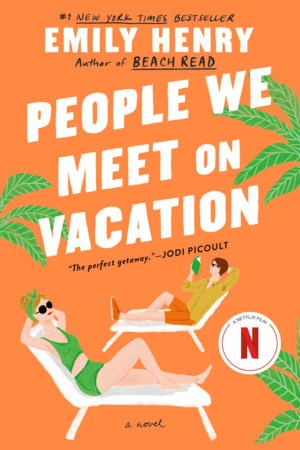
People We Meet on Vacation
Emily Henry
Bed-sharing evidence: Bed sharing attributed to an identified commentator
Best for: A reported booking disappointment with two longtime friends.
Poppy and Alex’s attempt to repair their friendship includes a vacation accommodation problem. Rebecca Perlmutter’s book-to-film comparison specifically identifies the novel’s Desert Rose rental as having one bed instead of the expected two, alongside malfunctioning air conditioning.
That exact book distinction matters because the screen adaptation changes the arrangement. Pick the novel for a reported proximity setup that intensifies an already complicated friendship; the claim concerns the wedding-week rental, rather than every vacation in their shared history.
Before choosing: Named critic explicitly separates novel’s one-bed rental from movie; do not import the film’s roadside motel scene into book guidance.
What establishes the bed-sharing setup?
Rebecca Perlmutter — TV Insider/Swooon book-to-film comparison: Explicitly reports book Desert Rose apartment delivers one bed rather than two; distinguishes adaptation. (reported classification). Source: https://www.tvinsider.com/swooon/1255238/people-we-meet-on-vacation-movie-changes-book-differences/.
Edition buttons become available when the specific format and destination are checked. Amazon opens a title-and-author search; choose your edition there.
Make the Season Bright
Ashley Herring Blake
Bed-sharing evidence: Bed sharing attributed to an identified commentator
Best for: One-bed tension with the familiarity and hurt of a broken engagement
Charlotte and Brighton encounter each other unexpectedly during a Colorado Christmas visit, five years after Brighton left Charlotte at the altar. April at Good Books & Good Wine specifically identifies an only-one-bed moment. Here physical closeness arrives with a history: these women are navigating a familiar person whose presence can still hurt.
This suits readers who want holiday activities and music alongside difficult reconciliation. The publisher describes their shared musical memories returning while Charlotte resists talking to Brighton. A bed-sharing recommendation should retain that second-chance context; proximity can intensify the reunion without erasing the need to address the abandoned wedding.
Before choosing: One-bed fit is reported by identified reviewer April (Books&Wine), not asserted by the checked publisher synopsis. Former fiancées, being left at the altar, and a five-year separation are central; no exact bed-scarcity mechanism is verified.
What establishes the bed-sharing setup?
April (Books&Wine) — Good Books & Good Wine audiobook review: Review explicitly identifies only-one-bed alongside second chance and fake dating. (verified identified critic). Source: https://goodbooksandgoodwine.com/2024/12/make-the-season-bright-by-ashley-herring-blake-audiobook-review.html.
Berkley — Make the Season Bright: Publisher verifies former fiancées unexpectedly sharing a Colorado holiday visit and renewed musical memories. (verified primary). Source: https://www.penguinrandomhouse.com/books/722346/make-the-season-bright-by-ashley-herring-blake/.
Edition buttons become available when the specific format and destination are checked. Amazon opens a title-and-author search; choose your edition there.
Winter’s Orbit
Everina Maxwell
Bed-sharing evidence: Bed sharing attributed to an identified commentator
Best for: A reported one-bed moment when two politically constrained spouses are alone
Hedwig’s World identifies a one-bed episode during the section where Kiem and Jainan travel across difficult terrain after losing access to their ship. The reviewer distinguishes that private stretch from the public scrutiny surrounding their marriage. The fit therefore rests on a reported accommodation detail, not an assumption that politically married partners automatically share a bed.
Try this for proximity that occurs alongside uncertainty about how another person interprets care and obligation. The reviewer describes the journey as a place where their communication and emotional histories become clearer. Jainan’s past abuse makes autonomy and personal space consequential, so the one-bed tag should not be treated as proof that immediate intimacy is inevitable or desirable. The inspected account establishes the trope, while the precise sleeping arrangements remain a scene-level unknown.
Before choosing: Reported bed detail from identified book-review publication. Past domestic abuse and political pressure remain material; do not imply forced intimacy, automatic bedsharing or a specific scene sequence.
What establishes the bed-sharing setup?
Hedwig’s World — Winter’s Orbit review: Review identifies only one bed during terrain journey after ship loss, when Kiem and Jainan are removed from public scrutiny. (inspected 2026-10-10). Source: https://hedwigsworldofbooks.home.blog/2021/04/05/review-winters-orbit-by-everina-maxwell/.
Edition buttons become available when the specific format and destination are checked. Amazon opens a title-and-author search; choose your edition there.
Managed
Kristen Callihan
Bed-sharing evidence: Bed sharing attributed to an identified commentator
Best for: Bedsharing chosen for sleep and comfort rather than a booking shortage
Kaetrin Allen’s review explicitly says Sophie and Gabriel share a bed because they sleep better together. That verifies bedsharing while offering a different mechanism from discovering that accommodation has only one usable bed. Their arrangement develops during a European band tour, where proximity and Gabriel’s reluctance to let people close create continuing romantic pressure.
Choose this reported variation if the appeal is repeated closeness under an ostensibly non-romantic agreement. The reviewer found the sleep rationale required some suspension of disbelief and thought Gabriel’s resistance to taking the relationship further became a little prolonged. Those limitations help distinguish the book from an accidental one-night shortage: the sleeping arrangement is itself a relationship choice, while attraction and professional circumstances make its boundaries harder to maintain.
Before choosing: Actual bedsharing reported; scarcity unverified and not claimed. Kaetrin questions plausibility of sleep rationale. Band-manager/workplace context; plot includes connection to suicide-attempt photographs and later misunderstanding.
What establishes the bed-sharing setup?
Kaetrin Allen — All About Romance Managed review: Explicitly reports bedsharing because both sleep better together, criticizes rationale’s plausibility, and places arrangement within European band tour. (inspected 2026-10-10). Source: https://allaboutromance.com/book-review/managed-by-kristen-callihan-2/.
Edition buttons become available when the specific format and destination are checked. Amazon opens a title-and-author search; choose your edition there.
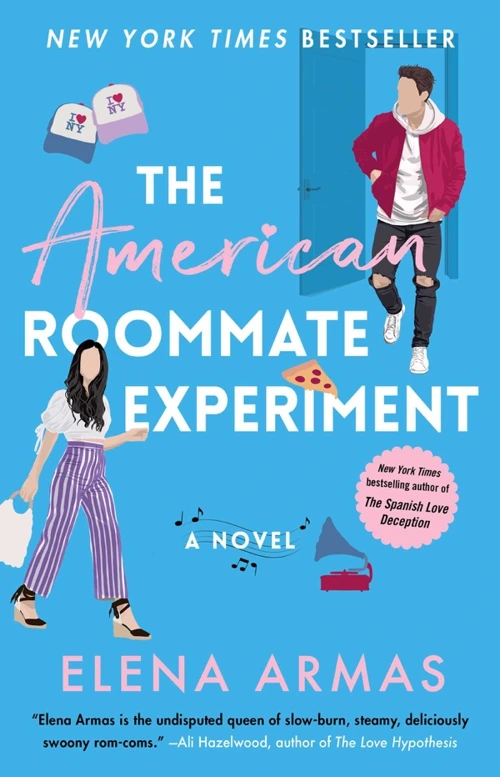
The American Roommate Experiment
Elena Armas
Bed-sharing evidence: One-bed accommodation verified; shared use and timing qualified
Best for: An apartment shortage beside dates devised for a romance writer’s inspiration
Andrea Reid’s review identifies Lina’s borrowed studio as having only one bed when Rosie and Lucas agree to live there temporarily. That is exact evidence of limited sleeping furniture, rather than merely a small apartment or shared room. Their arrangement follows the collapse of Rosie’s ceiling and overlapping permission to use the same home.
Try this qualified option for domestic proximity woven through a separate experiment in romantic dates. Rosie’s writing deadline and Lucas’s limited time in America give the arrangement practical pressures as attraction develops. The inspected critic confirms bed scarcity and labels the trope, but does not explain every sleeping choice, so no claim is made that they immediately or continuously share it. The same review notes a slow opening and an approaching departure that shadows the romance.
Before choosing: Qualified actual one-bed studio; precise bedsharing timeline and alternative sleeping arrangements unverified. Critic notes slow opening and Lucas’s temporary stay. Sequel can be read separately per publisher review material.
What establishes the bed-sharing setup?
Andrea Reid — The Nerd Daily review: Identifies temporary shared studio with one bed and one-bed trope; also reports experimental dates and limited visit duration. (inspected 2026-10-10). Source: https://thenerddaily.com/review-the-american-roommate-experiment-by-elena-armas/.
Edition buttons become available when the specific format and destination are checked. Amazon opens a title-and-author search; choose your edition there.
Questions that change the reading choice
Does only one bed mean the characters have sex?
No. Sleeping space and sexual content are separate claims. Check the individual assessment rather than inferring an act or heat level from the arrangement.
Are roommates automatically the same trope?
No. Roommates may have separate rooms or beds. Living together establishes proximity, while this collection requires specific bed-sharing evidence.
What about sleeping in the same bed at different times?
That can create an unusual shared-home premise without the leads sleeping together. The Flatshare is held outside this collection on its checked publisher premise because alternating use is not simultaneous bed sharing.
Does every choice prove there is literally no second bed?
No. The evidence notes preserve whether a source establishes scarcity, names the micro-trope or only confirms shared sleeping space. The distinctions prevent a broader setup being presented as an exact scene guarantee.
Does the scene establish slow burn?
No. Sharing can occur early or late. The review’s relationship analysis explains pacing; the bed itself cannot.
Can circumstances replace consent?
No. A practical arrangement does not establish agreement to intimacy. Read negotiation and boundaries separately from the reason the characters are nearby.
Only One Bed in Fantasy Romance: Shared Shelter and Boundaries
Compare contemporary bed-sharing setups and their evidence, with The Spanish Love Deception as an existing reviewed starter reported by identified critics.
MM Only One Bed: Shared Space, Boundaries and Trust
Choose MM bed-sharing romance by the actual sleeping-space setup, with Winter’s Orbit as one existing reviewed science-fiction starter reported by identified critics.
One Bed Historical Romance: Privacy, Reputation and Courtship
One bed historical romance places a couple in a shared sleeping space while the surrounding period gives that proximity particular consequences. Attraction may be awkward enough; questions of privacy, reputation and who can leave can make the same encounter fe
One Bed Paranormal Romance: Boundaries, Trust and Otherworldly Proximity
One bed paranormal romance adds a shared sleeping place to a relationship shaped by supernatural differences. The practical closeness can be familiar, while scent, appetite, unusual bodies or community rules make the characters’ interpretations of it less stra
One Bed Sapphic Romance: Shared Space and Unspoken Expectations
One bed sapphic romance brings the practical intimacy of a shared sleeping place into a sapphic love story. The tension may involve uncertain attraction, a relationship being performed for others or familiar people noticing each other differently. The pairing
One Bed Small-Town Romance: Private Closeness in a Familiar Community
One bed small-town romance combines the intimacy of a shared sleeping place with a setting where the couple may already be familiar to other people. That public familiarity can make a private change feel surprisingly consequential: the characters must dec
How these starting choices were researched
We inspected current competing guides and checked sleeping-space and relationship premises through author and publisher material, retaining identified criticism where additional interpretation is reported. Each note explains what establishes bed sharing and why exact scarcity or scene details remain qualified. These additions link existing researched assessments without adding ratings or claiming first-hand reading. The order groups evidence scopes rather than ranking quality; the collection remains incomplete.