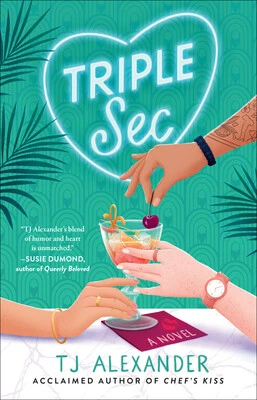
Sapphic why choose romance follows a central character whose love story includes more than one partner, with a sapphic connection at the center. Some books follow three women dating one another. Others include a nonbinary partner or a different set of connections within a larger relationship.
This guide offers a researched polyamorous starter rather than pretending to be a complete FFF book list. Triple Sec’s publisher verifies Mel’s connection with Bebe and the possibility of attachment to Bebe’s partner Kade. It is a queer multi-partner comparison; the evidence here does not label all three as women or claim an all-women configuration.
Authentic published cover of one starter selection; not a claim about every book in the guide.
Updated 8 November 2026 · Eikna Editorial Team
Choose the relationship dynamic
Setup
What drives it
What to check
All-women group
Several women build romantic connections
Is the configuration explicitly verified?
Sapphic connection in a wider group
Gender and attraction vary among partners
Which relationships are central?
Open relationship with separate connections
Partners need not date one another
Does your request require a shared triad?
Narrow the reading experience
Name the connections that matter to you
An all-women group, a sapphic relationship within a broader group and an open relationship with separate partners answer different requests. Decide whether you need every central romantic connection to involve women or chiefly want a sapphic lead whose love is not narrowed to one attachment. That distinction prevents the discovery process from erasing either queer women or partners whose identities do not fit an assumed binary.
Consider how the group begins
An established relationship opening to someone new has a different history from several people beginning together. The newcomer may be uncertain about their place, while existing partners have habits they must reconsider. If that asymmetry interests you, look for stories that make room for it. If you would rather avoid it, search for a group formed without an existing couple instead of treating every triad as interchangeable.
Look for room beyond the relationship
Friends, work and queer community can give the central people lives outside their attachments. Some readers want those connections to support a romance; others prefer an intense focus on the group itself. Neither preference tells you the heat or ending. A helpful selection explains whose perspective matters and what each person stands to gain or lose, without turning identity into a decorative tag.
A fall break brings three women together. Choose this one if you want an explicitly FFF romance with open-door intimacy and a found-family thread. It starts the Fall series.
In a triad, all three people date one another. In a V, one person dates two partners who do not date each other. An open relationship alone tells you neither shape.
Does sapphic poly romance have to be FFF?
No. Sapphic describes an aspect of attraction, while FFF describes a particular configuration. The terms can overlap, but they should not replace one another. If an all-women group is essential to you, seek direct confirmation about the people and relationships involved.
Is Triple Sec being presented as an all-women triad?
No. It is a publisher-verified queer polyamorous comparison with a sapphic connection. The publisher premise identifies Mel, Bebe and Kade, and this guide does not invent a gender classification for every partner. The distinction is part of why it is useful here.
Can a sapphic romance include more than one partner?
Yes. The important reading question is how the story defines and develops its connections, not a presumed restriction on queer women’s relationships. A why-choose or poly label still does not supply an ending or a quality assessment for a particular title.