A Chance at Love by Beverly Jenkins Review
Eikna Score: 7.3/10. Recommended.
A Chance at Love is Beverly Jenkins at her most playful for three quarters of its length: a worldly gambler heroine, a careful farmer hero and two eight year olds who pick their new mother before the adults have a say. The last stretch swaps that warmth for a hasty, borrowed conflict, and the book never quite gets its footing back.
Read it if you want a heroine who is richer, bolder and more experienced than the hero and never apologises for it, or you like found family built around children who actually sound like children. Skip it if you need the hero to back the heroine when it counts, or a rushed final act spoils a book for you.
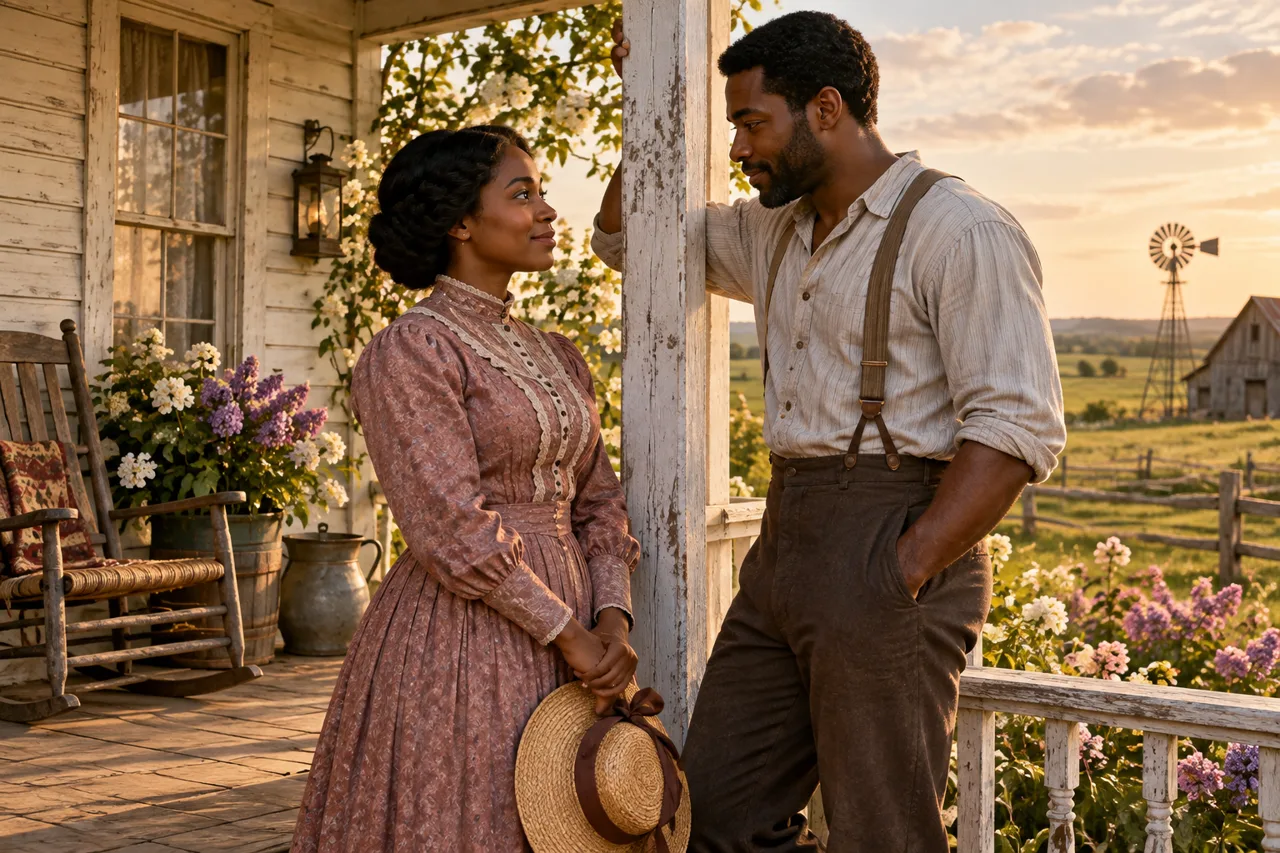
A Chance at Love at a Glance
A Chance at Love is a 2002 Avon historical romance by Beverly Jenkins, set in 1884 Kansas, about a gambler who agrees to a one year marriage so two orphaned girls can have a mother. It runs 384 pages in mass market paperback, ends with a happily ever after, and stands on its own.
| Author | Beverly Jenkins |
|---|---|
| Series | Standalone (shares a frontier Kansas world with other Jenkins historicals) |
| Subgenre | Historical romance (American West, 1884) |
| Main tropes | Marriage of convenience, accidental mail order bride, found family, worldly heroine and inexperienced hero, instant parenthood |
| Spice level | 3/5: Moderate, some open door |
| Content warnings | Racism, sexism, death of a parent (backstory), kidnapping, fire, violence, a past sexual assault (full list below) |
| POV | Third person, both leads |
| Ending | HEA |
| Pages | 384 (mass market paperback) |
| Audiobook | Narrated by Kim Staunton, 11 hours 21 minutes (Avon/HarperAudio, 2021) |
| First published | September 3, 2002 |
| Publisher | Avon |
What Is A Chance at Love About?
A Chance at Love opens with Loreli Winters passing through a small Kansas farming town in 1884. She is a wealthy, well travelled card player on her way west, helping a party of mail order brides reach their new husbands, and she has no intention of becoming one.
Then Jake Reed's eight year old twin nieces, Bebe and Dede, decide she should be their mama. Jake, a hog farmer raising the girls after his sister's death, needs a sensible wife. Loreli is not sensible. He offers a one year marriage while he looks for someone more suitable, and she says yes. Neither of them plans on the year turning into anything permanent.
What Makes This Marriage of Convenience Romance Work
A Chance at Love works because it flips the usual marriage of convenience power balance. In most of these books the bride is the one with no money and no options. Here Loreli has both, and Jake is the one wondering whether he is worldly enough for the woman sleeping down the hall.
That reversal gives the arrangement real comedy. Loreli is not a reformed rake in a skirt; she simply likes her life and sees no reason to apologise for it. Marianne Stillings at All About Romance called her the feistiest heroine she had ever read, and that energy drives the first half. Jake, for his part, is methodical and decent, an intelligent, logical man (All About Romance's description) who expects the world to follow reason.
The twins are the hook that makes it work. They chose Loreli, so the adults have to live with that choice, and every domestic scene carries a second question underneath: is this a temporary job or a family? If you like your found family with a deadline attached, that question keeps the pages turning.
My Review
I came to A Chance at Love expecting a gentle frontier story and got a wealthy, well travelled gambler who stays in a hog farming town because two little girls asked her to. For most of its length the book is as much fun as that sounds, and Loreli Winters is the reason.
Romance and Chemistry
The chemistry is built on a gap in experience, and Jenkins plays it for warmth rather than embarrassment. Loreli has money, travel and romantic experience behind her; Jake has his farm and his principles. The romance happens as Jake decides he would rather learn than pretend, and Loreli discovers that steadiness is attractive in a way she did not expect. Readers on StoryGraph keep singling out the moment Jake starts calling her his wife and means it, and I understand why. It lands.
The trouble is the last act. After a long, patient build, a new character arrives and the book takes a turn that splits the couple at the worst possible moment. Stillings wrote that the book slid from a solid B to a C+ because of it, and I share her frustration: Jake, who has been logical about everything, fails to stand by Loreli when it matters, and the reconciliation after a long separation arrives quickly. One StoryGraph reader called the end abrupt, and that is the right word.
The Characters
Loreli is a great creation. She is generous with the girls, blunt with the town gossips and entirely unbothered by people who think a gambler cannot be a mother. A reviewer at the blog File Under: Michellaneous liked that the leads are closer in age than usual for the genre, and it helps: these are two grown people negotiating, not a girl being rescued.
Jake is quieter and, for most of the book, very good. He has his own political work in town, and one StoryGraph reader found the political content heavy and only loosely tied to the story. I see the point, though I liked having a hero with a life outside the farmhouse. Bebe and Dede are the surprise. Stillings praised them for being sympathetic without being cute, and they are funny in the blunt way eight year olds are funny.
Writing and Pacing
The history is, as always with Jenkins, woven into the story rather than parked beside it. You pick up the history and politics of the period while watching a family get built. The prose is less even. Stillings noted that it lurches between clipped short sentences and long descriptive passages, and a few logistical details (a household shipped across the country in days, money moved overnight) are hard to swallow. The pacing is lovely through the middle and then rushes, which is the opposite of what the ending needed.
A Chance at Love has one of Jenkins's best heroines and two of her best child characters, and an ending that does not deserve them. Read it for Loreli, and go in braced for a final act that tests your patience with Jake.
How Spicy Is A Chance at Love?
A Chance at Love is a 3 out of 5 on our scale: Moderate, some open door. There are love scenes on the page, and they are warm and frank, but they are fewer and less central than in Jenkins's steamier titles. One StoryGraph reader rated it two peppers out of five, and our read sits just above that.
The intimacy matters to the story because it is where the experience gap plays out: Loreli knows more and is happy to teach. Consent between the leads is clear and mutual. For context, our romance heat levels guide explains the full scale.
Content warnings, drawn from StoryGraph reader reports and reviews:
- Racism and sexism of the period
- Death of a parent (the twins' mother, before the book opens)
- Grief
- Kidnapping
- Fire and injury
- Violence and a death
- Reference to a past sexual assault
- Pregnancy
Our content warnings guide explains how we compile these lists.
Who Should Read A Chance at Love?
A Chance at Love suits readers who want a self-possessed, sexually experienced heroine, a practical hero and a family that forms around two children. It is less suited to readers who need the hero to stay trustworthy through the climax or who dislike history delivered in speeches.
Best for:
- Fans of marriage of convenience stories with a time limit
- Readers who like a heroine with more money and experience than the hero
- Anyone who enjoys kids in romance when they are written as real people
- Readers who like history and politics woven into the plot
Not for:
- Readers who want a high heat level (try our spicy romance list)
- Anyone who hates a late-book separation
- Readers who skim political subplots
- People who need tight historical logistics
What Readers and Critics Are Saying
A Chance at Love is a reader favourite with a well known flaw. Romantic Times rated it Excellent on release in 2002, and on Goodreads it holds an average of about 4.4 from more than 1,600 ratings. The more detailed reviews almost all praise the first half and argue about the ending.
Where they agree. Loreli is the draw. Marianne Stillings at All About Romance, StoryGraph reviewers and the File Under: Michellaneous blog all name her first, followed by the twins. Several readers praise the way Jenkins works history and politics into the plot, and one StoryGraph reviewer called it a chosen family story where the heroine is never a damsel in distress.
Where they split. The last quarter. Stillings dropped her grade because of the late plot turn and Jake's failure to support Loreli, and a StoryGraph reader found the climax overdramatic and less developed than the first half. Another felt the move from slow burn to established couple happened too fast. The politics also divide people: some readers love the history lessons, while one StoryGraph reviewer found them only loosely connected to the story.
The Eikna Evidence Scorecard
A Chance at Love scores 7.3 out of 10 on the Eikna Evidence Scorecard, with its best marks for characters and its weakest for writing and the ending, where a late twist undoes some of the trust the book spent three hundred pages building.
| Dimension | Score (/5) | Why |
|---|---|---|
| Romance (20%) | 4 | Gap in experience played for warmth; StoryGraph readers praise the 'that's my wife' turn. |
| Characters (15%) | 4.5 | Loreli and the twins are standouts, per All About Romance and StoryGraph reviewers. |
| Writing and pacing (15%) | 3 | Uneven prose and rushed logistics, as All About Romance notes. |
| Emotional impact (15%) | 3.5 | Real found family pull, dented by the late separation. |
| Heat level (10%) | 4 | Delivers moderate, frank intimacy that suits the story; a StoryGraph reader rates it 2 of 5 peppers. |
| Ending satisfaction (15%) | 3 | A true HEA, but All About Romance and StoryGraph readers call the final act disappointing and abrupt. |
| Reread appeal (10%) | 3.5 | The first half rereads beautifully; the ending is the part you skip. |
The Eikna Overall Ranking: A Chance at Love sits in the middle of Jenkins's frontier Kansas historicals, warmer than most and weaker in its final act than Something Like Love, with a final Eikna Score of 7.3/10.
Is A Chance at Love a Standalone?
A Chance at Love is a standalone. Beverly Jenkins's official site lists it among her standalone historical romances, though Goodreads readers point out characters shared with Always and Forever and Topaz. You do not need to read anything first.
A Chance at Love (2002) is a standalone historical romance.
Best format: Kim Staunton's 2021 audiobook is a good way in, since she narrates many of Jenkins's reissued backlist titles. Print works too if you like to flip back through the history. Our series order guide covers Jenkins's connected books.
If You Loved A Chance at Love, Read These Next
If you loved A Chance at Love, the closest follow-ups are other Jenkins frontier romances and historicals where an arrangement turns into a family.
- Always and Forever by Beverly Jenkins: mail order brides heading to Kansas, and a natural companion to this book.
- Something Like Love by Beverly Jenkins: another Kansas town, a heroine with her own business and a hero with a price on his head.
- Topaz by Beverly Jenkins: an earlier Jenkins frontier romance with a heroine who refuses to be managed.
- First Comes Marriage by Mary Balogh: a Regency marriage of convenience where duty slowly turns to love.
- An Extraordinary Union by Alyssa Cole: Black history at the centre of a historical romance, with a heroine who outsmarts everyone.
Frequently Asked Questions
A Chance at Love raises a few common questions: how spicy it is, whether it stands alone, whether it ends happily and how to listen to it. Short answers below.
Is A Chance at Love spicy?
Moderately. A Chance at Love is a 3 out of 5 on our scale, with some open door love scenes that are frank but not frequent.
Is A Chance at Love a standalone?
Yes. Beverly Jenkins lists it as a standalone historical romance, though a few characters overlap with her other Kansas books.
Does A Chance at Love have a happy ending?
Yes. Loreli and Jake get a happily ever after, after a late separation.
When and where is A Chance at Love set?
A Chance at Love is set in a small Kansas farming town in 1884, with a stop in Philadelphia.
Is there an A Chance at Love audiobook?
Yes. Avon released an unabridged audiobook in 2021, narrated by Kim Staunton and running 11 hours 21 minutes.
What age is A Chance at Love appropriate for?
A Chance at Love is an adult romance with sexual content and references to sexual assault, so we recommend it for adult readers.
The Bottom Line
A Chance at Love earns a 7.3/10 and a Recommended badge from us. It is for readers who want a confident, worldly heroine, a careful farmer who learns to keep up with her and two little girls who refuse to let either adult off the hook. Pick it up for Loreli Winters; forgive it the ending if you can.
Buy on Amazon Buy at Bookshop.org Listen on Audible Listen on Libro.fm
Some links on this page are affiliate links: Eikna Romance may earn a small commission at no extra cost to you.
Sources
- A Chance at Love, All About Romance (Marianne Stillings)
- A Chance at Love review, File Under: Michellaneous
- A Chance at Love reader reviews, StoryGraph
- A Chance at Love review by readerette, StoryGraph
- A Chance at Love, Goodreads
- A Chance at Love, AALBC (edition details)
- A Chance at Love, Past Forward Books (edition details and Romantic Times rating)
- A Chance at Love audiobook, Libro.fm
- A Chance at Love audiobook, Blackstone Library
- Books, Beverly Jenkins official site
Sources disagree on the spelling of the Kansas town's name, so we leave it out.
How we review: every Eikna score is built from a seven-part evidence scorecard. Read our methodology.