Black Sheep by Georgette Heyer Review
Eikna Score: 8.3/10. Recommended.
Black Sheep is late Heyer at her most relaxed: a sensible woman in Bath and a scandalous man back from India, who start talking at their first meeting and never really stop. The plot is familiar and the ending's methods are high handed, but this is the Heyer couple who most obviously enjoy each other.
Read it if you love an older heroine with a sense of humour and a hero who refuses every social rule, or you want a short closed-door Regency built on conversation. Skip it if you want a dramatic plot, or a hero who simply arranges the ending without asking will annoy you.
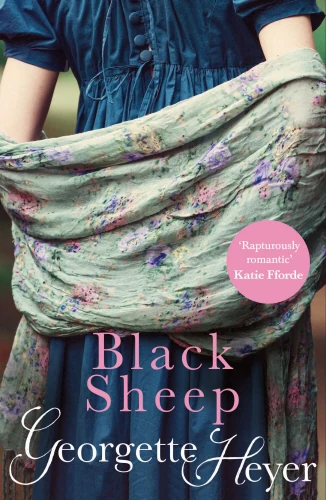
Black Sheep at a Glance
Black Sheep is a standalone Regency romance by Georgette Heyer, first published in 1966. It pairs a witty woman in her late twenties with an unconventional man of bad reputation, is closed door, and ends happily.
| Author | Georgette Heyer |
|---|---|
| Series | Standalone |
| Subgenre | Historical romance (Regency, Bath), romantic comedy |
| Main tropes | Black sheep hero, spinster heroine, unsuitable match, protecting a young relative, banter |
| Spice level | 1/5: Kisses only / closed door |
| Content warnings | A teenage heiress targeted by a fortune hunter, family coercion, an engineered abduction (full list below) |
| POV | Third person, mostly Abigail |
| Ending | HEA |
| Pages | 256 (Arrow paperback, 2019) |
| Audiobook | Narrated by Natalie Simpson, 8 hours 52 minutes, unabridged (Penguin Audio, 2021); an earlier recording read by Barbara Leigh-Hunt |
| First published | 1966 |
| Publisher | Current editions from Arrow (UK) and Sourcebooks Casablanca (US) |
What Is Black Sheep About?
Abigail Wendover lives comfortably in Bath with her older sister and her seventeen-year-old niece Fanny, a considerable heiress. Abby is witty, independent and, by the standards of her family, firmly on the shelf. When Fanny falls for a charming young man named Stacy Calverleigh, whom Abby suspects of wanting only her money, Abby sets out to stop it.
Instead she finds herself dealing with Stacy's uncle, Miles Calverleigh, the black sheep of his family, shipped off to India long ago and only just returned. Miles has no interest whatever in his nephew's affairs, or in good manners, or in what Bath thinks of him. He does have an interest in Abby, and the more she is warned against him, the more she enjoys his company.
What Makes This Black Sheep Romance Work
Black Sheep works as a black sheep romance because Miles is genuinely unrespectable, not a misunderstood paragon. He is rude to bores, indifferent to his family and frank about his past. What makes him attractive is that he treats Abby as an equal, a mind worth talking to, when everyone else treats her as a chaperone.
Katherine at Austenprose put the appeal well: their first meeting reads as an invitation to conversation, and the two are intellectual equals from the start. Lee O'Brien, in the Journal of Popular Romance Studies, read Miles's refusal of family obligation as potentially liberating for Abby, who has spent her adult life doing what was expected of her.
My Review
Black Sheep is the Heyer I give to readers who want a heroine their own age. Abby is in her late twenties, sharp, funny and fully aware of how her family sees her, and the romance is about a man who sees her differently.
It is a short book, and a light one, with none of the farce of The Grand Sophy or the darker shadows of Venetia. Most of it takes place in drawing rooms and the Pump Room, and the drama is mostly whether Fanny will make a fool of herself. That sounds thin, and plot-wise it is. But the conversations between Abby and Miles are some of the most purely enjoyable dialogue Heyer wrote.
Romance and Chemistry
This couple laugh together, constantly. Mari Ness at Reactor praised the banter and the way the book disrupts class expectations, while noting it is not Heyer's funniest. I agree on both counts: the humour is quieter than in her farces, and it lives almost entirely in the exchanges between Abby and Miles. He says outrageous things; she pretends to be shocked and then answers in kind.
The ending is where readers split. Miles resolves things in a way that is effective and decidedly high handed, and Sue at Sue's Book Reviews disliked the methods even while liking him more on a reread. I enjoyed the ending, but I see the objection: Abby is a capable woman, and the book briefly takes the decision out of her hands.
The Characters
Abby is one of Heyer's most appealing heroines, mature and amused, with a family who love her and underestimate her in equal measure. Her elder sister Selina, gently hypochondriac, and her pompous brother are good comic types. Fanny is young and silly, as she is meant to be.
Miles divides people more than Abby does. A commenter on Mari Ness's post, IClare, questioned the approving way the book treats the wealth he made in India, and Lee O'Brien's scholarly essay takes up the same imperial context. It is worth noticing: his fortune is a convenience the book never examines. Another commenter, Janhavi, found the Stacy subplot dragged on too long, and it does.
Writing and Pacing
The reviewer at BookSmith found the plot familiar but redeemed by characterisation and lively dialogue, which is exactly right. The slang is moderate, the pace brisk, and the book short enough to read in a sitting. It is a minor Heyer in scope and a major one in charm.
Black Sheep is a short, witty late Heyer about two grown-ups who would rather talk to each other than to anyone else in Bath. Read it for Abby and Miles; skip it if you need a big plot or dislike a hero who settles things his own way.
How Spicy Is Black Sheep?
Black Sheep is a 1 out of 5 on our scale: Kisses only / closed door. The romance is built on conversation, with no sex on the page, which makes it a natural fit for closed-door romance readers.
Content warnings, drawn from reviews and reader reports:
- A seventeen-year-old heiress targeted by an adult fortune hunter (no romance or sexual content involving her)
- Coercive family pressure
- An engineered abduction at the climax
- Colonial wealth from India presented uncritically
- Frank references to the hero's youthful scandal
Our romance heat levels guide explains the scale, and the content warnings guide explains how we compile these lists.
Who Should Read Black Sheep?
Black Sheep suits readers who want a mature, witty heroine and a romance built on conversation, in a short closed-door Regency. It is less suited to readers who want high drama or a heroine who drives the ending.
Best for:
- Readers who want a heroine in her late twenties
- Fans of banter-driven romance
- Anyone who likes an unconventional, rule-breaking hero
- Readers who want a short, low-angst Heyer
- Fans of Venetia and Sylvester
Not for:
- Readers who want a dramatic plot
- Anyone irritated by a hero who solves things without consulting the heroine
- Readers who want the imperial background examined
What Readers and Critics Are Saying
Black Sheep is one of Heyer's later and shorter Regencies, and it is a reader favourite for its central couple. Reviewers agree on the banter and differ on the hero's methods and wealth.
Where they agree. The conversation. Mari Ness at Reactor, Katherine at Austenprose and the reviewer at BookSmith all praise the dialogue and the equality between Abby and Miles. Lee O'Brien's scholarly reading in the Journal of Popular Romance Studies sees real freedom for Abby in Miles's indifference to convention.
Where they split. The ending and the money. Sue at Sue's Book Reviews disliked the ending's methods. Reactor commenters questioned the uncritical treatment of Miles's Indian fortune and the length of the Stacy subplot. Kirkus, reviewing Barbara Leigh-Hunt's older audio recording, found her voices distinct but her heroine too old-sounding.
The Eikna Evidence Scorecard
Black Sheep scores 8.3 out of 10 on the Eikna Evidence Scorecard, with top marks for romance and characters, and lower marks for a thin plot and a high-handed ending.
| Dimension | Score (/5) | Why |
|---|---|---|
| Romance (20%) | 4.5 | Banter between equals, per Austenprose and Reactor. |
| Characters (15%) | 4.5 | Abby is a standout heroine; Reactor commenters question Miles's fortune. |
| Writing and pacing (15%) | 4 | Lively dialogue per BookSmith; the plot is familiar and the Stacy subplot drags. |
| Emotional impact (15%) | 3.5 | Charming rather than moving. |
| Heat level (10%) | 4.5 | Closed door by design, and it delivers exactly that. |
| Ending satisfaction (15%) | 3.5 | A happy ending reached by methods Sue's Book Reviews dislikes. |
| Reread appeal (10%) | 4.5 | A short, favourite reread for Heyer fans. |
The Eikna Overall Ranking: Black Sheep sits in the upper middle of Georgette Heyer's Regency romances on Eikna, behind Sylvester, Venetia and Frederica, with a final Eikna Score of 8.3/10.
Is Black Sheep a Standalone?
Yes. Black Sheep is a standalone novel with a complete story. Heyer's Regency romances can be read in any order. The Heyer novels reviewed on Eikna, in publication order:
- Arabella (1949)
- The Grand Sophy (1950)
- Sylvester (1957)
- Venetia (1958)
- The Unknown Ajax (1959)
- Frederica (1965)
- Black Sheep (1966)
Best format: either. Natalie Simpson narrates the unabridged Penguin Audio edition, which runs under nine hours. Our series order guide covers connected historical series.
If You Loved Black Sheep, Read These Next
If you loved Black Sheep, the best next reads are more Heyer couples who talk beautifully and historicals with heroines past their first season.
- Venetia by Georgette Heyer: a clever heroine and a man of bad reputation who are each other's best company.
- Sylvester by Georgette Heyer: another sparring couple, with a proud duke instead of a careless nabob.
- Frederica by Georgette Heyer: a capable, managing heroine and a worldly man she never expects to fall for.
- The Unknown Ajax by Georgette Heyer: a family outsider who proves the most sensible person in the room.
- A Woman Entangled by Cecilia Grant: a modern Regency with Austen-style wit and a heroine who chooses for herself.
Frequently Asked Questions
Black Sheep raises a few common questions: heat level, the heroine's age, standalone status and the audiobook. Short answers below.
Is Black Sheep by Georgette Heyer spicy?
No. Black Sheep is a 1 out of 5 on our scale: kisses only and closed door.
How old is the heroine of Black Sheep?
Abigail Wendover is in her late twenties, older than most Heyer heroines and considered by her family to be past marrying.
When was Black Sheep first published?
Black Sheep was first published in 1966.
Is Black Sheep a standalone?
Yes. Black Sheep is a standalone novel, and Heyer's Regencies can be read in any order.
Is there a Black Sheep audiobook?
Yes. Natalie Simpson narrates the unabridged Penguin Audio edition, which runs 8 hours 52 minutes.
The Bottom Line
Black Sheep earns a 8.3/10 and a Recommended badge. It is for readers who want a short, witty, closed-door Regency with a grown-up heroine and a hero who does not care what anyone thinks. The reason to pick it up is Abby and Miles talking: Heyer never wrote a couple who enjoy each other more.
Buy on Amazon Buy at Bookshop.org Listen on Audible Listen on Libro.fm
Some links on this page are affiliate links: Eikna Romance may earn a small commission at no extra cost to you.
Sources
- Black Sheep audiobook, Libro.fm (Natalie Simpson, 8 hours 52 minutes)
- Black Sheep by Georgette Heyer: a review, Austenprose (guest review by Katherine, 2010)
- Heyer British first editions, Colby College list (publication year)
- Mari Ness, Heyer reread at Reactor (2013) and reader comments; BookSmith (2012); Lee O'Brien, Journal of Popular Romance Studies (2022); Sue's Book Reviews (2023); Kirkus (Barbara Leigh-Hunt audiobook)
- Arrow paperback edition, ISBN 9780099468035, 256 pages (2019); Sourcebooks US edition ISBN 9781402210785
How we review: every Eikna score is built from a seven-part evidence scorecard. Read our methodology.