Venetia by Georgette Heyer Review
Eikna Score: 8.8/10. Highly recommended.
Venetia is Georgette Heyer at her most grown up: a sensible, funny heroine and a rake who has lived down to his reputation for years, and the two talk each other into love over one Yorkshire summer. The forceful first kiss and a slow London middle stop it short of perfect, but the conversation between these two is the best Heyer ever wrote.
Read it if you love romance built almost entirely on conversation, or you want a closed-door Regency with a heroine who knows her own mind. Skip it if a hero kissing the heroine without asking on their first meeting will sour the rest for you, or you need on-page heat.
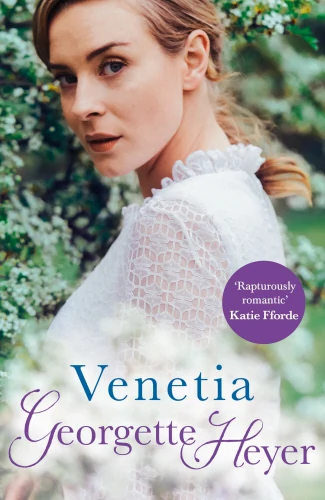
Venetia at a Glance
Venetia is a standalone Regency romance by Georgette Heyer, first published in 1958. It pairs a clever, isolated young woman with her disreputable neighbour, is closed door, and ends happily.
| Author | Georgette Heyer |
|---|---|
| Series | Standalone |
| Subgenre | Historical romance (Regency, Yorkshire and London) |
| Main tropes | Reformed rake, unsuitable match, neighbours, meet-ugly, heroine who chooses for herself |
| Spice level | 1/5: Kisses only / closed door |
| Content warnings | A forced kiss at first meeting, paternalism, family scandal (full list below) |
| POV | Third person, mostly Venetia |
| Ending | HEA |
| Pages | 336 (Arrow paperback, 2019) |
| Audiobook | Narrated by Gemma Whelan, 11 hours 47 minutes, unabridged (Penguin Audio, 2021) |
| First published | 1958 |
| Publisher | Heinemann (first edition); current editions from Arrow (UK) and Sourcebooks Casablanca (US) |
What Is Venetia About?
Venetia Lanyon has spent her whole life at Undershaw, a quiet estate in Yorkshire, keeping house for her clever, lame younger brother Aubrey while their elder brother Conway stays away with the army. She has two worthy local suitors and no wish to marry either of them.
Then Lord Damerel, the neighbour whose name nobody says in polite company, comes home to the Priory. Venetia meets him while picking blackberries, and their first encounter is a bad one. But when Aubrey is hurt in a riding accident and Damerel takes him in, Venetia spends her days at the Priory, and the two discover that they find each other better company than anyone else alive. The question is whether a woman of good family can marry a man with that past, and who gets to decide.
What Makes This Reformed Rake Romance Work
Venetia works as a reformed rake romance because Heyer does not pretend Damerel is secretly a saint. He has earned his reputation, he says so, and the book makes his past a real obstacle rather than a costume. What changes him is not a lecture but company: Venetia makes him laugh, and she quotes poetry back at him.
The other half of the hook is Venetia herself. She is isolated but not naive, and she sees through the men who decide things for her with good humour and very little patience. Laura A. Wallace at Austenprose praised exactly this, her clear judgement and her lack of lasting resentment toward the selfish people around her. Lynn Spencer at All About Romance put the appeal in a phrase readers will recognise: an intellectual match as much as a romantic one. That pairing, two adults who can finish each other's quotations, is what readers come back for.
My Review
Venetia is my favourite Heyer to argue about. It is quieter than The Grand Sophy and less farcical than Sylvester, and it is the one where the romance is the whole engine of the book. Two people talk, and talk, and fall in love on the page in a way that still feels modern.
It is also the Heyer that annoys some readers most, and the reasons are fair. The first meeting is a problem. Damerel kisses Venetia, uninvited, in a lane, and the book treats it as a rake behaving like a rake. A StoryGraph reviewer named pkrawr objected to it as a consent issue, and I agree that it lands badly today. What redeems it, for me, is that Heyer makes Damerel know it was wrong, and the rest of their courtship runs on Venetia's terms.
Romance and Chemistry
The chemistry is verbal, which is the point. Laurel Ann Nattress at Austenprose argued that the dialogue and the romantic tension matter more here than plot, and she is right: very little happens for long stretches, and I never wanted it to hurry. Venetia and Damerel share a habit of quotation and a sense of the absurd, and their conversations at the Priory read like two lonely people finally finding the only other person who speaks their language.
Mary Kingswood's reservations are worth naming. She disliked the stretch where the men around Venetia separate the couple for her own good, and the reader Ealasaid, commenting on her review, found the couple's shared mockery of other people unkind. I see the second point. These two can be snobs together. But the separation is the book's argument, not its flaw: Venetia's whole arc is about refusing to have her life arranged for her.
The Characters
Venetia is one of Heyer's best heroines, practical, amused and stubborn without being shrill. Aubrey is a wonderful secondary character, a prickly boy scholar whose friendship with Damerel is almost as touching as the romance. The suitors are comic in different keys: the solid, unimaginative Edward Yardley and the young, theatrical Oswald Denny, whose Byronic posing is one of the funniest things in the book. Vic at Jane Austen's World singled out the secondary cast and the plot turns, and the late arrivals at Undershaw (I will not say who) are among Heyer's most purely irritating creations, in a good way.
Damerel is the darker figure. He is weary, self-mocking and honest about his own record, and his tenderness toward Aubrey is the first sign that his reputation is not the whole man.
Writing and Pacing
The prose has Heyer's usual period slang, lighter here than in her more cant-heavy books. The scholar Anne Lancashire, writing in the Journal of Popular Romance Studies, read Venetia as a pastoral romance, and the Yorkshire chapters do feel like a green, enclosed world where normal rules lapse. That makes the London section feel slower and colder by contrast. Some of that is deliberate, but Mary Kingswood's pacing complaint holds: the middle third drags.
Venetia is the most adult romance Heyer wrote, a love story carried by conversation between two people who are each other's best company. Read it if you love wit and a heroine who chooses for herself; skip it if the forced first kiss is a dealbreaker.
How Spicy Is Venetia?
Venetia is a 1 out of 5 on our scale: Kisses only / closed door. There are kisses, warmth and a great deal of talk, and nothing more on the page. All About Romance gives it a Kisses label and describes the sensuality as discreet. It suits readers looking for closed-door romance with adult themes.
Content warnings, drawn from reviews and reader reports:
- A forced kiss when the leads first meet
- Paternalism: male relatives and friends making decisions for the heroine
- Frank discussion of the hero's past as a rake, including affairs
- A family scandal involving divorce
- A riding accident and injury to a teenage boy
- Disability (the heroine's brother is lame)
Our romance heat levels guide explains the scale, and the content warnings guide explains how we compile these lists.
Who Should Read Venetia?
Venetia suits readers who want a witty, slow, conversational romance with adult leads and a heroine who resists being managed. It is less suited to readers who want plot-driven adventure or who cannot get past the first meeting.
Best for:
- Fans of reformed rakes who are honestly flawed
- Readers who love bookish, quotation-trading couples
- Anyone who wants closed-door romance with grown-up stakes
- Jane Austen readers who like Persuasion's quieter mood
- Readers who already loved Sylvester
Not for:
- Readers who need on-page heat
- Anyone for whom a non-consensual kiss is a hard limit
- Readers impatient with slow middle sections
What Readers and Critics Are Saying
Venetia is often named among Heyer's best novels, and the reviews explain why: nearly everyone loves the conversations and the heroine.
Where they agree. The dialogue and Venetia. Lynn Spencer at All About Romance, Laura A. Wallace and Laurel Ann Nattress at Austenprose, and Vic at Jane Austen's World all praise the couple's intellectual connection and the secondary characters. Anne Lancashire's academic reading in the Journal of Popular Romance Studies treats it as one of Heyer's most literary books.
Where they split. The first kiss and the men. The StoryGraph reviewer pkrawr admired Venetia's independence but objected to the forceful kiss and the paternalism around her. Mary Kingswood liked the book but found the separation and the pacing frustrating, and a commenter on her review disliked the couple's habit of mocking others.
The Eikna Evidence Scorecard
Venetia scores 8.8 out of 10 on the Eikna Evidence Scorecard, with top marks for romance, writing and reread appeal, and lower marks where the forced first kiss and the slow middle cost it.
| Dimension | Score (/5) | Why |
|---|---|---|
| Romance (20%) | 5 | Two adults who are each other's best company; AAR praises the intellectual match. |
| Characters (15%) | 4.5 | Venetia and Aubrey are beloved; Jane Austen's World praises the cast. |
| Writing and pacing (15%) | 4 | Brilliant dialogue per Austenprose; Mary Kingswood finds the middle slow. |
| Emotional impact (15%) | 4 | Quietly moving, though less dramatic than some Heyers. |
| Heat level (10%) | 4.5 | Closed door by design, and it delivers exactly that. |
| Ending satisfaction (15%) | 4 | A satisfying HEA, delayed by the paternalism Kingswood dislikes. |
| Reread appeal (10%) | 4.5 | Often named a favourite reread; JPRS finds layers worth revisiting. |
The Eikna Overall Ranking: Venetia sits in the top tier of Georgette Heyer's Regency romances alongside Sylvester and Frederica, with a final Eikna Score of 8.8/10.
Is Venetia a Standalone?
Yes. Venetia is a standalone novel with a complete story and no connected sequel. Heyer's Regency romances can be read in any order. The Heyer novels reviewed on Eikna, in publication order:
- Arabella (1949)
- The Grand Sophy (1950)
- Sylvester (1957)
- Venetia (1958)
- The Unknown Ajax (1959)
- Frederica (1965)
- Black Sheep (1966)
Best format: either. Gemma Whelan narrates the unabridged Penguin Audio edition, and the dialogue-heavy text suits audio well; avoid older abridged recordings if you want the whole book. Our series order guide covers connected historical series.
If You Loved Venetia, Read These Next
If you loved Venetia, the best next reads are more witty Heyer and later historicals where a clever woman chooses a man with a past.
- Sylvester by Georgette Heyer: another sparring couple and a hero who has to learn humility.
- Frederica by Georgette Heyer: a bored, worldly man won over by a capable heroine and her family.
- Black Sheep by Georgette Heyer: a sensible woman and a disreputable man who simply enjoy talking to each other.
- Lord of Scoundrels by Loretta Chase: a much spicier rake who meets his match in a sharp, determined heroine.
- A Woman Entangled by Cecilia Grant: a modern Regency with Austen-style wit and a heroine making her own choices.
Frequently Asked Questions
Venetia raises a few common questions: heat level, the first kiss, where it sits among Heyer's books and the audiobook. Short answers below.
Is Venetia by Georgette Heyer spicy?
No. Venetia is a 1 out of 5 on our scale: kisses only and closed door.
When was Venetia first published?
Venetia was first published in 1958.
Is Venetia part of a series?
No. Venetia is a standalone Regency romance, and Heyer's Regencies can be read in any order.
Is the first kiss in Venetia consensual?
No. Damerel kisses Venetia without asking when they first meet, and some modern readers find it hard to get past. The book acknowledges it was wrong, and the courtship that follows runs on her terms.
Does Venetia have a happy ending?
Yes. Venetia ends with a happily ever after.
Is there a Venetia audiobook?
Yes. Gemma Whelan narrates the unabridged Penguin Audio edition, which runs 11 hours 47 minutes.
The Bottom Line
Venetia earns a 8.8/10 and a Highly recommended badge. It is for readers who want a witty, closed-door Regency romance between two adults who are each other's best company. The reason to pick it up is the conversation: no Heyer couple talks better than Venetia and Damerel.
Buy on Amazon Buy at Bookshop.org Listen on Audible Listen on Libro.fm
Some links on this page are affiliate links: Eikna Romance may earn a small commission at no extra cost to you.
Sources
- Venetia audiobook, Audible (Gemma Whelan, Penguin Audio 2021)
- Venetia audiobook listing, AudiobooksNow (length)
- Heyer British first editions, Colby College list (publication year)
- Venetia, Sourcebooks edition, Bookshop.org
- All About Romance (Lynn Spencer, 2017); Austenprose (Laura A. Wallace, 2011; Laurel Ann Nattress, 2010); Jane Austen's World (Vic, 2011); Mary Kingswood (2018) and reader comments; The StoryGraph (pkrawr); Anne Lancashire, Journal of Popular Romance Studies (2020)
- Arrow paperback edition, ISBN 9780099465652, 336 pages (2019)
How we review: every Eikna score is built from a seven-part evidence scorecard. Read our methodology.